

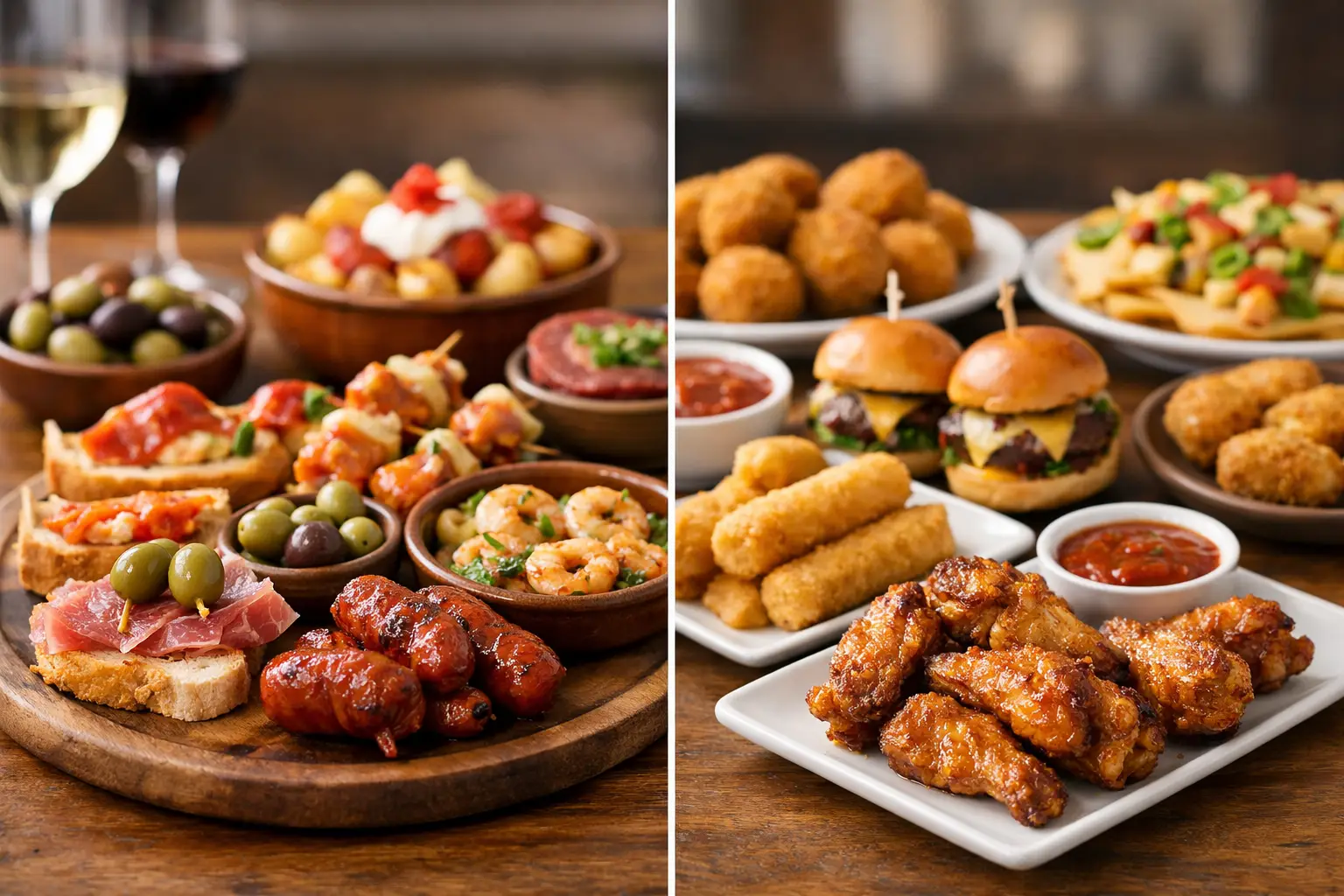
A plate of croquetas shared over sangría, patatas bravas passed around the table, a forkful of jamón offered to a friend before you take your own – this is where tapas versus appetizers becomes more than a menu question. Both can begin a great meal, but tapas are built to keep the conversation moving, the table tasting, and the appetite buzzing with excitement.
For diners used to ordering one starter before one entrée, tapas can feel like a happy change of pace. The distinction is not simply that tapas are small. It is about how they are ordered, served, shared, and enjoyed. A tapas meal turns several plates into the main event, creating a spirited rhythm that invites everyone to try a little of everything.
Tapas Versus Appetizers: The Essential Difference
An appetizer is usually defined by its place in the meal. It comes first, often as a single dish shared by the table or ordered individually, and it is meant to prepare you for the entrée ahead. Think calamari before pasta, a salad before steak, or a warm dip before the main course arrives.
A tapa is defined more by a dining culture than by a course. In Spain, tapas are small portions designed for grazing, pairing with drinks, and sharing in good company. They may arrive one or two at a time as they are prepared, rather than all at once. There may be no traditional entrée at all. Instead, the table builds its meal plate by plate.
That difference changes the mood. Appetizers can be a delicious opening act. Tapas encourage a full evening of discovery, where a crispy bite, a bright seafood dish, and a slow-cooked meat plate each get their moment. The meal feels less linear and more social.
Tapas Are About Timing, Sharing, and Choice
Portion size matters, but it does not tell the whole story. Some appetizers are small enough to share, while certain tapas can be substantial. A hearty portion of grilled steak, braised meatballs, or Spanish tortilla may satisfy more than one person. What makes it tapas is the invitation to combine it with other flavors across the table.
Timing is another clue. At a conventional restaurant, the starter often arrives before everything else. With tapas, dishes frequently land as they are ready. That means a hot, crackling plate reaches the table at its best, while the next bite gives everyone something new to talk about. Rather than waiting for one large course, diners settle into a delicious procession.
Choice is the final piece. A tapas table lets one person chase seafood, another lean into vegetables, and someone else insist on the croquetas, without turning dinner into a compromise. The table can order broadly, taste generously, then add another round once a favorite disappears. It is an easy format for date nights, after-work drinks, family meals, and celebrations where no one wants to be locked into just one dish.
Not Every Small Plate Is a Tapa
In the United States, “small plates” and “tapas” are sometimes used interchangeably. They can overlap, but they are not identical. Small plates may come from any culinary tradition and may simply be smaller restaurant portions. Tapas are rooted in Spanish food culture, with regional ingredients, classic preparations, and a social way of eating behind them.
That does not mean every tapa must look the same. Spain’s food traditions vary widely by region. A tapa might be a simple bowl of marinated olives, anchovies, or almonds at one stop, then a composed dish of sautéed shrimp, grilled octopus, or creamy croquetas at another. The common thread is not a rigid recipe. It is the pleasure of sharing bold, satisfying bites alongside drinks and conversation.
There is also a popular idea that tapas are always complimentary with a drink in Spain. In some cities and bars, a small bite may indeed accompany your order. In many other places, tapas are ordered and priced from the menu. Both experiences can be authentic. The important point is that tapas culture has room for spontaneity, local custom, and a lingering table.
How to Order Tapas for the Table
The best tapas order has contrast. Start with something snackable while everyone chooses: olives, cheese, cured meats, or a crisp bite that works beautifully with a first round of cocktails or wine. Then bring in warm favorites, vegetables, seafood, and a richer dish to give the meal more range.
For two people, three to five tapas can be a smart starting point, depending on appetites and whether you plan to add paella or dessert. For a larger group, order enough variety for everyone to try several bites, then pause before placing the next round. This is not about getting the math perfect on the first pass. It is about leaving room for the dish that catches everyone’s attention when it passes by.
A balanced table often includes something crisp, something creamy, something bright, and something deeply savory. Patatas bravas bring heat and comfort. Croquetas offer a golden, indulgent crunch. Garlic shrimp bring sizzle and aroma. A chilled seafood or vegetable dish can refresh the palate between richer bites. Pairing warm and cold tapas keeps every round interesting.
If paella is part of the plan, let it take center stage after a few opening plates. Tapas stimulate the appetite; paella gives the table a shared destination. That pacing works especially well when you are settling in for an unhurried lunch, a lively dinner, or a night that starts with a toast and grows from there.
Drinks Belong in the Conversation
Appetizers pair well with drinks, of course, but tapas and beverages have a particularly natural relationship. A glass of Spanish wine can bring out the savory depth of jamón or aged cheese. A bright sangría can play beautifully against spice and salt. A refreshing cocktail can keep a rich, fried bite from feeling too heavy.
There is no need to follow a strict pairing rule. Order what sounds good, then let the table compare notes. One of the pleasures of tapas is seeing how the same dish shifts with a sip of red, white, sparkling wine, or a citrus-forward cocktail. That kind of easy experimentation is part of the fun.
When an Appetizer Is the Better Choice
Tapas are not automatically better than appetizers. If you are stopping in for a quick meal before a show, ordering one starter and one main dish may be exactly right. Appetizers also make sense when you know what you want for dinner and simply want a first bite while you wait.
Tapas shine when the occasion calls for variety and connection. They are ideal when friends have different cravings, when a couple wants a more interactive date night, or when a team is gathering after work and wants food that keeps everyone at the table. They make it easy to extend the evening without making the meal feel overly formal.
At Bulla Gastrobar, that social energy is the point: Spanish-inspired plates arrive ready to share, inviting the group to taste, react, and order the next favorite together. It is dining that creates a stir without asking anyone to overthink it.
The Etiquette Is Happily Simple
Tapas etiquette is less about rules and more about generosity. Use serving utensils when provided, offer the last bite before claiming it, and order another round when a plate disappears in record time. If you are dining with a group, let the table know about allergies or dietary preferences early so there is something exciting for everyone.
Do not feel pressure to order every dish at once. A great tapas meal has a little momentum. Start with a few plates, enjoy the first wave, then follow the table’s appetite. Did everyone reach for the same spicy potatoes? Get another. Is the seafood the surprise hit? Keep that story going.
The next time you are choosing between a starter and a table full of Spanish small plates, let the occasion lead. For a quick beginning, an appetizer does the job. For an evening made of shared bites, clinking glasses, and one more plate because nobody is ready to leave yet, tapas are ready to make the table buzz.