


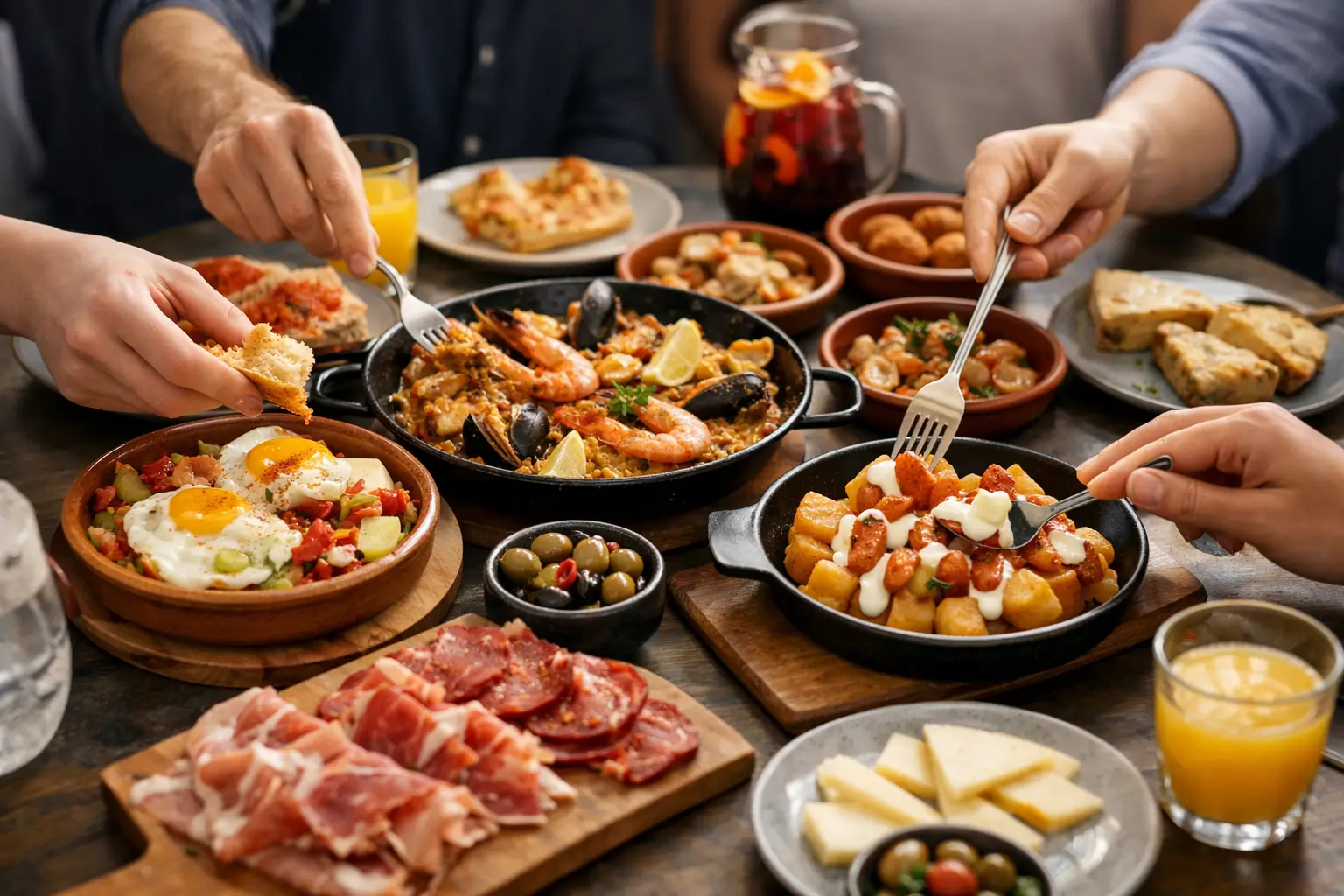
A late morning table should not feel like a meeting. It should arrive buzzing with bright flavors, clinking glasses, passing plates, and just enough time to tell the story you skipped over during the week. That is the pull of Spanish brunch: a more social way to do the weekend, where eggs, potatoes, seafood, cured ham, and a well-made cocktail are all part of the conversation.
For guests who want more than one oversized entrée and a rushed refill, brunch in the Spanish style offers variety with a little spark. One plate lands, then another. Someone reaches for the crispy potatoes. Someone else orders the sangría. Before long, the table has created its own feast.
What Makes Spanish Brunch Different?
Traditional Spanish eating has always made room for gathering. Tapas culture is not simply about ordering small dishes. It is about pacing a meal around people, appetite, and the pleasure of trying something together. At brunch, that rhythm feels especially right.
Instead of choosing between sweet or savory, between a breakfast dish or a lunch dish, the table can do both. A tortilla española brings comfort in every slice, with tender potato and egg at its center. Croquetas offer a crisp, creamy bite made for passing. Patatas bravas bring a little heat and a lot of personality. Then there may be pan con tomate, jamón, seafood, or a rice dish that turns a casual brunch into an occasion.
The difference is not only what is on the table. It is how the table works. A Spanish brunch is built for the friend who wants a classic egg dish, the couple splitting a few tapas, and the group that would rather sample six great things than commit to one. It gives everyone a reason to lean in.
Start With Tapas, Stay for the Brunch Energy
Brunch does not need a rigid order of operations. In fact, it is better when it does not. Start with a few shareable tapas while the first round of drinks arrives, then let the meal build according to the mood at the table.
A warm tortilla española is a natural opener, substantial enough to satisfy but easy to share. Add patatas bravas for crisp edges and bold sauce, or croquetas for a rich bite with a crackling crust. These are the dishes that keep hands moving across the table and make even a first visit feel familiar.
For a brunch that stretches toward lunch, look for plates with Spanish chorizo, jamón serrano, grilled vegetables, or seafood. The balance matters. A menu with a few lighter, brighter bites alongside richer comfort food lets guests keep tasting without feeling like the meal ended after the first plate.
There is a trade-off, of course. Sharing means giving up a little control over your personal plate. But that is also the point. If you are planning a quick solo meal, an individual entrée may make more sense. If you came to catch up, celebrate, or turn a regular Sunday into something worth talking about, the shared approach wins.
Do Not Skip the Potatoes
Potatoes have a special way of keeping a brunch table grounded. In Spanish cooking, they can be silky inside an omelet, fried until golden, or dressed with sauces that wake up the palate. They are familiar enough for the cautious eater and exciting enough when paired with smoky paprika, garlic, or a spirited brava sauce.
They also make the whole table more generous. A plate of potatoes is never just a side when everyone is reaching for it.
Paella Turns Brunch Into an Occasion
There is something about paella that changes the energy of a meal. It arrives with color, aroma, and presence, bringing the table to a brief, happy pause. Rice carries the flavor of saffron, stock, vegetables, meats, or seafood, while the bottom of the pan may hold the prized crisp layer known as socarrat.
Paella is not necessarily an everyday brunch move, and that is exactly why it works for birthdays, visiting friends, family gatherings, and the kind of weekend plan that starts with brunch and somehow lasts all afternoon. It gives the group a centerpiece without taking away the playful variety of tapas.
The right choice depends on the crowd. A seafood-forward paella suits guests who want a coastal, celebratory feel. A chicken or meat-based version can feel heartier and more familiar. Vegetarian options make room for a broader table. When in doubt, pair a paella with a few tapas rather than ordering only rice. You get the drama of the centerpiece and the lively back-and-forth of smaller plates.
Drinks Should Create a Stir, Not a Rush
A Spanish brunch calls for a drink with personality, but the best choice depends on the plan after the meal. A sparkling cocktail feels right for a festive start. A handcrafted sangría brings fruit, wine, and easygoing color to the table. Spanish wine can be a smart match for guests who want something drier and more food-focused.
For brunch regulars who are pacing themselves, a zero-proof option, coffee, or sparkling water can hold its own beside bold flavors. The goal is not to turn every brunch into a marathon. It is to give the meal its own sense of occasion.
That is why a good brunch drink menu should have range. One guest may be ready for a chilled glass of rosé; another may want a café con leche and an extra croqueta. Both are welcome at the same table.
How to Order Spanish Brunch for a Group
The easiest way to order is to think in layers rather than courses. Begin with two or three tapas that everyone can enjoy, then add a more substantial dish for every few guests. Finish with something sweet if the table still has room and the conversation is still rolling.
For a group of four, that might mean a tortilla española, patatas bravas, croquetas, a fresh vegetable or seafood plate, and a paella to share. Adjust for appetite, of course. A table coming straight from a workout may want more hearty dishes, while a group meeting before an afternoon event may prefer lighter plates and a round of sparkling drinks.
Do not overlook dietary needs before the food starts landing. Shared dining is most fun when everyone has several choices, not one safe item at the edge of the table. Ask about vegetarian dishes, gluten-sensitive options, and ingredients that may affect your group. A little planning keeps the mood easy.
At Bulla Gastrobar, that social rhythm is part of the experience: Spanish tapas arrive as they are prepared, so the meal keeps moving and the table never has to wait for one grand reveal. It is less about perfect synchronization and more about enjoying the next great bite as it appears.
Make Room for the Long Brunch
The best brunches have no need to hurry toward the check. They leave space for one more shared plate, a second round of coffee, or the story that comes out only after everyone has settled in. Spanish food is especially suited to that tempo because it asks guests to participate. Pass this. Try that. Save one bite for the person who stepped away.
Choose a table full of flavors, not just plates full of food. Order with a little curiosity, share with abandon, and let the weekend linger the way it should.