

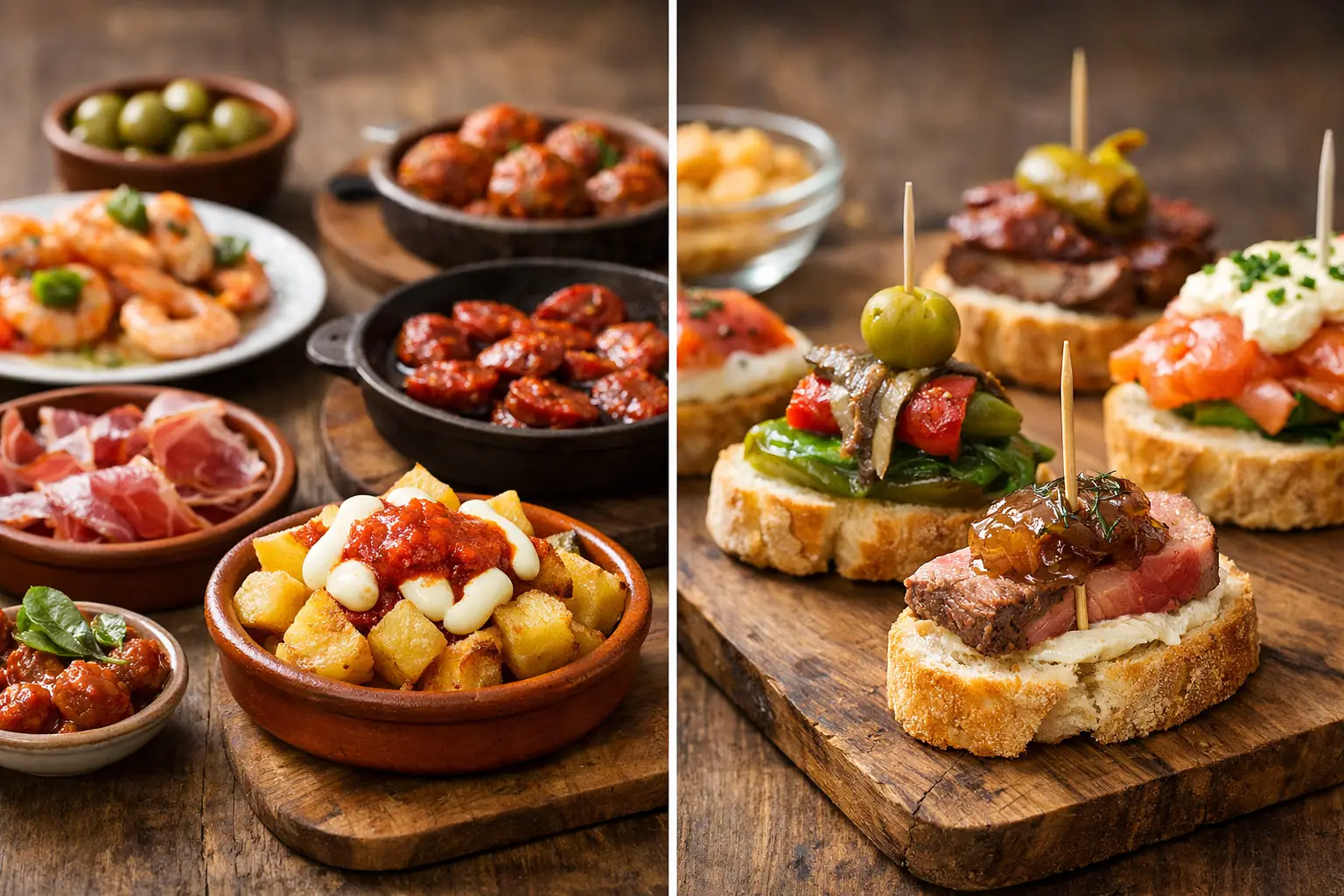
A table crowded with patatas bravas, sizzling garlic shrimp, jamón, croquetas, and glasses of chilled Spanish wine has one clear purpose: keep the conversation moving. But when the menu says tapas in one place and pintxos in another, the difference can feel less clear. Spanish tapas vs pintxos is not a battle of better bites. It is a delicious lesson in Spain’s regional food culture, and both are made for sharing.
Spanish Tapas vs Pintxos: The Core Difference
Tapas are small dishes associated with Spain as a whole, while pintxos belong most strongly to the Basque Country in northern Spain, especially San Sebastián and Bilbao. The distinction begins with geography, but it continues in the way the food is presented, ordered, and enjoyed.
A tapa can be nearly anything: a simple plate of marinated olives, a few slices of manchego, a warm portion of tortilla española, or a chef-driven preparation with layers of flavor. The word describes the serving style more than a specific recipe. Tapas are meant to be sampled, passed around, and paired with another round of drinks or the next course of the evening.
Pintxos, pronounced peen-chos, are often more compact and composed. Many are arranged on slices of bread and traditionally held together with a toothpick, or pintxo, the Basque word for spike. That detail is iconic, not mandatory. Modern pintxos can arrive in a small bowl, on a spoon, or plated as a polished one- or two-bite creation.
The shared spirit is what matters most. Neither style asks one person to commit to a giant entrée while everyone else waits politely. Both invite the table to taste, react, reach, and order the next thing that catches its eye.
Tapas Are a Way of Eating
In Spain, tapas culture is built around the social rhythm of the bar. You might stop in for a drink and a snack, then move on to another spot for something different. The food can be casual or elaborate, cold or hot, familiar or surprising. There is no single correct tapas menu.
That flexibility is part of the fun. A first round might lean salty and snackable: olives, almonds, cured meats, and cheese. Then come richer dishes such as crispy croquetas, grilled octopus, or chorizo with cider. A final round could include vegetables, seafood, or a rice dish when the table is ready to settle in.
Tapas also vary by region. In some parts of Spain, a small snack may be served with a drink. Elsewhere, diners select and pay for each dish. The famous story that tapas began as food placed over a drink as a lid may be charming, but its exact origin is debated. What is not debated is the pleasure of sharing a handful of dishes instead of eating in a straight line from appetizer to entrée.
At a Spanish restaurant in the United States, tapas often become the center of the meal rather than a quick bar snack. That is a natural adaptation for a longer dinner with friends, a date night, or a family gathering. It also means a tapas menu may include larger shareable plates alongside smaller bites.
Pintxos Bring Basque Bar Energy
Pintxos culture has its own rhythm: lively, visual, and delightfully spontaneous. In traditional Basque bars, guests may see a counter lined with ready-to-enjoy bites, choosing what looks good as they enjoy a drink and a buzz of conversation. Warm pintxos can also be ordered from the kitchen, arriving fresh and often more substantial.
The best pintxos tend to deliver contrast in a very small space. Think crusty bread with creamy seafood salad, a savory mushroom topping, salty anchovy, roasted pepper, or a silky egg. The point is not merely to make food tiny. It is to make every bite feel complete.
That makes pintxos especially appealing for diners who like variety without a lot of ceremony. You can try several flavor combinations in one evening, from bright and briny to smoky and rich. It is food designed to create a stir before the next sip even reaches the table.
Still, do not reduce pintxos to bread and toothpicks. Basque cooking is deeply ingredient-led, with serious attention paid to seafood, produce, sauces, and technique. A pintxo can be playful, but it can also be remarkably refined.
How Service and Ordering Change the Experience
The most practical difference between tapas and pintxos is often how you encounter them. Tapas are commonly ordered as individual dishes for the table. Pintxos may be selected from a bar display, ordered one at a time, or chosen in a few rounds as the group moves through the evening.
For a seated dinner, the line between the two can soften. A restaurant may serve tapas with the composed style of pintxos, or offer pintxos alongside larger plates meant for sharing. That is not necessarily a mistake. Spanish food traditions are regional, living, and varied. The menu’s approach matters more than forcing every bite into a strict category.
If you are dining with two people, start with three dishes that offer contrast: one crisp or fried item, one vegetable or seafood dish, and one richer meat or cheese selection. For four or more people, build in rounds. Begin with lighter bites, add warm dishes as they arrive, then bring paella or another substantial plate into the mix if the table wants a fuller meal.
Ordering in rounds is more than a practical strategy. It leaves room for discovery. The dish you did not expect to love may become the one everyone talks about on the ride home.
What to Drink With Tapas and Pintxos
Both styles shine with drinks that keep the palate fresh. A bright Spanish white wine can lift seafood, salty cheeses, and vegetable-forward plates. A medium-bodied red is a natural match for grilled meats, mushrooms, and cured jamón. Cava brings celebratory sparkle to fried bites and creamy croquetas.
Sangría works beautifully when the occasion calls for a pitcher and a little more color at the table. For a more classic bar feel, try a crisp lager, a vermouth pour, or a gin and tonic with plenty of citrus. The right pairing does not need to be precious. It should make the next bite more tempting.
At Bulla Gastrobar, that social rhythm is the point: dishes arrive as they are ready, giving the table new flavors to share while the energy stays high. Let the food set the pace rather than waiting for every plate to appear at once.
Which One Should You Choose?
Choose tapas when you want a broad tour of Spanish flavors and the freedom to build a meal from several shareable dishes. Choose pintxos when you are drawn to compact, composed bites and the lively, bar-hopping spirit of Basque Country. If a menu offers both, there is no need to choose sides. Order a mix.
The better question is what kind of night you want. A quick drink and a few clever bites? Pintxos fit the mood. A long dinner where everyone reaches across the table for one more croqueta? Tapas are ready for that. A celebration with wine, paella, and a table that keeps getting more animated? Start with either, then follow the appetite.
Bring people who enjoy trying one more thing. The most memorable Spanish meal is rarely the one you planned down to the last bite. It is the one that gives your table a reason to linger.