

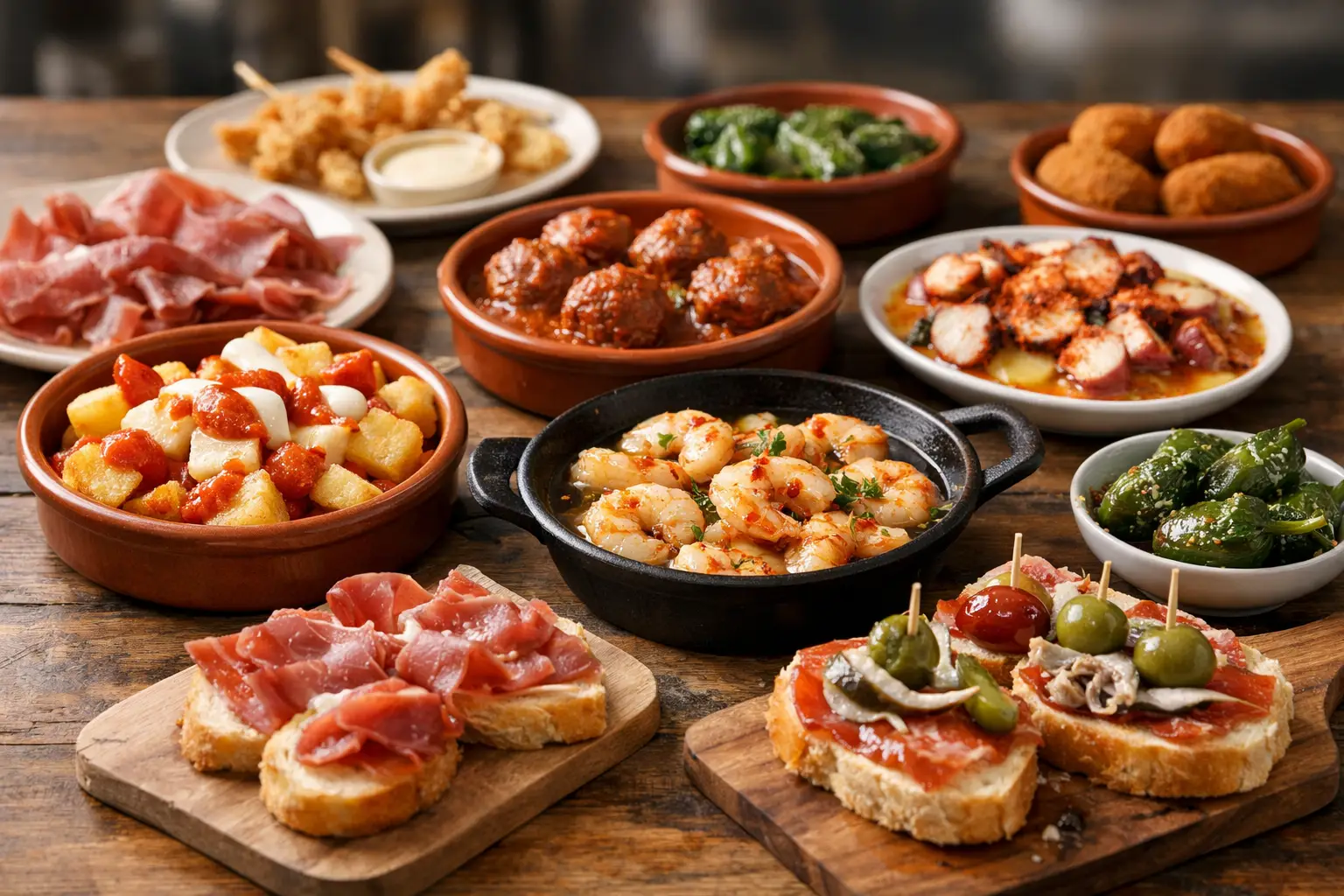
A first tapas order should feel like a table full of possibilities, not a pop quiz in Spanish. The best tapas for newcomers pair familiar flavors with a little Spanish flair: something crisp, something saucy, something fresh, and at least one dish worth passing across the table before you take your next bite.
Tapas are built for conversation. Dishes arrive as they are ready, so the meal moves at its own delicious pace. One plate sparks a recommendation, another calls for a second round of sangría, and suddenly everyone has a favorite. That is the point. Start with a few crowd-pleasers, taste broadly, then let the table decide what deserves an encore.
The best tapas for newcomers start with contrast
There is no single correct tapas order. A date night for two might begin with three plates and a paella, while a group of six can happily work through eight or more dishes. The best first order balances textures and temperatures rather than choosing everything fried or everything rich.
If your group is new to Spanish dining, choose a mix of familiar comfort food, seafood or vegetables, and one deeply savory dish. That gives everyone an easy entry point while leaving room for discovery.
1. Croquetas: the crispy first bite
Croquetas are often the dish that turns a curious first-timer into a tapas regular. These golden, fried bites are creamy inside and crisp outside, commonly filled with ingredients such as ham, chicken, or cheese. They are warm, rich, and easy to share, with the kind of satisfying crunch that gets the table quiet for a moment.
Order them early and eat them while they are hot. Croquetas are familiar enough for cautious eaters, but their silky filling still feels like a special occasion.
2. Patatas bravas: potatoes with personality
Patatas bravas are one of Spain’s most beloved ways to serve potatoes. Expect crispy or tender potato pieces topped with a bold bravas sauce, often joined by a creamy aioli. The exact heat level and sauce style can vary by kitchen, which is part of the fun.
This is an ideal shared plate because nearly everyone understands the appeal of potatoes and sauce. If someone at the table is nervous about spice, ask how fiery the bravas sauce is. It can range from gently smoky to a true palate wake-up call.
3. Pan con tomate: simple, bright, and essential
Great Spanish food does not need to be complicated. Pan con tomate, or toasted bread rubbed with tomato and finished with olive oil and seasoning, proves the case in a few vivid bites. It is fresh, savory, and especially welcome beside richer dishes.
Think of it as the table’s reset button. Between croquetas, meats, and saucy plates, its bright tomato flavor keeps the meal lively. It also pairs beautifully with Spanish wine, a cold beer, or a citrus-forward cocktail.
4. Gambas al ajillo: shrimp that arrives sizzling
Gambas al ajillo brings the theater. Shrimp cooked with garlic, olive oil, and often a touch of chile or herbs arrives fragrant and ready to create a stir. The aroma alone tends to pull attention from every corner of the table.
Seafood newcomers should know that this dish is usually about clean shrimp flavor rather than a heavy sauce. Use bread to catch the garlicky oil after the shrimp are gone. Leaving it behind would be a missed opportunity.
5. Tortilla Española: the Spanish potato omelet
A tortilla Española is not the folded, cheese-filled diner omelet some Americans expect. This classic Spanish dish is a thick, sliceable potato and egg omelet, often served at room temperature or warm. Its texture is tender and comforting, and it can be wonderfully simple.
For groups with vegetarians or diners who prefer mild flavors, tortilla is a smart choice. It is also an easy reminder that tapas are not all fried snacks or cured meats. The menu has range.
6. Albóndigas: meatballs made for sharing
Spanish-style meatballs, often called albóndigas, are a natural choice for anyone who likes a hearty, saucy plate. They may come in a tomato-based sauce or another richly seasoned preparation, depending on the restaurant. Either way, they bring depth to a tapas spread.
They are particularly useful when the table has ordered several lighter dishes and needs something more substantial. Add bread, and make sure everyone gets a spoonful of sauce. That is where the real action is.
7. Dates wrapped in bacon: sweet, salty, smoky
For a plate that disappears fast, look for dates wrapped in bacon. The contrast is immediate: caramel-like sweetness from the fruit, smoke and salt from the bacon, and sometimes a creamy or nutty filling to bring it all together.
This is a good example of why tapas work so well for first-time diners. The dish is recognizable, but the flavor balance feels fresh and distinctly Spanish. It is also a natural match for a glass of sangría.
8. Jamón and cheese: a lesson in Spanish ingredients
A board of cured ham and Spanish cheese can be one of the most revealing orders on the table. Jamón is not just a snack before the meal. Its savory, silky flavor is a centerpiece of Spanish food culture, especially when paired with cheeses, fruit, nuts, or bread.
If you are trying jamón for the first time, take a small bite on its own before layering it onto bread. Notice the salt, the richness, and the way it melts. Then pair it with cheese or a sip of wine and see how the flavors shift.
9. Grilled octopus: the adventurous order that still feels approachable
Octopus can sound like a leap, but a well-prepared grilled octopus dish is tender, lightly charred, and far less intimidating than its reputation suggests. It is often served with potatoes, paprika, olive oil, or a bright sauce that brings the dish into balance.
This is the plate to order when your table wants one new experience without going too far outside its comfort zone. If you enjoy grilled seafood, you are already most of the way there.
10. Paella: when tapas should lead somewhere bigger
Paella is not technically a tapa, but it belongs in a first Spanish meal when the occasion calls for it. It turns a collection of small plates into a feast, with saffron-scented rice, layered ingredients, and the deeply savory crust at the bottom of the pan known as socarrat.
Paella works best when the table is ready to settle in. It generally takes longer than tapas because it is cooked to order, so start with a few small plates while you wait. At Bulla Gastrobar, it is the kind of table-sharing centerpiece that makes a lunch, celebration, or long-overdue catch-up feel properly festive.
How much tapas should a first-timer order?
For two people, begin with three tapas and adjust from there. If you are adding paella, two or three small plates are usually plenty before it arrives. For a group, start with one or two dishes per person, but order in rounds rather than filling the entire table at once.
That approach has two advantages. First, hot dishes stay hot and crisp dishes stay crisp. Second, you can follow the table’s appetite. If everyone is reaching for the croquetas, order another round. If the grilled octopus gets more compliments than expected, lean into the seafood side of the menu.
Dietary needs matter, too. Tapas makes it easy to build a varied meal, but do not assume every vegetable dish is vegan or every fried item is gluten-free. Ask your server about ingredients, preparation, and substitutions before ordering. A good tapas meal should make every guest feel included in the next bite.
Make your first tapas meal a shared occasion
The easiest mistake is treating tapas like individual appetizers. They are better when the whole table participates. Put phones down for the first round, pass the plates, and make room for opinions. Someone will want more bravas sauce. Someone else will claim the last bacon-wrapped date. That friendly competition is part of the experience.
Start with the dishes that sound most delicious, not the ones you think you are supposed to order. A lively Spanish meal rewards curiosity, and the next great plate is usually one shared recommendation away.