

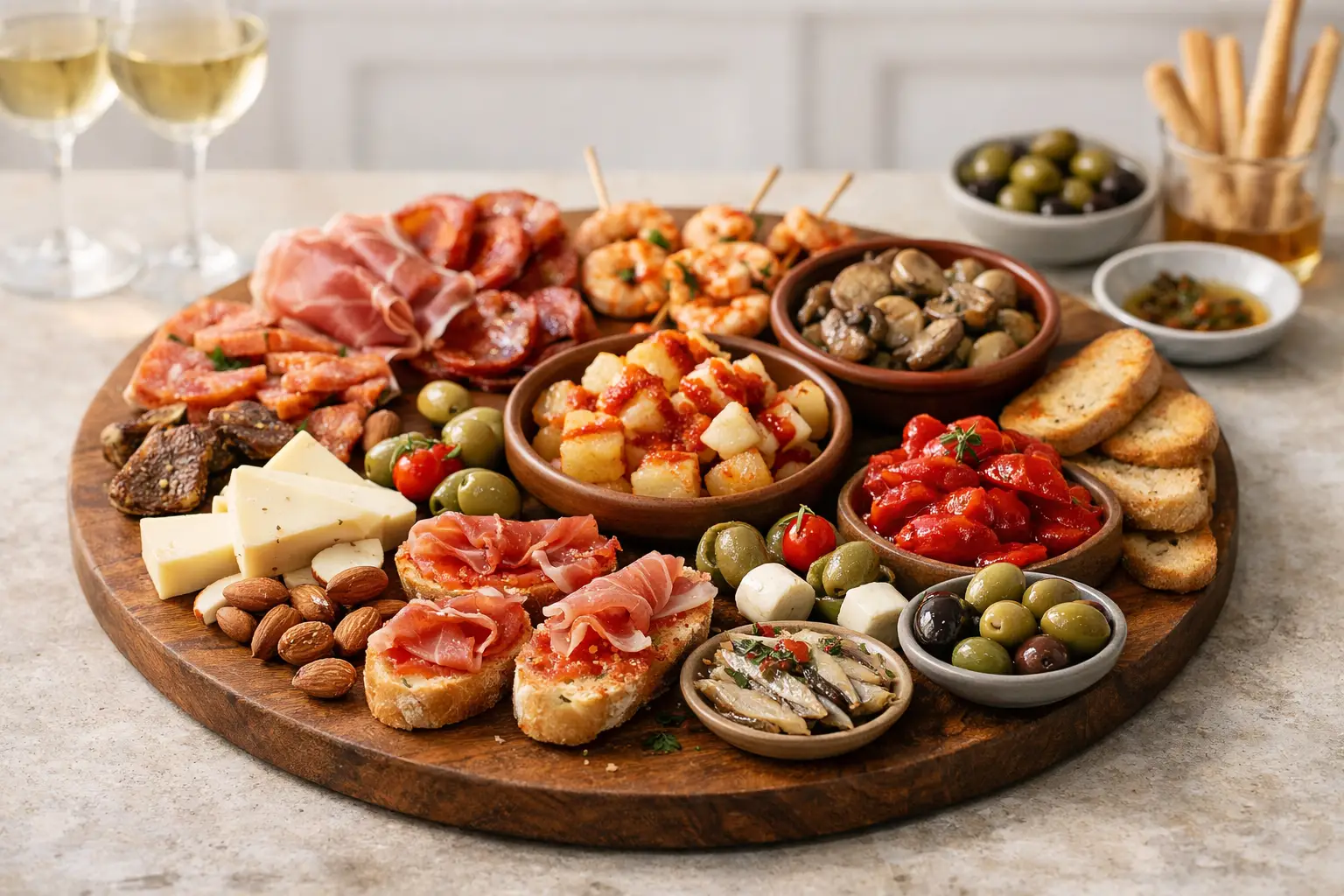
A tapas board should make people lean in before the first bite. The right mix of salty jamón, creamy cheese, crisp vegetables, warm potatoes, and something sparkling in the glass turns a simple get-together into a table full of conversation. Learning how to build tapas boards starts with one essential idea: this is not a pile of snacks. It is a social spread designed for tasting, passing, pairing, and coming back for one more bite.
Tapas in Spain are small plates, often served hot and meant to be enjoyed in rounds with drinks and good company. A board is a relaxed, home-friendly way to borrow that spirit. Keep the flavors Spanish-inspired, make room for a few warm dishes, and resist the urge to make every inch look identical. A little abundance, a little contrast, and plenty of reasons to reach across the table create the buzz.
How to Build Tapas Boards With Real Spanish Energy
Begin with the occasion, not the board itself. A pre-dinner cocktail gathering calls for lighter bites and easy one-hand eating. A game-day crowd can handle heartier potatoes, croquetas, and skewers. For a date night or a small dinner party, build a more thoughtful progression with cheese, cured meats, seafood, and one warm centerpiece.
Plan for roughly four to six different components for a small group, then add variety as the guest count grows. Too many choices can become a grocery-store collage instead of a cohesive spread. The goal is a board that feels generous, not chaotic.
Choose a platter, cutting board, or two smaller boards that leave enough open space for guests to serve themselves. If your board is small, place bowls of olives or sauces beside it rather than crowding the surface. Tapas are meant to move around the table, so there is no prize for squeezing every last almond into a corner.
Start With a Spanish Cheese and Charcuterie Foundation
Build the first layer with two or three cheeses that offer different textures. Manchego is a natural starting point: nutty, buttery, and firm enough to slice or cube. Pair it with a creamy goat cheese or soft sheep’s milk cheese, then add a blue cheese only if your guests enjoy bolder flavors. Let the cheese sit out for 30 minutes before serving so its aroma and flavor can wake up.
For charcuterie, jamón serrano brings the savory, delicate saltiness many people expect from a Spanish spread. Chorizo adds smoky paprika flavor, while lomo or sliced salchichón can bring another layer without repeating the same taste. Fold thin slices into loose ribbons rather than laying them flat. It looks more inviting and makes it easier for guests to pick up a portion.
If you are serving vegetarian guests, do not treat their options as an afterthought. Add marinated mushrooms, smoked almonds, grilled eggplant, or a substantial bean dip so the board still feels complete. A great tapas table gives everyone something to talk about and something they genuinely want to eat.
Add Bright, Briny Bites to Stimulate the Appetite
Spanish food loves contrast. Rich cheese and cured meat need acidity, crunch, and a little brine to keep every bite lively. This is where olives, pickled vegetables, roasted peppers, and fruit earn their place.
Choose one or two olive varieties, such as buttery Castelvetrano olives and more assertive marinated Spanish-style olives. Add cornichons, pickled onions, or guindilla peppers for a sharp pop. Roasted red peppers bring sweetness, while marinated artichokes offer tang and a tender texture.
Fresh fruit can work beautifully, especially grapes, sliced pear, figs, or orange segments. The trick is to use fruit as a flavor partner, not a generic garnish. Grapes soften the saltiness of jamón. Figs love Manchego. Orange brightens smoky chorizo and pairs naturally with a Spanish wine or sangría.
Nuts are another small but mighty addition. Marcona almonds are classic, but toasted almonds with olive oil, rosemary, smoked paprika, and flaky salt bring plenty of personality. Set them in a small bowl so they do not roll across the board and disrupt the arrangement.
Bring the Heat With One or Two Warm Tapas
A cold board can be beautiful, but warm tapas make it feel like a real gathering. This is also where a tapas board becomes closer to the Spanish small-plate experience rather than a standard cheese board wearing a flamenco dress.
Patatas bravas are a crowd-pleasing choice. Roast or fry crisp potatoes, then serve them in a bowl with bravas sauce and a cool aioli. The sauces can be made ahead, while the potatoes should arrive hot so they keep their crunch.
Gambas al ajillo, or garlic shrimp, is another fast, festive option. Sizzle shrimp in olive oil with sliced garlic, chile, and parsley, then bring the dish straight to the table with bread ready for dipping. If seafood is not right for your group, warm chorizo in cider or red wine makes an equally fragrant centerpiece.
Croquetas add that irresistible crackly-and-creamy contrast, though they are best when served immediately. If you are hosting, choose only one high-maintenance hot dish. You want to enjoy the party, not spend it flipping croquetas while everyone else is already sipping sangría.
Bread, Spreads, and Sauces Make the Board Feel Generous
Good bread is nonnegotiable. Offer sliced baguette, crusty country bread, or toasted bread brushed with olive oil. Pan con tomate is especially welcome: toast the bread, rub it with garlic and ripe tomato, finish with olive oil and salt, and serve right away. It is simple, bright, and proof that a few good ingredients can create a stir.
Include one or two spreads that connect the board’s flavors. Romesco brings roasted pepper, tomato, nuts, and a gentle smoky depth. Aioli adds creamy garlic richness. Whipped goat cheese with honey is delicious, though it leans more modern than traditional Spanish. That is not a problem if it suits your guests. Just balance it with flavors that keep the spread rooted in Spain.
Use small bowls for anything saucy or loose. Place them near the ingredients they complement: romesco by roasted vegetables, aioli near potatoes or seafood, and honey beside cheese. This makes the board easier to navigate and encourages guests to build their own favorite combinations.
Arrange for Ease, Not Just for the Photo
Start by placing bowls, ramekins, and warm dishes first. These are the anchors. Next, arrange cheeses and meats in separate areas, then fill the spaces with olives, fruit, vegetables, nuts, and bread. Avoid grouping every ingredient by color alone. Contrast in texture matters more than creating perfect stripes.
Keep wet ingredients contained and replenish delicate items as needed. Crisp bread can go stale, warm potatoes can cool, and herbs can wilt under the lights. Set aside extra olives, sliced bread, and charcuterie in the kitchen so refreshing the board takes seconds rather than a full reset.
Small serving tools make a big difference. Offer cheese knives, tiny spoons for sauces, tongs for olives, and cocktail napkins. Guests should never have to chase a slippery olive with a fork or ask permission to take the last slice of Manchego.
Portion With the Party in Mind
For a cocktail-style gathering, estimate two to three ounces of cheese and two ounces of charcuterie per person, plus bread, olives, and produce. If the board is standing in for dinner, increase those amounts and add at least two warm, more filling dishes. Potatoes, seafood, croquetas, tortilla española, or a small paella can carry the meal beyond grazing.
Drinks should follow the same spirit of contrast. A crisp Spanish white wine works beautifully with seafood, olives, and lighter cheeses. Rioja or another medium-bodied red is a natural match for chorizo and jamón. For a celebratory group, a pitcher of sangría keeps the table social and the refills easy. At Bulla Gastrobar, that balance of shareable plates, Spanish wine, and a lively pour is what turns dinner into an occasion.
The most memorable tapas boards are not the ones with the most ingredients. They are the ones that make people pause, taste something new, trade recommendations across the table, and reach back in for another bite. Build yours with a little heat, a little brightness, and enough room for the conversation to unfold.