


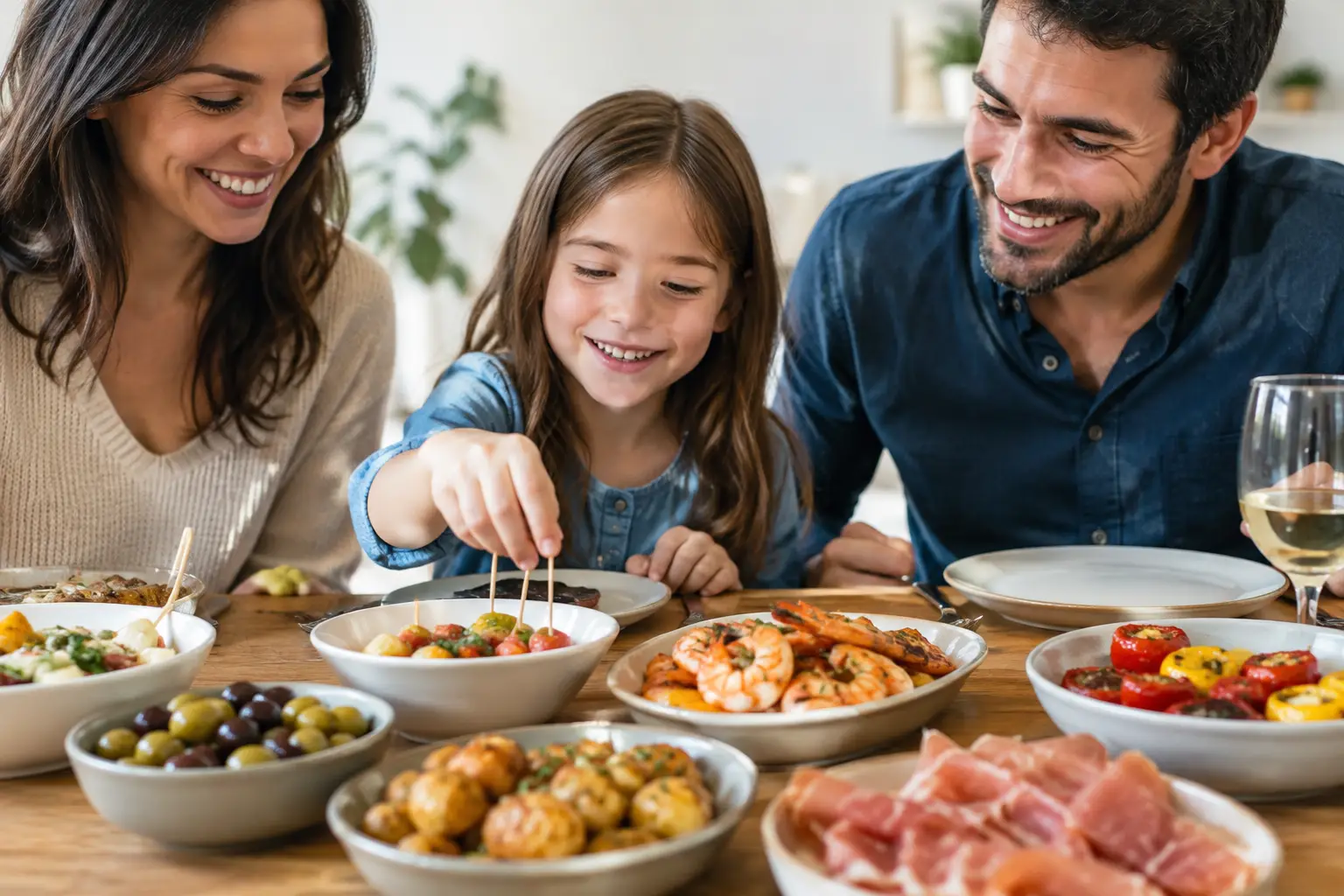
A table full of little plates can be one of the easiest ways to keep a family meal lively. So, can children eat tapas? Absolutely. Tapas are made for sharing, sampling, and talking over the next delicious bite. The key is choosing dishes that suit your child’s age, appetite, and comfort with new flavors – then letting everyone enjoy the fun at their own pace.
Spanish dining is social by nature. Rather than waiting for one large entrée, the table begins to fill with color: crisp potatoes, warm bread, grilled vegetables, savory bites, and perhaps a paella made for passing around. For kids, that variety can turn dinner from a negotiation into a small adventure.
Can Children Eat Tapas at a Restaurant?
Yes, and tapas can be especially family-friendly because no one has to commit to just one dish. A selective eater can start with a familiar plate while a more curious sibling tries something new. Parents get to enjoy the breadth of a Spanish meal without ordering an entirely separate experience for the kids.
That said, a tapas menu is not automatically a children’s menu. Some plates may be spicy, richly seasoned, salty, served very hot, or prepared with ingredients that need extra care for young diners. A good family meal is less about ordering everything on the menu and more about building a table with a few easy wins, one or two new tastes, and plenty to share.
At Bulla Gastrobar, the rhythm of dishes arriving as they are prepared gives families a natural way to taste, pause, and choose the next bite together. It is dining with a little buzz – and without the pressure to make every child love every flavor.
Start With Familiar Flavors, Then Create a Stir
Children are often more open to something new when there is a recognizable favorite on the table. Think crispy potatoes, bread, cheese, mild chicken, simple vegetables, or rice. These plates offer a comfortable starting point, especially for younger diners who are still building confidence with texture and seasoning.
From there, invite curiosity without making it a test. A child who likes potatoes may be willing to try a small taste of a sauce. A child who enjoys chicken may want a bite of a croqueta. Rice can be a friendly gateway to paella, while grilled vegetables offer a chance to explore smoky, savory flavors without much heat.
The best approach is simple: offer, do not insist. Tapas are meant to be passed, not pushed. When children see adults enjoying a dish and are free to take a tiny taste, the meal feels festive rather than unfamiliar.
Good Tapas Choices for Many Kids
Every child is different, but mild, clearly recognizable dishes tend to work well. Potatoes with a sauce served on the side can be a crowd-pleaser. Croquetas are often approachable because of their crisp exterior and creamy center. Bread, cheeses, grilled chicken, meatballs, egg dishes, and simply prepared vegetables can also make easy additions to the table.
Paella can be a great family order, particularly for children who already enjoy rice. Ask about the ingredients and seasoning before ordering, then serve a small portion first. Some kids will go straight for the rice; others may surprise you by trying seafood, chicken, or vegetables once the meal becomes a shared occasion rather than a mystery on one plate.
For a younger child, it can help to separate components before serving. A little rice, a small piece of chicken, and a vegetable on the side may feel more manageable than a mixed spoonful. There is no wrong way to enjoy a shared table.
What Parents Should Watch For
A spirited Spanish meal still calls for a few practical checks. Tapas often feature bold flavors, which is part of the pleasure, but children may be more sensitive to spice, garlic, acidity, or salty cured meats. Ask your server which dishes are mild, whether a sauce can come on the side, and which plates are best for a child who prefers gentler flavors.
Heat matters, too. Small plates can arrive sizzling, in hot ceramic dishes, or fresh from the fryer. Give dishes a moment to cool and check the temperature before serving young children. It is a small pause that keeps the table happy.
Portion sizes are another reason tapas work well for families. Kids may not need a full entrée, and their appetite can change quickly. A few shared plates let adults order enough variety without turning uneaten food into the main event. If your group is hungry, begin with several familiar options and add another round once everyone finds their favorites.
Allergies and Dietary Needs
If your child has a food allergy or dietary restriction, communicate it clearly before ordering. Spanish cooking can include common allergens such as dairy, eggs, wheat, shellfish, fish, nuts, and sesame, sometimes in sauces, breading, or garnishes that are not obvious at a glance.
Cross-contact is also a consideration in a busy restaurant kitchen. Ask direct questions about ingredients and preparation, and let the restaurant team guide you toward suitable choices. Do not rely on appearance alone, especially with fried foods, sauces, croquetas, cured meats, and rice dishes.
For gluten-sensitive guests, a shared table can still be full of flavor, but bread baskets and fried items may require extra attention. For vegetarian children, vegetables, potatoes, cheeses, egg dishes, and rice may offer options, depending on preparation. The details matter, so a quick conversation before the first plate arrives can make the experience more relaxed for everyone.
Tapas Safety for Babies and Toddlers
Older children can usually enjoy tapas with a little guidance, while babies and toddlers need more careful preparation. Restaurant dishes may contain more salt than foods prepared specifically for infants, and certain tapas can present choking hazards. Whole olives, nuts, grapes, firm chunks of meat or cheese, crusty bread, and round foods should be modified or avoided based on your child’s age and eating skills.
Avoid giving children any dish cooked with or finished with alcohol unless you have confirmed how it is prepared. Alcoholic beverages, sangría, and cocktails are, of course, for adults only. For raw or undercooked ingredients, including some seafood and egg preparations, follow the guidance you would use anywhere else and choose fully cooked options for young children or anyone who needs them.
If you are introducing a new food to a baby or toddler, a bustling restaurant may not be the ideal setting for a first-ever taste of a known allergen. Keep it simple, stick with foods your child handles safely, and enjoy the occasion without turning the table into a science experiment.
Make the Meal Feel Like a Celebration
Part of the magic of tapas is that everyone gets a role. Let children help choose a plate, pass the bread, or vote on whether the table should order another round. Give them the words for what they are tasting: crispy, smoky, creamy, tangy, salty, warm. A meal becomes more memorable when kids are invited into the conversation, not simply handed a plate.
Timing can make a difference, especially with small children. An earlier dinner may be more comfortable than a late, high-energy rush. If your family is dining with a larger group, order a few kid-friendly plates early so there is something to nibble while adults consider wines, cocktails, and more adventurous choices.
There is room for both: a child happily working through potatoes and bread while the grown-ups savor Spanish wine, a bold seafood plate, or a second helping of paella. That is the beauty of the shared table. Everyone can eat in their own way while still enjoying the same occasion.
A Better Way to Introduce New Foods
Tapas take the spotlight off the idea of finishing a meal. Instead of presenting a full unfamiliar entrée, they offer low-pressure bites. That can help children become more flexible eaters over time, particularly when they see new foods served beside trusted favorites.
Try describing a dish with enthusiasm but without overselling it. “This is crispy chicken with a creamy filling” may be more inviting than “You have to try this.” Celebrate the attempt, whether it is one bite or none at all. A child who touches, smells, or asks about a new dish is already participating.
Bring an appetite, ask a few questions, and order with the table in mind. A family tapas meal does not need to be perfectly adventurous to feel distinctly Spanish. It just needs good food, a little sharing, and enough room for the next bite to become a favorite.