

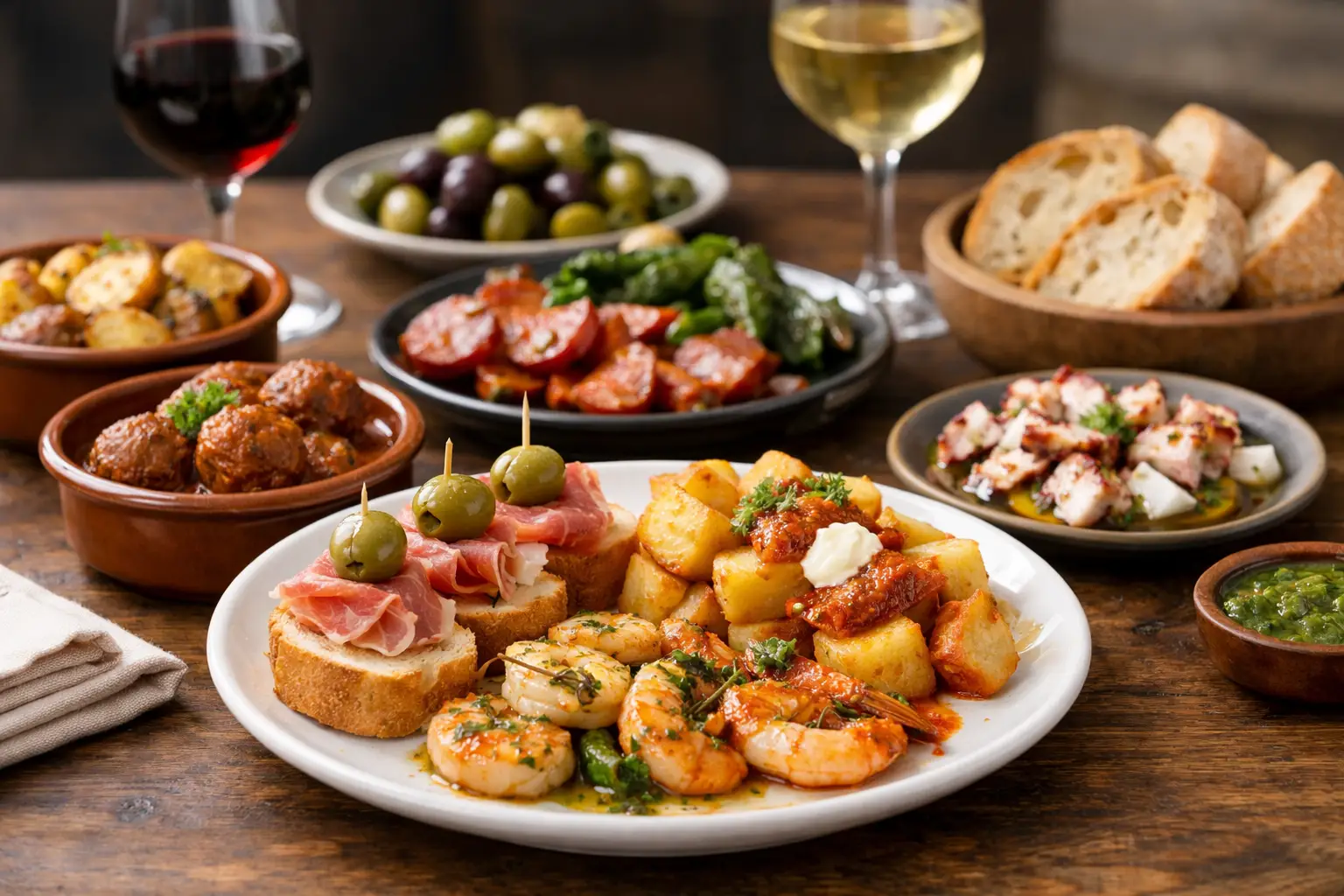
The short answer to are tapas filling is yes – when you order them as a meal, not just a snack before dinner. A table of sizzling croquetas, crisp patatas bravas, garlicky shrimp, grilled vegetables, cured meats, and a paella built for sharing can satisfy a hungry crowd beautifully. The fun is that no two bites need to taste the same.
Tapas are designed for conversation as much as appetite. Dishes arrive as they are ready, creating a rhythm that feels less like ordering one big entrée and more like making an evening of it. The secret to leaving happy, rather than scanning the menu for a late-night burger, is choosing a balanced mix of plates and giving the table enough range.
Are Tapas Filling Enough for Dinner?
They absolutely can be. Tapas may be called small plates, but that description can be misleading. Some are a few rich bites meant to stimulate the appetite, while others bring the substance of a main course: braised meats, seafood, rice dishes, eggs, potatoes, cheese, and hearty vegetables. A Spanish meal is not measured by one oversized plate. It is built over several rounds.
How filling tapas feel depends on three things: the size of your group, how hungry everyone is, and whether you include more substantial dishes alongside lighter starters. Two people meeting for sangría and a quick bite can be content with a few plates. Four friends arriving after work with dinner on their minds should plan a fuller spread, with protein, starch, vegetables, and at least one centerpiece.
There is also a difference between tapas at a bar and tapas as a restaurant meal. A couple of olives, almonds, or a small toast with wine is a classic way to start. That is not the same as settling in for a proper dinner with hot plates, a sizzling skillet or two, and paella landing in the center of the table.
How to Order Tapas That Satisfy
The best tapas order has contrast. Begin with one or two lighter, bright dishes that wake up the palate. Then bring in warm, savory plates with enough protein and starch to give the meal weight. Finish with a shared rice dish, a larger-format plate, or dessert if the occasion calls for it.
For a table of two, think in layers rather than courses. Start with something fresh or briny, then add a fried favorite such as croquetas or calamari. Follow with a meat or seafood plate and a potato, bread, or rice-based dish. If you are sharing paella, it can serve as the satisfying final act – especially after a few small plates have created a little anticipation.
For groups of four or more, variety becomes part of the feast. Order enough for everyone to sample, but avoid choosing only rich, fried dishes or only cold bites. A lively table might pair jamón, pan con tomate, and a colorful salad with spicy potatoes, sautéed shrimp, meatballs, grilled vegetables, and paella. That mix gives every guest a favorite while keeping the meal from becoming too heavy in one direction.
Build Around Protein, Starch, and Freshness
If fullness is the goal, look for these three elements across the table. Protein can come from seafood, chicken, pork, beef, eggs, or cheese. Starch often appears in potatoes, rice, bread, or legumes. Freshness comes through salads, tomatoes, greens, citrus, herbs, and simply prepared vegetables.
This is why a plate of patatas bravas is more than a side thought. Potatoes bring comfort and staying power, while a spicy sauce and creamy aioli keep each forkful exciting. The same goes for a paella layered with rice, saffron, stock, and your choice of seafood, meat, or vegetables. It is celebratory food, but it also does the practical work of turning a round of tapas into dinner.
Bread can help, too, but it should support the experience rather than replace it. Use it to scoop up a rich sauce, savor a spread, or chase the last bit of garlicky oil from the plate. Then save room for the dishes that make Spanish dining feel like a proper occasion.
The Right Amount Depends on Your Occasion
Tapas are flexible, which is one reason they suit so many kinds of nights. A date night calls for a different order than a family dinner or a corporate gathering. The pleasure is in matching the menu to the moment.
For drinks and happy hour, a few shareable plates may be exactly right. Choose bites that are easy to pass around and pair naturally with a cocktail, sangría, or Spanish wine. You may not be looking for a full meal, and there is no need to order as if you are. Tapas let the table stay spontaneous.
For dinner, give yourselves permission to order in waves. Start with three or four plates, see what disappears first, and add more as the evening unfolds. This approach keeps food arriving warm and lets the group follow its appetite. It also makes room for a dish you did not expect to crave after the first round.
For a celebration, bigger is usually better. A shared paella creates a natural center of gravity, while a generous lineup of tapas lets guests mingle, taste, and return for another bite. At Bulla Gastrobar, that ongoing arrival of dishes is part of the buzz: the table stays active, glasses stay lifted, and there is always something worth passing across the table.
Don’t Order Every Plate Per Person
The most common first-timer mistake is treating tapas like individual appetizers. If everyone orders two or three plates just for themselves, the table can become crowded fast, and the point of sharing gets lost. Instead, order for the group and let each dish make the rounds.
That does not mean one bite per person is enough. Generosity matters, especially when hungry guests are involved. It means choosing a spread that offers multiple tastes while including enough hearty options to keep everyone satisfied. If a favorite vanishes instantly, that is your cue to order a second round.
Why Tapas Can Feel More Satisfying Than One Entrée
Fullness is not only about volume. A meal also feels satisfying when it has texture, temperature, color, and a little surprise. Tapas deliver all of that in a way a single entrée sometimes cannot. One bite might be smoky and charred, the next creamy, then salty, crisp, bright, or gently sweet.
Sharing also slows the meal down. You talk, reach, recommend, and compare notes between bites. That pacing gives your appetite time to catch up and turns dinner into a social experience rather than a quick stop between obligations. For couples, it creates an easy reason to linger. For groups, it gives everyone something to react to besides the usual question of what they ordered.
Of course, tapas are not automatically light just because they are small. Fried dishes, creamy sauces, cured meats, cheeses, and rice can add up quickly. If you want a meal that feels satisfying without feeling overly rich, balance those favorites with seafood, salads, grilled vegetables, and tomato-forward dishes. You can have the croquetas and still leave feeling energized for the rest of the night.
A Simple Tapas Strategy for First-Timers
Arrive with an appetite, but do not feel pressure to solve the entire menu at once. Choose a bright starter, one crisp or fried plate, one protein-forward dish, one vegetable dish, and a starch or paella to share. That creates a dinner with real range and enough substance for most tables.
Then let the meal tell you what comes next. If everyone is lingering over the last spoonful of sauce, bring bread. If the shrimp disappeared before anyone finished their sentence, order another hot seafood plate. If the table wants something more grounding, make rice, potatoes, or a heartier meat dish the next move.
The best tapas dinner is not about counting plates perfectly. It is about building a table that keeps the conversation moving, the flavors changing, and everyone comfortably full enough to stay for one more toast.