


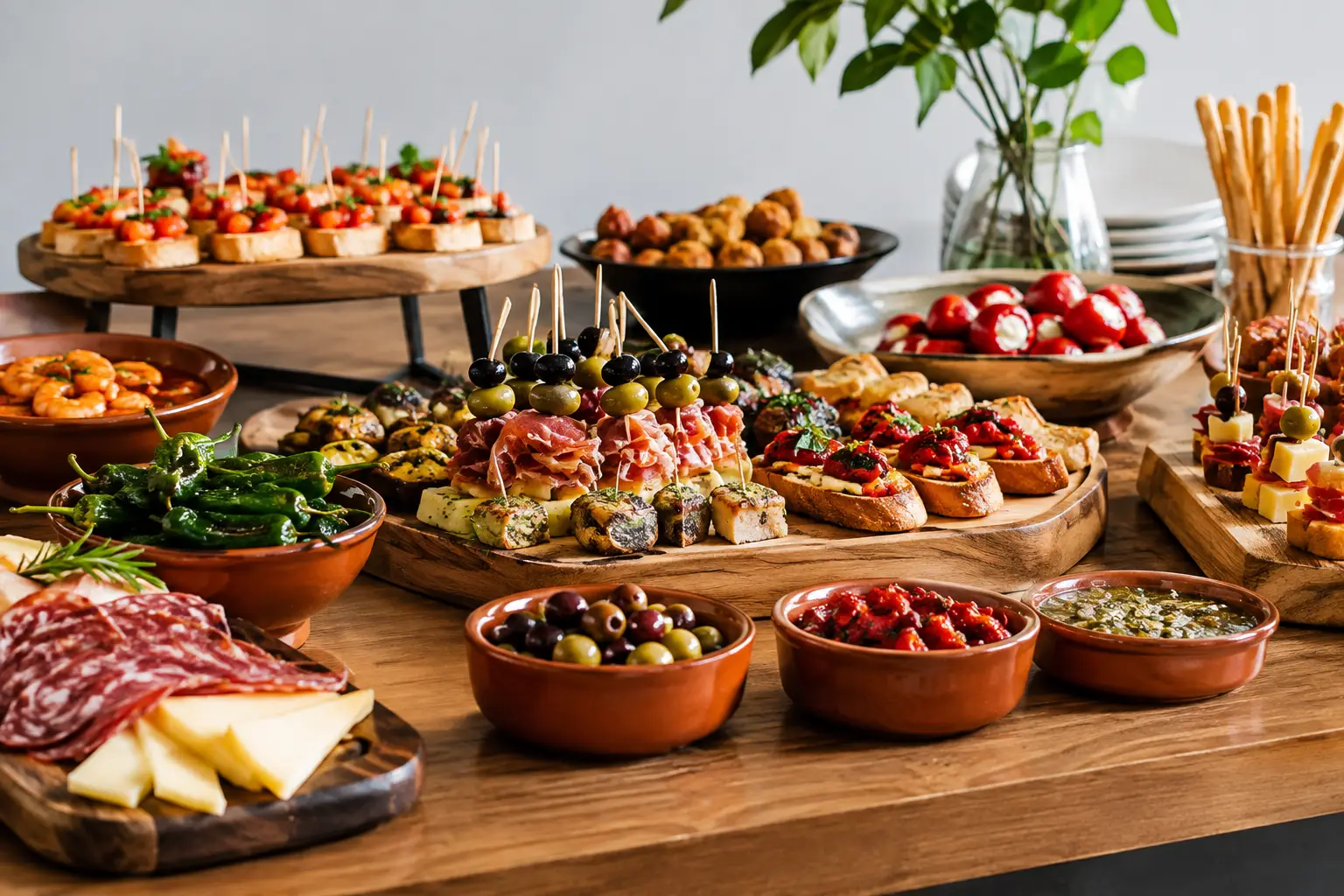
A great tapas buffet should feel like the party started before the first guest arrives. There is a platter of jamón catching the light, a bowl of olives ready for the first glass of wine, and warm croquetas appearing just as the room starts to buzz. That is how to arrange a tapas buffet with real Spanish spirit: not as a rigid dinner line, but as an invitation to gather, graze, sip, and come back for one more bite.
Tapas are made for movement. Guests should be able to build a small plate, talk with one hand free, and discover something new each time they circle back. The goal is abundance with intention, balancing colors, temperatures, textures, and a little bit of delicious surprise.
Start With the Guest Count and the Occasion
Before choosing dishes, decide whether your buffet is a light happy hour spread, a full dinner, or a late-night companion to cocktails. The amount of food changes dramatically. For a pre-dinner gathering, plan about five to seven bites per person. If tapas are the meal, aim for 10 to 14 bites per guest, plus bread and one more substantial dish such as paella, tortilla española, or a carved protein.
A two-hour cocktail party calls for food that can sit comfortably at room temperature, with a few hot dishes refreshed during the evening. A birthday dinner or game-day crowd can handle heartier plates and a more generous pace of service. Think about who is coming, too. A group of adventurous food lovers may happily reach for boquerones and patatas bravas. A mixed crowd often appreciates familiar anchors such as grilled chicken skewers, Spanish cheeses, crispy potatoes, and plenty of bread.
Build your menu around variety rather than trying to serve every Spanish classic at once. Eight to 10 choices create a generous buffet without turning the table into a traffic jam.
Build a Tapas Buffet Menu With Contrast
The most tempting spreads move between salty, creamy, crisp, smoky, bright, and rich. Start with a few cold bites that can be arranged before guests arrive. Marinated olives, manchego with membrillo, sliced jamón serrano, pan con tomate, and a simple citrusy salad all earn their place because they wake up the appetite without demanding last-minute attention.
Then add warm dishes in stages. Croquetas bring that crackly, creamy contrast. Gambas al ajillo bring aroma and theater, though they are best served in smaller batches so the shrimp stay sizzling rather than overcooked. Patatas bravas hold well and offer a satisfying, shareable base. Meatballs in a rich tomato sauce, chorizo in cider, or roasted mushrooms with garlic give the buffet depth for guests who want something more substantial.
Do not overlook vegetarian choices. A buffet feels more generous when everyone can make a plate without asking what they can eat. Roasted peppers, marinated artichokes, sautéed spinach, tortilla española, and grilled seasonal vegetables fit naturally into a Spanish spread.
If you are serving paella, let it be the centerpiece rather than one dish among too many. Bring it out later, when guests have enjoyed a first round of tapas and are ready to gather around the pan. A generous paella creates a moment, especially when it arrives fragrant with saffron, rice, and toasted edges.
A simple balance for 10 menu items
For a dinner buffet, aim for three cold selections, three warm vegetable or potato dishes, two seafood or meat dishes, bread and cheese, plus one hearty anchor such as paella or tortilla. This approach gives guests plenty of choice while keeping your prep realistic.
Be mindful of dishes that compete. Two creamy croquetas, a heavy cheese board, and a mayonnaise-based salad can make the table feel one-note. Pair richer bites with acidity: pickled vegetables, tomatoes, lemon, sherry vinegar, or a crisp green salad.
How to Arrange a Tapas Buffet for Easy Flow
A tapas buffet works best when it is arranged in the order people naturally build a plate. Put small plates, napkins, and forks at the beginning of the table. Set them out generously. Guests will return for seconds, and no one wants to interrupt a good conversation to hunt down a clean plate.
Begin with bread, olives, nuts, and cold tapas. These foods look inviting from the start and keep early arrivals happy. Follow with cheeses, cured meats, and salads. Place warm dishes toward the end of the buffet, where they can stay close to the kitchen or warming equipment. Put sauces beside the item they belong to, rather than grouping every sauce in one crowded corner.
Leave a little empty space between platters. The best-looking buffet is not the one with the most dishes jammed together. It is the one where guests can see each item, serve themselves comfortably, and notice the color of the food. Use boards, shallow bowls, ceramic dishes, and a few raised stands to vary the height. A low bowl of glossy olives beside a raised platter of jamón creates more visual energy than a flat row of matching serving trays.
Keep drinks off the food table whenever possible. A separate sangría and wine station prevents bottlenecks and protects the buffet from spills. Add water, ice, wine glasses, and cocktail napkins there, so guests can refresh their drinks without blocking someone reaching for croquetas.
Make labels part of the welcome
Small labels are a thoughtful touch, particularly for guests new to tapas. Write the dish name and a short description, such as “Patatas bravas – crispy potatoes with spicy tomato sauce.” Mark vegetarian, gluten-free, or nut-containing dishes clearly. It keeps the mood easy and gives guests confidence to try something unfamiliar.
Plan the Temperature, Not Just the Table
The difference between a good buffet and a memorable one is often temperature. Cold tapas should be chilled until close to serving, then set out in manageable portions. Warm food needs a refresh plan. Rather than putting every croqueta or shrimp dish on the table at once, hold back half and replenish it every 20 to 30 minutes.
Chafing dishes can be useful for saucy meatballs, potatoes, and rice, but they are not magic. Crispy foods soften in steam, and delicate seafood can dry out. Serve fried tapas on platters in smaller waves. If you have an oven, use it as your backstage partner, keeping batches warm and ready to replenish.
Place serving utensils in every dish. Tongs work beautifully for croquetas, skewers, and sliced bread; large spoons are better for saucy dishes; small forks help with olives and artichokes. This simple detail keeps hands out of shared food and the line moving.
Add Spanish Drinks Without Overcomplicating It
A bright pitcher of red sangría or white sangría belongs at a relaxed tapas party, but it should not be the only option. Offer Spanish red and white wine, sparkling water, still water, and a nonalcoholic drink with citrus or herbs. A chilled spritz with orange, sparkling water, and a splash of fruit juice gives nondrinkers something festive to hold.
Choose wines that welcome a range of flavors. A crisp Albariño-style white is lovely with seafood and salty snacks, while a medium-bodied tempranillo is at home beside chorizo, meatballs, and grilled vegetables. If the menu is especially rich, bubbles provide a refreshing reset between bites.
For a polished gathering without doing all the cooking yourself, Bulla Gastrobar catering can bring the shared-plate energy to a celebration while you focus on the guest list and the first toast.
Set the Mood, Then Let Guests Make It Their Own
Spanish dining has a rhythm. It is lively, generous, and never rushed. Use warm lighting, a playlist with movement, and enough seating for guests to rest between rounds without turning the evening into a formal sit-down dinner. A few standing-height surfaces help people gather with a drink and a small plate.
Do not put out dessert at the beginning. Bring it in later, after the savory dishes have had their moment. Churros with chocolate, flan, Basque-style cheesecake, or orange-almond cake gives the night a sweet second act. Offer coffee if the occasion runs late.
Most of all, resist the urge to perfect every minute. A tapas buffet is at its best when one platter empties, another arrives warm, and someone tells a friend they have to try the thing with the smoky sauce. Set out food with flavor and purpose, keep the glasses full, and give the conversation room to create its own stir.