


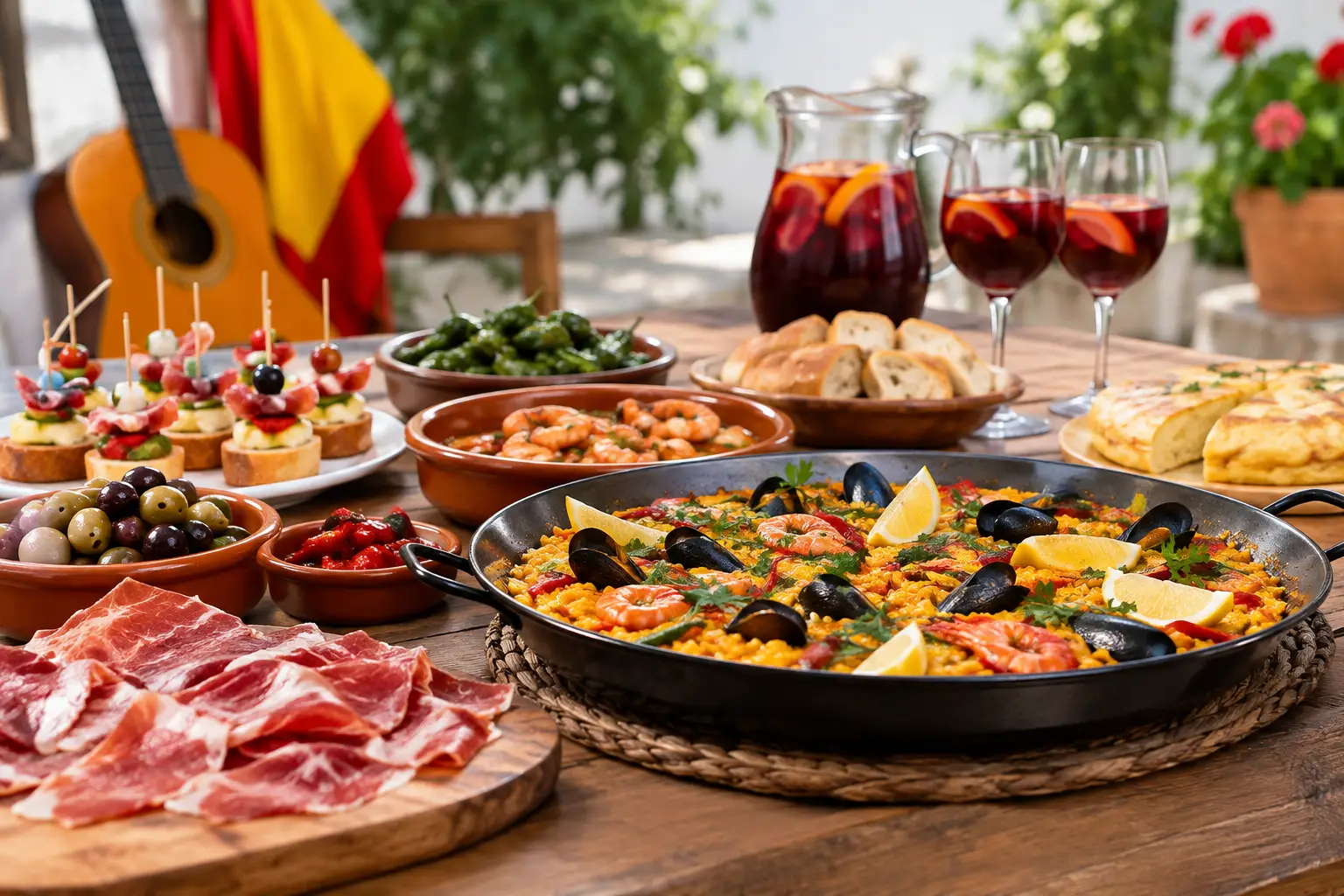
A good event should not begin with everyone standing politely around a tray of predictable appetizers. Spanish catering changes the rhythm from the first bite: warm croquetas passed across the table, bright tapas built for sharing, paella arriving with color and aroma, and a little more conversation in every corner of the room.
That is the pleasure of eating the Spanish way. Food is not simply a break in the agenda or a box to check before the toast. It is the reason people gather, linger, compare favorites, and create a stir together. For a client lunch, a family celebration, a team happy hour, or a wedding welcome party, the right menu makes the occasion feel generous without making it feel stiff.
What Makes Spanish Catering Feel Different
Spanish food is naturally social. Tapas are designed for the center of the table, where guests can taste a little of everything instead of committing to one oversized entrée. A spread might move from jamón and Spanish cheeses to patatas bravas, sizzling garlic shrimp, grilled vegetables, and crisp fried bites with a creamy center.
That variety matters when a guest list includes different appetites and comfort levels. Someone can start with familiar potatoes and chicken skewers, then try something new. A guest avoiding meat can build a satisfying plate from vegetables, cheeses, salads, and rice dishes. The meal feels abundant because there is movement, choice, and plenty to discuss.
Paella brings its own kind of occasion energy. It is a dish made to be seen before it is served, with rice, saffron, vegetables, seafood, chicken, or other proteins layered into one fragrant pan. For a smaller dinner, it can be the centerpiece. For a larger crowd, it can anchor a broader spread of tapas and desserts.
Spanish catering also leaves room for a proper toast. Sangría, Spanish wine, and cocktails can complement the menu when the venue and guest list call for it, while sparkling water, citrus-forward nonalcoholic drinks, and coffee keep the table welcoming for everyone. The goal is not to turn every event into a late night. It is to give the gathering a little buzz, in both senses of the word.
Build the Menu Around the Way Guests Will Gather
The best catering order starts with the occasion, not a fixed package. A working lunch has different needs than an anniversary dinner, and a reception where guests are circulating needs a different format than a seated team celebration.
For corporate lunches, keep it easy to enjoy
A business lunch works best when it feels polished but practical. Boxed lunches or individually portioned meals can keep a tight schedule on track, especially for training sessions, office meetings, and client presentations. For a more relaxed team meal, shared tapas and paella create an inviting break from the conference room without demanding a formal sit-down service.
Choose dishes that travel and hold well, and include clear labels for dietary needs. A mix of protein, vegetables, and satisfying sides helps guests stay energized rather than sleepy through the afternoon. If the meeting includes visitors, Spanish flavors offer something more memorable than another sandwich platter while still feeling approachable.
For celebrations, let the table do the talking
Birthdays, engagement parties, graduations, and family reunions benefit from a menu with layers. Begin with a few easy-to-share cold selections, add hot tapas as the room fills, then bring in paella or larger platters once everyone has settled in. Dessert can be a final sweet note instead of an afterthought.
This format gives the host breathing room. Guests can eat as they arrive, then keep sampling throughout the party. No one has to coordinate a single synchronized service moment, and the meal feels lively even when the guest list includes different generations, schedules, or dietary preferences.
For cocktail-style events, focus on bites with presence
A standing reception calls for food guests can enjoy without balancing a knife and fork while saying hello. Skewers, croquettes, stuffed peppers, crisp potatoes, charcuterie, cheeses, and seafood bites fit the moment beautifully. The ideal selection has contrast: something warm, something bright, something savory, something vegetarian, and something that feels indulgent.
For this kind of event, timing is everything. Do not send every item out at once. Staggering hot selections keeps the food fresh and gives guests a reason to stay curious. It also makes the room feel cared for, not merely fed.
How Much Food Should You Order?
This is where a little planning protects the party. The answer depends on the event length, the time of day, whether alcohol is being served, and whether the menu replaces a full meal. A late-afternoon gathering with cocktails typically needs more substantial food than a midmorning meeting. A two-hour reception can lean into tapas, while a four-hour celebration usually needs a filling centerpiece such as paella, rice dishes, or larger-format entrées.
It also depends on the group. A team of coworkers meeting between appointments may prefer a streamlined lunch. A friend group gathering for a milestone birthday may happily make an evening of it, ordering another round and circling back for the last croqueta. Ask guests to RSVP with dietary restrictions early, then plan enough variety so those guests are not limited to one side dish.
If you are uncertain, choose a little more range rather than simply more of one item. Five distinct tapas create a better shared-table experience than an oversized quantity of just two. Variety is part of the fun, but it should be intentional. A menu overloaded with rich fried dishes can feel heavy, while too many cold selections may not satisfy at dinner.
The Details That Keep the Fiesta Running Smoothly
Great food deserves a smart setup. Confirm the guest count a few days before the event, then share the final number with your caterer along with delivery timing, parking instructions, building access, and the name of the onsite contact. At an office, make sure there is enough table space for serving and that the room has plates, napkins, utensils, and beverages ready before the food arrives.
For home gatherings, think about flow. Place drinks away from the main food table so guests are not crowding one spot. Set small plates where people enter the serving area, and put napkins in more than one location. If you are serving paella, give it room to make an entrance. It is not just dinner. It is a conversation starter.
Dietary planning should be handled with the same care. Vegetarian, vegan, gluten-sensitive, dairy-free, and allergy-related requests are not interchangeable. Tell the catering team what guests need, ask how dishes are prepared, and label the final spread clearly. Spanish cuisine offers plenty of naturally appealing options, but ingredients and preparation methods still matter.
Budget deserves an honest look, too. A tapas-heavy menu can feel festive and flexible, but it may require more pieces per person for a dinner-length event. Paella often provides satisfying value for a group, though it may not suit every dietary mix. Premium ingredients such as seafood and cured meats bring instant wow factor, while vegetable-forward dishes can help balance both the menu and the spend. The strongest order is not necessarily the largest one. It is the one that fits the people in the room.
Bring Restaurant Energy to Your Next Gathering
Spanish catering works because it gives guests permission to participate. They pass a plate, recommend a favorite bite, reach for one more spoonful of rice, and stay at the table a little longer. That is a different experience from a standard catered meal, and it is exactly what makes an event memorable.
At Bulla Gastrobar, that social spirit is built into the menu, from chef-driven paellas and shareable tapas to Spanish wines and handcrafted sangrías. Whether you are planning boxed lunches for the office or a full spread for a celebration, choose food that matches the energy you want in the room.
Set the table with variety, leave space for seconds, and let the first plate passed around be the start of a very good conversation.