


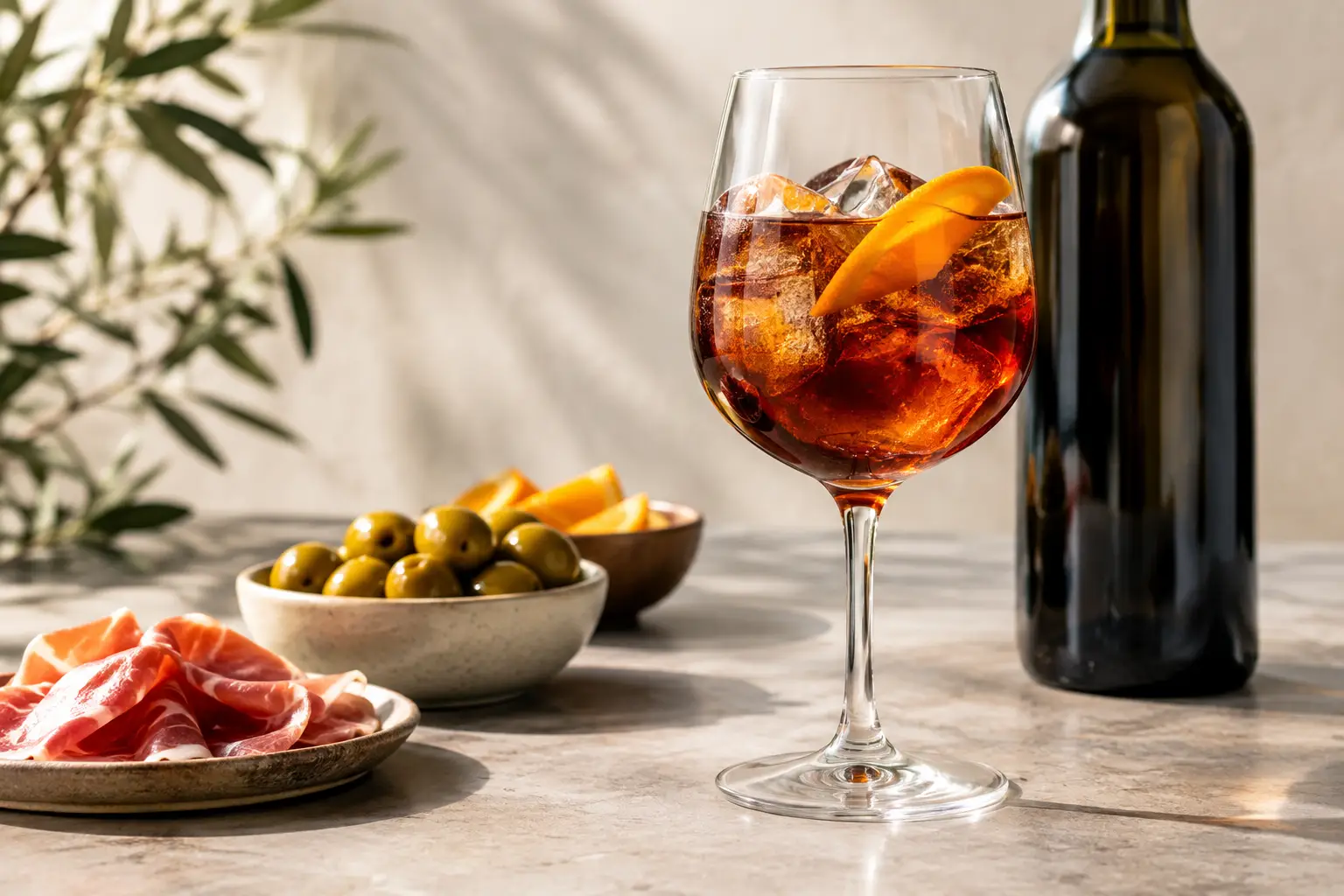
At a Spanish bar, the best first order may not be a cocktail at all. It may be a small glass of chilled vermouth over ice, glowing amber or ruby beneath an orange peel, with an olive perched on top. So, what is Spanish vermouth? It is a fortified, aromatized wine – fragrant with botanicals, lightly bitter, gently sweet, and made for stimulating the appetite before the first tapa reaches the table.
In Spain, vermouth is not a dusty bottle reserved for a single classic cocktail. It is a ritual. Friends meet for la hora del vermut, the vermouth hour, usually before lunch or dinner, when the table starts to fill with salty snacks, bright conversation, and the happy anticipation of a long meal.
What Is Spanish Vermouth, Exactly?
Spanish vermouth begins with wine, usually white wine, that is fortified with a neutral spirit and infused with a proprietary blend of herbs, roots, spices, flowers, and citrus peels. Wormwood is traditionally part of the mix, and it gives vermouth its signature bitter edge. Producers may also use ingredients such as cinnamon, clove, vanilla, chamomile, rosemary, gentian, cardamom, or orange peel.
The result is more complex than a standard glass of wine but generally lower in alcohol than a full-strength spirit. Most Spanish vermouths land around 15% to 18% ABV, which makes them an easy, sociable start to an afternoon or evening rather than a drink that takes over the occasion.
Every producer guards its botanical recipe closely, so no two bottles taste exactly alike. One may lead with dried orange, baking spice, and vanilla. Another may be brisk and herbal, with a savory bitterness that calls for an anchovy, an olive, or a crisp potato chip. That range is part of the fun: Spanish vermouth rewards curiosity without asking anyone at the table to become a cocktail expert.
Why Spanish Vermouth Tastes Different
Vermouth is made in several countries, and Italian and French styles are rightly celebrated. Spanish vermouth, however, has developed a personality all its own. Many versions are round, aromatic, and bittersweet, with a generous wine character beneath the botanicals. They often feel designed not just for mixing, but for sipping slowly with food.
Aging can shape the flavor, too. Some Spanish producers rest vermouth in wooden barrels, which can bring notes of caramel, dried fruit, toasted spice, and a soft oxidative richness. Others keep the style fresher and more citrus-driven. There is no single flavor profile that defines every Spanish bottle, but balance is the point: sweetness should soften the bitterness, while acidity and herbal lift keep each sip lively.
That balance makes vermouth especially friendly for guests who think they do not like bitter drinks. A dry martini may feel sharp; an amaro may feel intense. Spanish vermouth often sits comfortably in the middle, offering enough intrigue for serious drinkers and enough fruit, spice, and sweetness for an easy first sip.
Red, White, and Rosé Styles
Red vermouth, often called rojo or rosso, is the style many people picture first. Its deep mahogany or ruby color usually comes from caramel, and its flavors can lean toward cola spice, dark fruit, citrus peel, vanilla, and warm herbs. It is the classic choice for serving on the rocks with an orange slice and olive.
White vermouth, or blanco, tends to be paler, brighter, and sometimes a touch more floral. Depending on the bottle, it can be dry and crisp or noticeably sweet, with lemon, herbs, and gentle spice. It works beautifully with lighter seafood tapas and can bring a refreshing contrast to salty cured ham.
Rosé vermouth is a newer but increasingly welcome player at the bar. It often shows red berry fruit, soft florals, and a fresh finish. If red vermouth feels too rich and white feels too sharp, rosé can be a cheerful middle ground for warm-weather sipping.
The Spanish Vermouth Ritual
The traditional serve is wonderfully uncomplicated: vermouth over ice, garnished with an orange or lemon twist and an olive. A splash of sparkling water or soda is common, especially when the sun is out and the conversation is likely to stretch. The garnish is not decoration alone. Citrus wakes up the aromatics, while the olive brings a briny contrast that makes the next sip more compelling.
In parts of Spain, you may see vermouth poured from the tap. Known as vermut de grifo, it is a bar ritual with its own pull: chilled, freshly poured, and served alongside a plate of olives, conservas, or potato chips. The setting matters. Vermouth tastes best when it creates a pause between the rush of the day and the pleasure of the meal ahead.
This is also why it belongs so naturally in a tapas setting. Spanish dining is built for tasting, passing, comparing, and ordering one more thing for the table. Vermouth does the same job in the glass. Its bitterness sharpens the appetite, its sweetness softens salt and spice, and its wine base keeps it at home beside a broad range of flavors.
What to Eat With Spanish Vermouth
Start with salty, savory bites. Marinated olives, roasted almonds, potato chips, anchovies, boquerones, and jamón are all natural partners. Salt heightens vermouth’s fruit and spice, while its bitter edge clears the palate between bites.
For a fuller tapas spread, red vermouth has enough depth for croquetas, chorizo, patatas bravas, and grilled mushrooms. Its caramelized and herbal notes can stand up to smoky paprika and richer fried flavors. White vermouth is a bright match for gambas al ajillo, fried calamari, oysters, ceviche-style preparations, and goat cheese.
The pairing does depend on the bottle. A sweeter red vermouth can be wonderful with blue cheese or a dessert built around citrus and almonds, while a drier, more bitter example may be better with seafood and preserved fish. The easiest approach is also the most Spanish: order a few shareable plates, pour a chilled glass, and let the table tell you what works.
At Bulla Gastrobar, that spirit fits right in. A vermouth aperitif can set the pace for a tapas feast, giving the table something to sip while dishes arrive as they are prepared and new favorites begin to circulate.
How to Serve Spanish Vermouth at Home
Treat an opened bottle of vermouth like wine, not like a shelf-stable liquor. Refrigerate it after opening and enjoy it within a few weeks for its freshest aromatics. It will not suddenly become unsafe after that point, but oxygen gradually dulls the citrus, herbs, and wine character that make it exciting.
Use a short tumbler or a wine glass, plenty of ice, and a simple garnish. An orange slice is a reliable choice for red vermouth; lemon peel works especially well with white; a green olive adds classic Spanish-bar character to either. If you prefer a lighter drink, top it with a small splash of chilled soda water rather than burying it under mixers.
Spanish vermouth also earns a place in cocktails. It can make a Negroni-style drink softer and more aromatic, add complexity to a spritz, or replace part of the wine in a sangría-inspired pitcher. Still, taste it on its own first. That is the best way to understand the bottle’s balance before asking it to share the spotlight.
A Better Way to Begin the Meal
Spanish vermouth is an aperitif, but calling it only that undersells the experience. It is a reason to gather early, order something salty, and let dinner become an occasion before the main course even arrives. Next time the table is deciding what to sip first, create a little stir with vermouth, ice, citrus, and a plate meant for passing.