

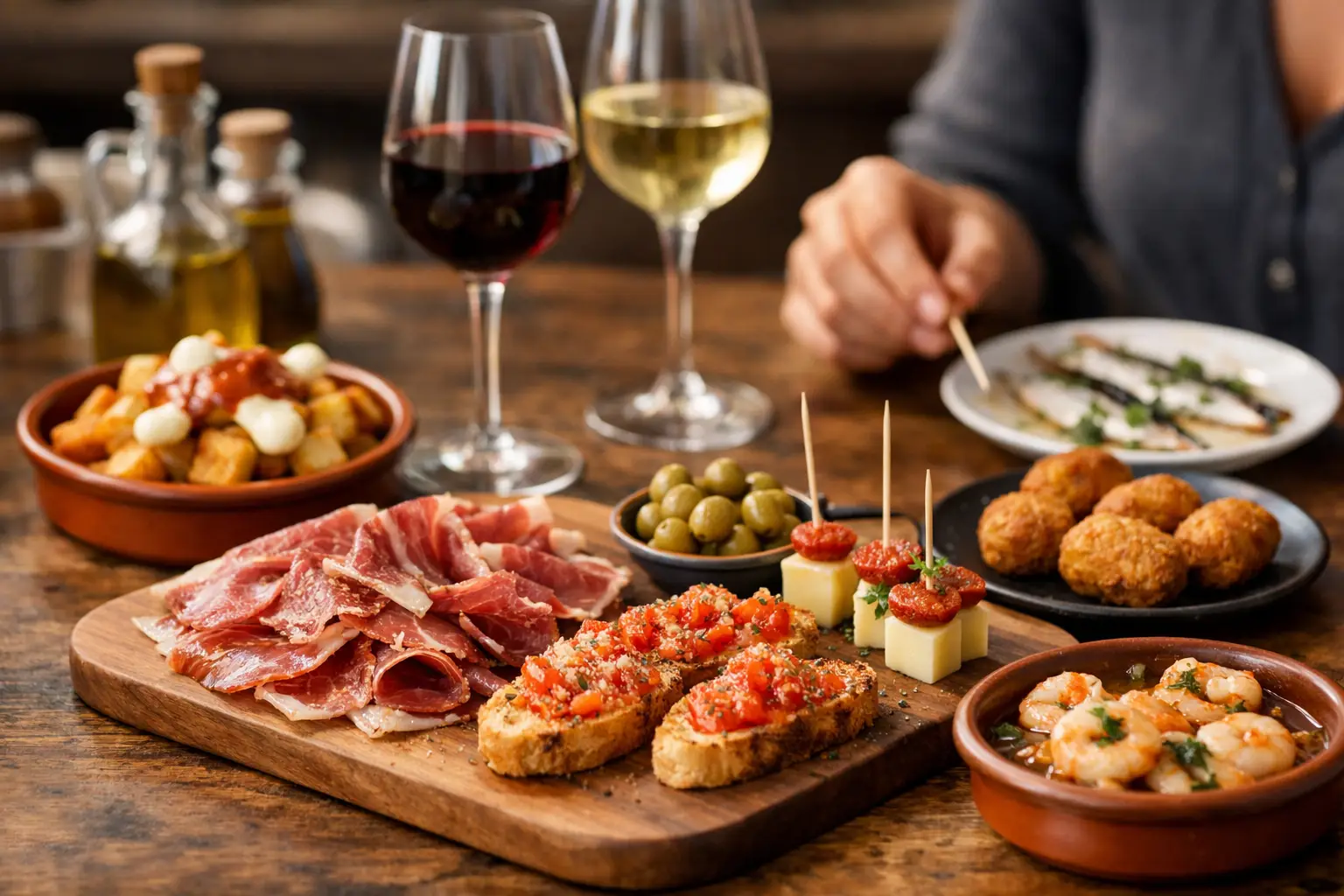
The first plate lands at the table sizzling with garlic. A second brings crisp croquettes with a creamy center. Someone reaches for the patatas bravas, someone else orders another round of sangría, and suddenly dinner has become the best kind of group conversation. So, are tapas good for dinner? Absolutely – provided you treat them as a meal to build together, not just a few snacks before the main event.
Tapas are made for the nights when one entrée feels too limiting. They offer contrast, surprise, and plenty to talk about between bites. A well-chosen table of Spanish small plates can be as satisfying as any traditional dinner, with more room for everyone to follow their appetite.
Are Tapas Good for Dinner When You Want a Full Meal?
Yes. The misconception is that tapas are too small to count as dinner. Individual plates may be petite, but the experience is cumulative. A few cold bites wake up the palate, warm dishes bring richness, vegetables add balance, and a larger shareable dish such as paella gives the table a hearty center.
The key is pacing. Tapas are not meant to arrive in a single, crowded sweep. In Spain, and in a proper tapas-style meal, dishes come out as they are ready. That gives the table a natural rhythm: taste, pass, sip, react, and decide what sounds good next. Dinner feels less like a fixed order and more like an unfolding evening.
This format works especially well for couples, friend groups, and families with mixed cravings. One person may want seafood, another may be ready for jamón, while someone else is looking for a vegetable-forward plate. Instead of negotiating one compromise dish, everyone gets a little of what they came for.
That said, tapas dinner is not automatic. If you order only cheese, olives, and one fried plate for four hungry people, the table will be hungry again before the check arrives. The answer is not to abandon tapas. It is to order with enough variety and substance.
How to Order Tapas for a Satisfying Dinner
Start with your group size, your hunger level, and whether the table wants a light, lingering meal or a full evening feast. For two people, three to five plates can create a satisfying dinner, depending on the dishes. For a group, the order should grow in rounds, leaving room to add another plate after the first few arrive.
A balanced tapas dinner usually has a fresh element, a vegetable dish, a comforting fried or roasted bite, and one or two more substantial choices. Paella, grilled meats, seafood, or a larger rice dish can anchor the meal when everyone arrives hungry. This mix keeps the table from feeling overly rich or overly snack-like.
Think about texture as much as protein. Pair a bright tomato-based bite with something creamy. Follow crisp potatoes with tender octopus or grilled vegetables. Add warm bread or a rice dish when the meal needs more staying power. The best tapas spreads move from salty to smoky, crunchy to soft, bright to indulgent.
If you are ordering for a group, avoid making every choice a vote. Pick a few crowd-pleasers first, then let the next round reflect the table’s mood. A shared dinner should create a stir, not turn into a committee meeting.
Let Paella Set the Pace
Paella is often the difference between a fun tasting and a full dinner. It brings the satisfying weight of rice, a deeply savory base, and a centerpiece that invites everyone to lean in. Whether it is filled with seafood, chicken, vegetables, or a combination of flavors, paella gives tapas a sense of occasion.
It also solves a practical problem: not every guest wants to rely on fried bites or cured meats to feel full. A rice dish adds substance while preserving the social, shareable spirit of the table. Order tapas around it, rather than treating it as an afterthought, and the whole meal feels more complete.
At Bulla Gastrobar, that rhythm is part of the point. Small plates arrive ready to share, while chef-driven paella gives the table a reason to slow down, pour another glass, and make a night of it.
Why Tapas Make Dinner More Social
An entrée-centered dinner can be lovely, but it often keeps everyone in their own lane. You choose your plate, I choose mine, and the conversation fills the space between. Tapas change the setup. The food sits in the middle, and the meal becomes collaborative from the first order to the final bite.
Passing plates creates easy conversation. Someone notices the smoky paprika on the potatoes. Someone else insists that the next round include another order of croquettes. Even guests who do not know each other well have a natural opening: try this, taste that, save me one.
That makes tapas a strong choice for date nights, birthdays, after-work gatherings, and business dinners that should feel polished without becoming stiff. It is elevated dining with less pressure. You can linger over Spanish wine, bring in a cocktail or sangría, and keep the energy moving without rushing through a three-course structure.
There is a trade-off, of course. Tapas are not ideal for every occasion. If you are short on time, feeding a very hungry crowd, or trying to keep the bill tightly predictable, a traditional entrée may be simpler. Tapas reward curiosity and a little flexibility. The value is in trying more flavors, sharing more freely, and staying present at the table.
Tapas Dinner Tips for First-Timers
If tapas are new to you, resist the urge to order one plate per person and call it done. The whole pleasure is in sharing. Begin with a few familiar choices, then add one or two dishes that feel distinctly Spanish or outside your usual order.
Ask about portion sizes and which dishes are especially filling. Servers can help you build a spread that matches your party, whether you are looking for a lighter dinner before a show or a full table for a celebration. It is also smart to order in waves. Start with several plates, see what disappears first, then keep the favorites coming.
Drinks can shape the meal, too. A crisp Spanish white can brighten seafood and vegetables, while a bold red has enough presence for grilled meats and richer plates. Sangría brings fruit-forward refreshment and a festive pour for the table. There is no single right pairing – the best choice is the one that keeps the conversation buzzing.
For dietary needs, tapas can be especially welcoming because the variety gives guests options. Vegetarian diners can build a colorful meal from vegetables, potatoes, cheeses, and rice, while seafood and meat lovers can add their own favorites. Just communicate allergies clearly, since shared plates mean foods and serving utensils may be close together.
The Best Dinner Is One You Want to Keep Talking About
Tapas work for dinner because they make room for appetite, personality, and spontaneity. You can keep it casual with a few plates and a drink, or turn it into a long, flavor-packed meal anchored by paella. Either way, the table has more to discover than a single plate can offer.
The next time dinner calls for more than the usual order-and-eat routine, gather a few people, choose a mix of hot and cold plates, and leave room for one more dish. The best tapas dinners do not end when everyone is full. They end when no one is quite ready to leave the table.