

A great tapas table should feel generous, not limiting. Gluten free Spanish tapas can bring the same crackle of conversation, bright olive oil, smoky paprika, chilled wine, and plates passed from hand to hand – provided you know which dishes to ask about and how they are prepared.
Spanish food is full of naturally gluten-free possibilities, from simply grilled seafood to tender potatoes, aged cheese, and vegetables that arrive sizzling with garlic. The key is not settling for a side dish when you could build a full, colorful spread made for staying awhile.
Why Spanish Tapas Work So Well Without Gluten
Tapas are built around ingredients with plenty to say on their own. Think briny olives, jamón, Manchego, roasted peppers, marinated seafood, eggs, potatoes, and market vegetables. Many classic recipes rely on olive oil, garlic, herbs, vinegar, saffron, and paprika rather than flour-heavy sauces.
That does not mean every Spanish small plate is automatically safe for a gluten-free guest. Bread is a fixture of Spanish dining, and flour can appear in fried foods, croquettes, sauces, meatballs, and certain marinades. A tapas meal is at its best when everyone at the table orders with a little intention, then shares freely once the right dishes are confirmed.
The happy trade-off is variety. Instead of ordering one entree and hoping it works, a group can mix a table of vegetable dishes, seafood, meat, and rice, creating an evening that feels abundant from the first pour to the last bite.
Gluten Free Spanish Tapas to Put on the Table
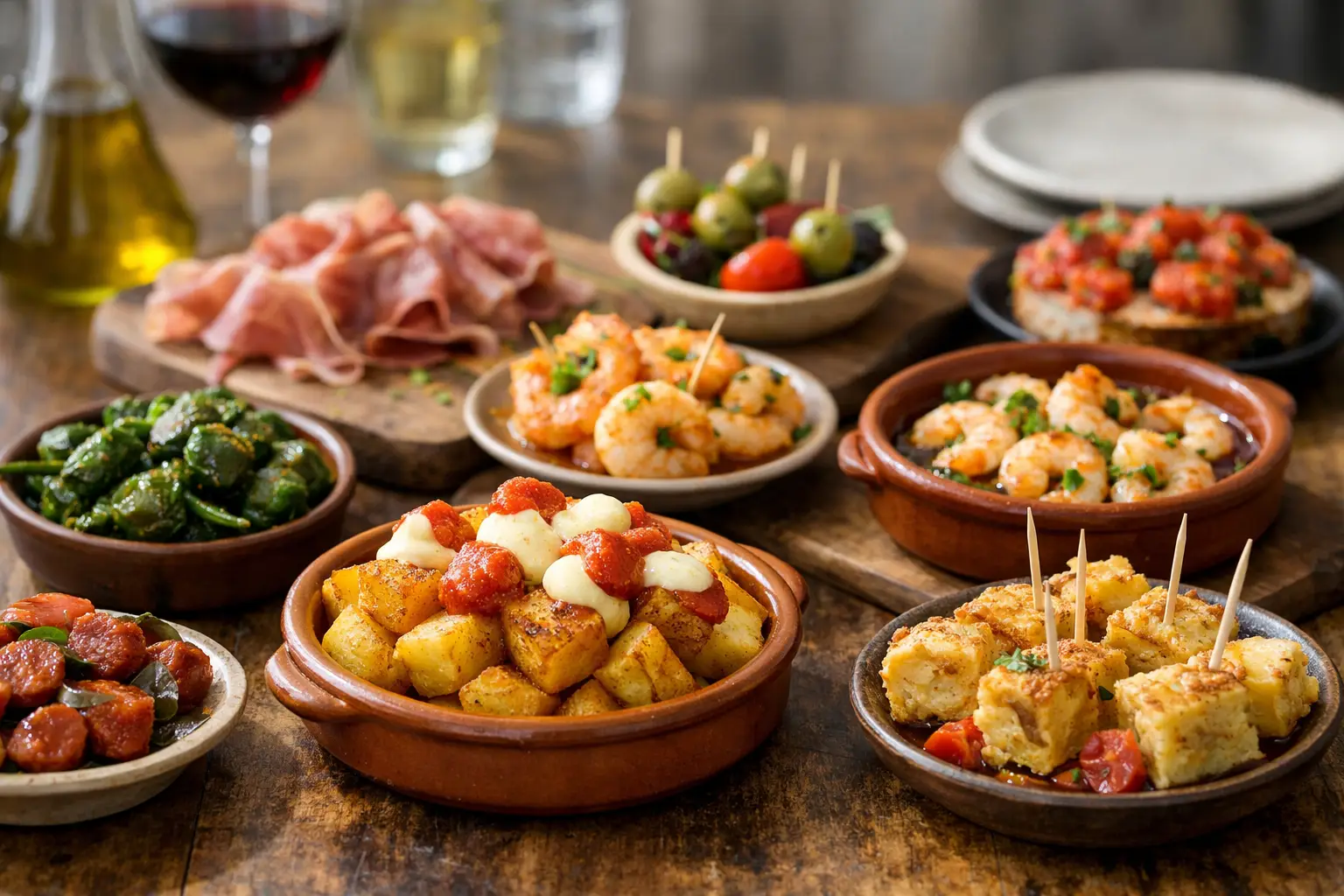
Start with the classics that celebrate simple Spanish ingredients. Marinated olives are an easy opening act, especially alongside a plate of aged cheese and cured ham. Ask whether any seasonings, accompaniments, or shared prep surfaces introduce gluten, but these dishes are often a natural fit.
Tortilla Española, the beloved Spanish potato omelet, is another tapas-table favorite. At its most traditional, it is made with eggs, potatoes, onion, and olive oil. Its rich, comforting texture makes it a smart choice when others at the table are ordering bread-based dishes you need to skip.
Seafood brings plenty of energy to the spread. Gambas al ajillo, or shrimp cooked in garlic and olive oil, arrives hot, fragrant, and ready for its close-up. Grilled octopus, seared scallops, and simply prepared fish can also be excellent choices, though it is always worth asking about marinades, sauces, and grill cross-contact.
For a little smoke and color, look for blistered shishito peppers, roasted vegetables, mushrooms sautéed with garlic, or grilled asparagus. These plates bring contrast to richer meats and rice dishes, and they make the table feel like a proper feast rather than a restricted order.
Potatoes deserve their own moment. Patatas bravas may be gluten free, but the answer depends on the fryer and the sauces. Some kitchens use a dedicated fryer; others fry croquettes, calamari, or other breaded items in the same oil. A bravas sauce may also be thickened or contain ingredients that require verification. Ask first, then enjoy every crisp, spicy bite with confidence.
Paella Can Be a Showstopper, With a Quick Check
Paella is one of Spain’s most celebratory dishes: rice toasted at the bottom of the pan, saffron perfume in the air, and a center-of-the-table arrival that creates an instant stir. Rice itself is naturally gluten free, so seafood, chicken, vegetable, or mixed paellas can be a wonderful option.
Still, paella recipes vary. Stock bases, seasoning blends, chorizo, and preparation surfaces can change from kitchen to kitchen. If you have celiac disease or a high sensitivity, ask the restaurant to confirm the ingredients and cross-contact practices before ordering. That short conversation can turn a hopeful choice into a relaxed one.
At Bulla Gastrobar, the spirit of paella and tapas is communal: plates arrive as they are ready, inviting the table to taste, compare, and order one more round. For gluten-free diners, letting the server know at the start helps the kitchen guide the experience and keeps the shared meal feeling easy.
What to Ask Before You Order
A clear, specific request helps restaurant teams help you. Rather than asking only, “What is gluten free?” try explaining your needs and asking about the preparation of the dishes you are considering.
For example, ask whether a sauce contains flour, whether fried items use a dedicated fryer, and whether the grill or cooking surface is shared with breaded foods. If you are ordering a cheese or charcuterie board, ask for it without bread and confirm that it can be plated separately from crackers or crostini.
There is a meaningful difference between avoiding gluten by preference and needing strict protection from cross-contact due to celiac disease or an allergy-related medical concern. Share that distinction with your server. A thoughtful restaurant can then advise on what is possible that day, since ingredients and kitchen procedures may vary by location or service.
Build a Tapas Table Everyone Can Share
The best gluten-free order does not announce itself as a compromise. It simply feels like a great night out. Begin with olives, cheese, and a vegetable plate. Add a potato dish if its preparation checks out, then bring in garlic shrimp or grilled seafood for heat and drama. Finish the savory round with a confirmed gluten-free paella or another rice-based dish.
If friends want bread, croquettes, or fried calamari, keep those plates on one side of the table and use separate serving utensils where possible. It is a small move that matters, particularly for guests who must avoid even trace exposure. Shared dining should feel social, not stressful.
Drinks can add to the occasion without complicating it. Spanish wine, sangría made with verified ingredients, cava, and many classic cocktails are often natural companions, but flavored mixers, garnishes, and beer should be checked when necessary. A dry Spanish red with smoky grilled meats, or a glass of cava beside shrimp and salty olives, makes the whole table hum.
A Few Tapas to Approach With Care
Some Spanish favorites need more than a glance at the menu. Croquetas are traditionally coated and fried, so they usually contain gluten. Albóndigas, or meatballs, may include breadcrumbs or flour in the mixture or sauce. Calamari and other fried seafood are often breaded, while empanadas and pastries are made with wheat-based dough.
Romesco sauce can be another surprise. It often includes nuts, peppers, tomatoes, garlic, and olive oil, but some versions use bread to create body. Even a dish that appears vegetable-forward can have a sauce that changes the answer.
None of this means those dishes are forever off the table. Some restaurants make gluten-free versions or can offer alternatives. It simply means the best order starts with curiosity, not assumptions.
Make the Meal Feel Like a Celebration
Gluten free Spanish tapas are not about removing the fun from a night out. They are about choosing dishes with bold flavor, asking the right questions, and giving everyone at the table something worth reaching for. Spanish dining has always made room for lingering, sharing, and a little joyful excess.
Arrive hungry, tell your server what you need, and let the table build itself around sizzling seafood, golden potatoes, bright vegetables, and a paella worth gathering around. That is how a gluten-free meal becomes the reason everyone wants to make another reservation.