

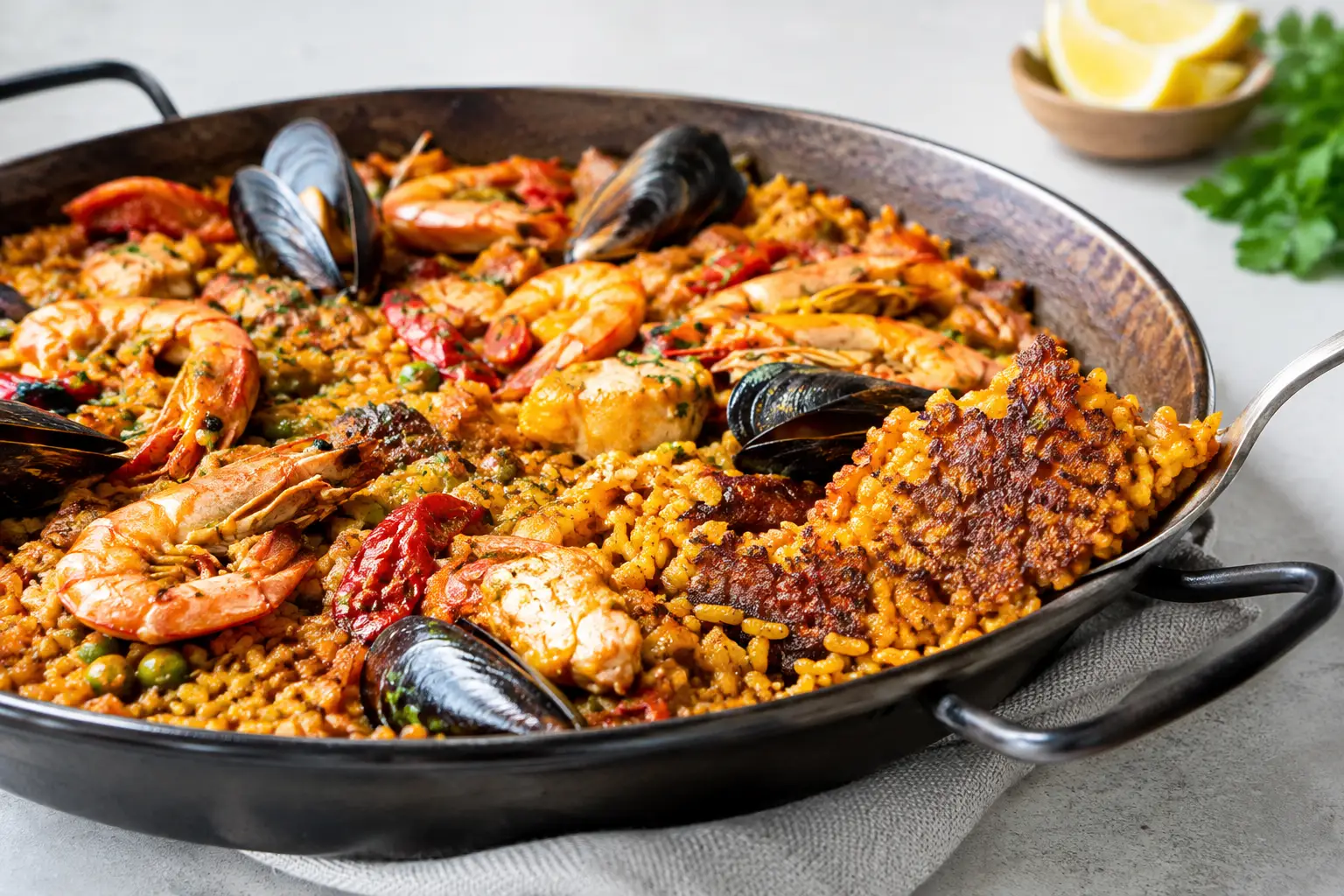
The room goes quiet for a second when the paella pan reaches the table. Then comes the first spoonful from the bottom: rice that is golden, toasty, and just crisp enough to crackle between your teeth. That prized layer is the answer to what makes paella socarrat – and it is one of the most thrilling moments in Spanish cooking.
Socarrat is not burnt rice. It is not an afterthought, either. It is the carefully developed crust that forms where seasoned rice meets the hot base of a paella pan near the end of cooking. Done well, it brings a deep roasted aroma, a hint of caramelized flavor, and a textural contrast to the tender rice above it. Done poorly, it tastes acrid, dry, and bitter. The difference comes down to technique, timing, and the confidence to let the pan do its work.
What Makes Paella Socarrat? Heat Meets Restraint
The word socarrat comes from a Valencian term meaning lightly scorched. That description matters. The goal is not to blacken the bottom of the pan. The goal is to create a thin, bronzed layer of rice that clings together slightly, releases a nutty fragrance, and adds a gentle crunch.
Paella begins with rice absorbing a flavorful broth, often built around sofrito, saffron, paprika, vegetables, seafood, meat, or a combination dictated by the style of paella. As the liquid disappears, the rice continues to cook in the pan’s remaining heat. At that point, the grains touching the bottom begin to toast in the olive oil and concentrated cooking juices.
That final stage is where restraint enters the picture. Stirring is useful for creamy rice dishes, but paella is meant to cook undisturbed once the rice and broth are distributed. Leave it alone, and the rice can settle into an even layer. Keep moving it around, and the pan loses its chance to build socarrat.
The Pan Is Part of the Recipe
A traditional paella pan is wide, shallow, and designed to expose a large surface area of rice to heat. Its shape is not merely a nice visual for the table. It helps the broth reduce evenly and gives more rice the opportunity to make contact with the bottom of the pan.
A deep pot can produce delicious Spanish-style rice, but it will not deliver the same ratio of tender rice to crisp bottom layer. For socarrat, a broad pan matters. So does matching the pan size to the amount of rice. An oversized pan can dry out the rice before it cooks. An overcrowded one can steam the grains and make it difficult to develop that concentrated base.
At a restaurant, the burner setup also plays a role. Wide, steady heat is easier to control than one intense hot spot. At home, a large burner may not cover the entire pan, especially if you are cooking for a crowd. You can rotate the pan gently as it cooks to encourage even heat, but avoid shaking or stirring the rice itself.
Rice Variety Sets the Foundation
Not every grain behaves like paella rice. Short-grain Spanish varieties such as bomba or Calasparra are valued because they absorb flavor while holding their shape. They take in broth without turning mushy, making them especially well suited to the dry, distinct texture associated with paella.
Can you make a respectable paella with other short-grain rice? Sometimes, yes. But different varieties absorb liquid at different rates, so the broth ratio and cooking time may need adjustment. Long-grain rice is usually a less convincing choice because it does not absorb the savory base in the same way and can leave the finished dish feeling separate rather than integrated.
Good socarrat depends on rice that is nearly cooked through before the bottom layer starts to toast. If the heat goes up too early, the base can burn while the rice above remains firm and underdone.
Flavor Before the Crunch
Socarrat tastes best when there is something worth concentrating. That starts with the cooking base: olive oil, aromatics, tomatoes, peppers, garlic, saffron, paprika, and whatever else belongs to the particular paella being made. These ingredients leave flavorful traces in the pan as the rice cooks.
The broth matters just as much. It should be well seasoned and warm when it meets the rice, whether it is a seafood stock, chicken stock, vegetable broth, or a more specialized house preparation. Once the rice is spread, the flavors settle together as the liquid reduces. By the time socarrat forms, the pan holds the essence of the entire dish.
This is why plain, underseasoned rice cannot be rescued by a crisp crust. Socarrat is a finishing note, not a cover-up. A great one tastes like the paella turned up a notch: savory, lightly smoky, and full of the ingredients that brought the pan to life.
When to Build Socarrat
The most common question is when to increase the heat. There is no exact minute because burners, pan materials, rice varieties, and batch sizes all vary. Instead, watch for the signs: most of the liquid has been absorbed, the rice is close to tender, and the sound from the pan shifts from a gentle simmer to a sharper, more active sizzle.
At this stage, raise the heat modestly for a brief period. You may smell toastiness and hear a faint crackle. That is promising. If the aroma turns harsh or smoky, pull the pan from the heat immediately. It is better to create a subtle socarrat than to chase a darker crust and lose the whole dish to bitterness.
A short resting period after cooking is also useful. Covering the pan loosely or letting it sit for several minutes allows the rice to finish settling. It gives guests a moment to gather around, pour a glass of sangría, and admire the pan before serving begins.
The Biggest Socarrat Mistakes
The first mistake is stirring after the broth goes in. Paella is not risotto. Once the rice is arranged, let it remain in place.
The second is using too much liquid. Excess broth can leave the rice soft and prevent the pan from reaching the dry, concentrated stage required for a crust. The third is turning the heat high too soon. That creates char before flavor has had time to develop.
Finally, do not confuse a dark pan with success. A little color on the rice is desirable. A blackened, bitter layer is not. True socarrat has warmth and depth, not the taste of a forgotten skillet.
Why Everyone Reaches for the Bottom
Paella is built for sharing, and socarrat makes that communal instinct even stronger. When a pan lands in the center of the table, guests naturally lean in, compare their favorite bites, and make sure nobody misses the crispy edge. It turns serving into part of the occasion.
That is the joy behind chef-driven paella at Bulla Gastrobar: a dish meant to create a stir, linger over conversation, and reward the table with more than one texture in every serving. The crisp rice at the bottom is not a secret bonus. It is part of the experience people remember.
Next time paella arrives, do not stop at the top layer. Let your spoon travel to the bottom of the pan, listen for that gentle scrape, and claim a bite of the golden rice that makes the whole table buzz.