

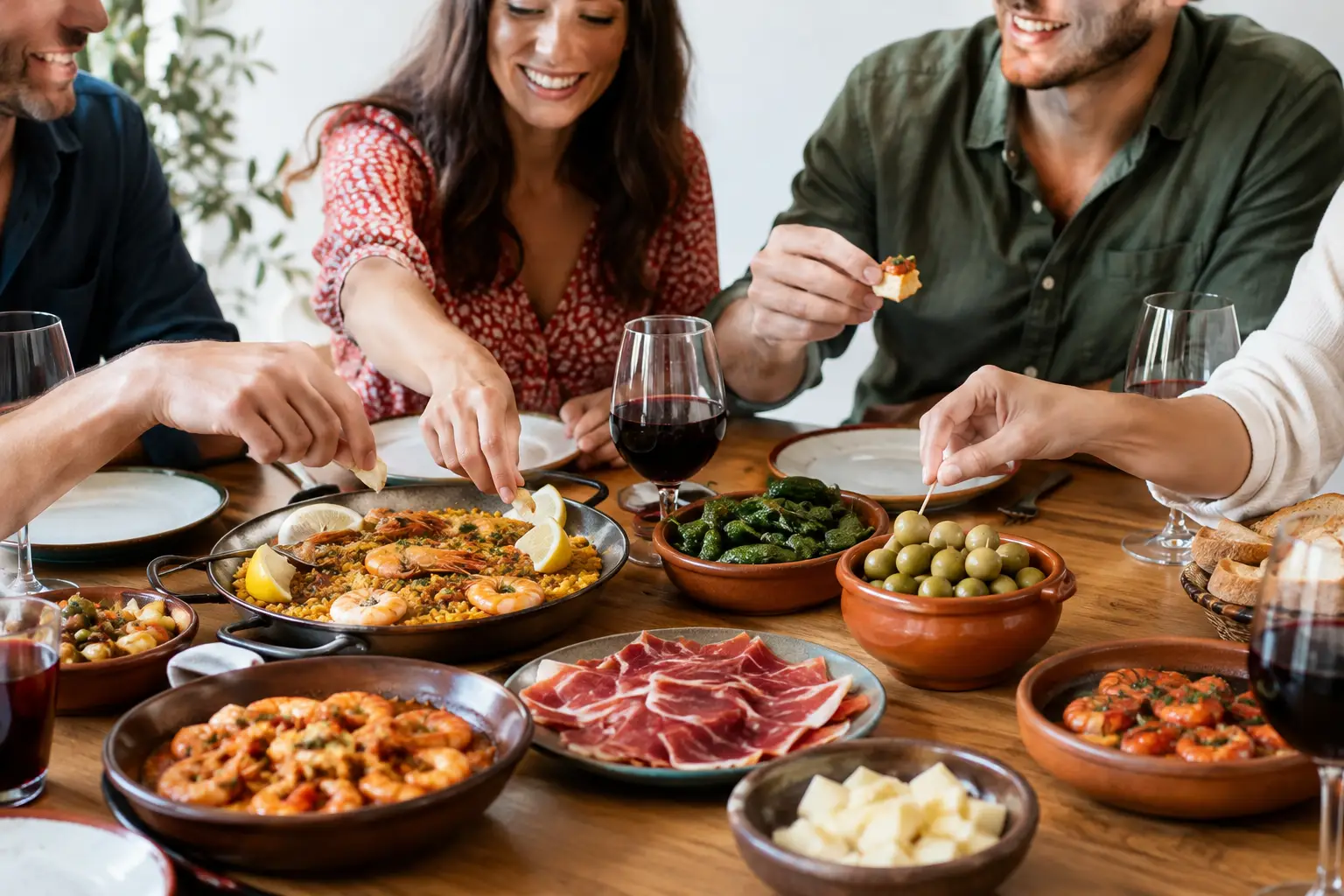
The first rule of Spanish food culture is simple: do not rush the table. A Spanish meal is rarely just fuel between appointments. It is a reason to gather, order another round, pass a plate, and let the conversation get as lively as the room. From a quick pre-dinner bite at the bar to a paella made for a crowd, the real magic is in the shared experience.
That spirit is what makes Spanish dining feel so electric for date nights, birthday tables, after-work drinks, and family lunches alike. There is always room for one more taste, one more story, and, quite often, one more glass of sangría.
Spanish Food Culture Starts at the Table
Spain is a country of distinct regions, ingredients, and culinary traditions, so there is no single Spanish menu that tells the entire story. The smoky paprika and pork traditions of western Spain, the seafood-forward cooking along the coasts, the rice dishes of Valencia, and the pintxos bars of the Basque Country all bring something different to the table.
What connects them is the way food invites participation. Plates are meant to move. A fork reaches across the table. Someone insists you try the croqueta before it disappears. The meal builds course by course rather than arriving in one fixed, individual portion.
This is why tapas are often misunderstood in the United States. Tapas are not simply tiny appetizers. In Spain, they can be a snack with a drink, a few bites before dinner, or a full evening of ordering, sharing, and grazing with friends. The size, style, and custom can vary by city and bar. What stays consistent is the social rhythm.
Tapas: Small Plates, Big Energy
A great tapas meal balances familiar comforts with a little surprise. You might start with warm marinated olives, crisp patatas bravas, and jamón sliced thin enough to melt on the tongue. Then come the richer plates: creamy croquetas, sizzling garlic shrimp, grilled vegetables, or tender meatballs in a deeply savory sauce.
The best approach is to order in waves. Begin with two or three plates for the table, then add more as everyone finds their appetite. This keeps the meal feeling spontaneous and makes room for dishes that arrive hot from the kitchen, ready for their moment.
There is also a practical upside to this style. A table with different tastes does not have to settle on one cuisine or one entrée. The person craving seafood can get their shrimp. The friend who wants something crispy has options. The group that came mainly for wine still has plenty to snack on. Everyone gets a say, and no one has to commit too early.
Tapas, Pintxos, and Raciones
A few Spanish dining terms help tell the story. Tapas generally refer to small portions meant to accompany a drink or create a shared meal. Pintxos, most associated with northern Spain and especially the Basque Country, are often small bites presented on bread and traditionally secured with a pick. A ración is a larger portion designed for sharing.
The distinctions matter, but they should never make the meal feel formal. Think of them as invitations to try something new. Order a variety, ask what is best for the group, and follow the aromas coming from the kitchen.
Paella Is a Gathering Dish
Paella has become one of Spain’s most recognizable dishes, and for good reason. It arrives with color, fragrance, and a little bit of theater. Saffron-scented rice, a flavorful broth, vegetables, seafood, chicken, or other ingredients come together in a wide, shallow pan made for the center of the table.
Its roots are in Valencia, where traditional versions often feature rabbit, chicken, beans, and snails rather than the seafood-heavy paellas many American diners expect. Both tradition and regional variation have a place in the conversation. What matters most is respecting paella as a rice dish with its own technique, not treating it as a catch-all for anything mixed into a pan.
One detail worth waiting for is the socarrat: the coveted layer of toasted rice at the bottom of the pan. It adds a nutty, savory crunch and is often the first thing seasoned paella fans look for. If the table is sharing a paella, make sure everyone gets a spoonful.
Paella also sets the pace. It is not a dish to order when everyone needs to be out the door in 20 minutes. It rewards a slower evening, another pour of wine, and the kind of conversation that gets better as the pan empties.
The Spanish Way to Sip
Food and drink are partners in Spanish dining. A bright, chilled glass of sangría can bring fruit, wine, and a celebratory mood to a warm afternoon. Spanish wines offer just as much range, from crisp Albariño with seafood to structured Rioja alongside grilled meats and rich tapas.
Sherry deserves attention, too. Produced in southern Spain, it is not one single flavor. Styles range from dry and delicate to rich and complex, making it a smart match for everything from salty almonds and cured ham to roasted dishes. A knowledgeable server can help steer the table toward a pairing that suits the food and the occasion.
Cocktails have their place as well, especially when the plan is to meet for happy hour and see where the night goes. The point is not to memorize rules. It is to choose a drink that makes the food taste brighter and the table feel more relaxed.
Why the Clock Matters in Spanish Dining
Traditional meal times in Spain can feel later than the American norm. Lunch is often the day’s substantial meal, while dinner may begin well after sunset. The schedule reflects a broader habit of giving meals their own space instead of squeezing them into the margins of the day.
That does not mean every Spanish-inspired meal needs to last for hours. A lively lunch can be quick. Brunch can be bright, bubbly, and built around shared plates. A business gathering can still run on time. The lesson is less about copying a clock and more about protecting the pleasure of being together.
This is where the idea of sobremesa comes in. It describes the time spent talking at the table after the meal is finished. There may be coffee, a dessert, or a final drink involved, but the heart of sobremesa is connection. No one is hurrying to clear the moment away.
How to Order for a Group
For a first Spanish-style meal, start with a mix of textures and temperatures. Choose something crisp, something creamy, something fresh, and one warm, substantial dish. Add a paella when the group is ready to settle in, especially for a celebration or a dinner where sharing is the main event.
Portion needs depend on the table. A group meeting for drinks may want a lighter spread of tapas, while a hungry dinner crowd should build toward heartier plates and rice. Dietary needs matter, too, so it helps to ask about ingredients and order enough variety that every guest has more than one great option.
Most of all, avoid turning a shared meal into a spreadsheet. Let the table react. If the croquetas vanish first, order another. If the wine is hitting just right with the grilled seafood, stay with it. Spanish food culture has structure, but it leaves plenty of room for appetite and instinct.
At Bulla Gastrobar, that rhythm comes to life as dishes arrive when they are ready, encouraging the table to taste, talk, and create a stir together. It is a welcoming way to experience Spanish flavors whether you know your way around tapas or are ordering your first plate.
The next time you gather friends, leave room in the plan for the pause after the last bite. Order the plate that everyone is curious about, pass it around, and let dinner become the reason nobody wants to head home just yet.