


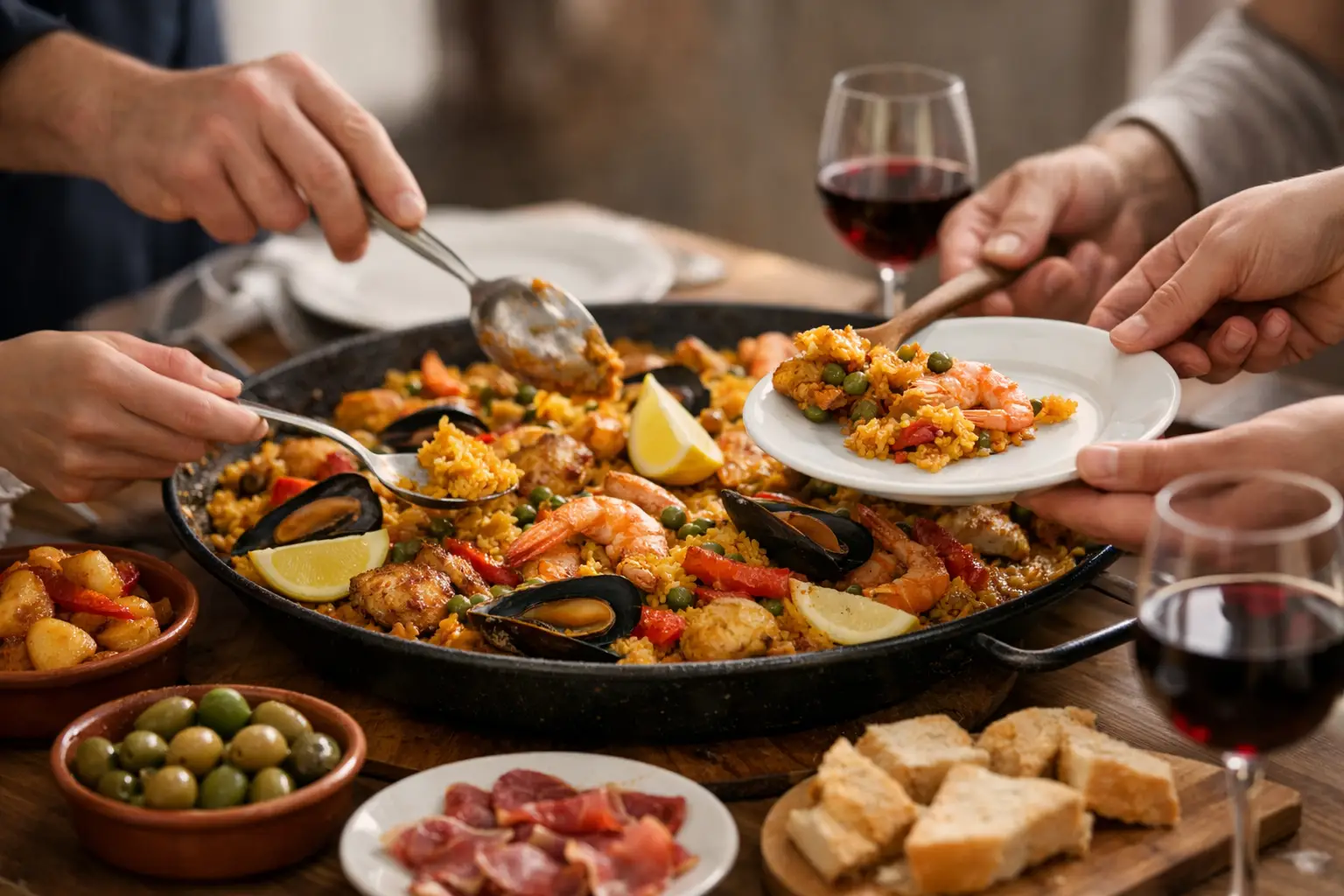
A paella pan lands in the center of the table sizzling, fragrant with saffron, and made for more than one set of hands. Knowing how to share paella turns that moment from a careful serving exercise into what it should be: a lively, generous meal where conversation keeps pace with every spoonful.
Paella is often treated like a plated entree in the U.S., with everyone waiting for a neat, identical portion. In Spain, the experience is more communal. The pan is part of the presentation, the rice is the main event, and the best bites are not always distributed with mathematical precision. The goal is to enjoy the pan together while making sure every guest gets a satisfying taste of its rice, proteins, vegetables, and prized caramelized bottom.
Start With the Right Paella for Your Group
Before deciding how to serve, choose a pan that fits the occasion. Paella is wide and shallow for a reason: the rice cooks in an even layer, developing flavor from the stock and heat rather than piling up like a rice bowl. A crowded pan can leave guests short on rice, while an oversized pan may cook unevenly or look sparse.
For a dinner where paella is the centerpiece, plan on a generous serving for each person. If the table is also enjoying several tapas, a lighter portion works beautifully because everyone will be tasting across the meal. A seafood paella with shell-on shrimp, mussels, or clams needs a little extra room in the plan. Some of the pan’s visual drama is edible, but shells take up space on the plate.
A mixed group benefits from choosing a paella with broad appeal, such as chicken and seafood, or pairing the pan with vegetable-forward tapas for guests who do not eat meat or fish. If dietary preferences are very different, two smaller paellas can be the more gracious move. It gives the table variety and prevents one pan from becoming a negotiation.
How to Share Paella at the Table
Bring the pan to the table before serving it. That first look matters. Let guests take in the color of the rice, the aroma of smoked paprika and saffron, and the arrangement of seafood or vegetables across the top. Paella is celebratory food, and a quick pause creates a little buzz before the first serving.
Traditionally, friends and family may eat directly from the pan with spoons, each person working from the outer edge toward the center. This is warm, casual, and wonderfully social when everyone at the table is comfortable with it. At a restaurant, a family meal, or a more polished gathering, serving the paella onto individual plates is usually the easier choice.
Use a broad serving spoon or a flat spatula, not a small spoon that digs too deeply. Start by dividing the pan into visual sections, then serve a little from each area so no one receives only plain rice or all the seafood. If shrimp, chicken, or vegetables are arranged on top, distribute those first. Then spoon the rice beneath and around them.
Do not stir the paella before serving. Stirring breaks up the rice, blurs the textures, and can pull the crusty bottom away from the pan. Instead, slide the utensil gently beneath the rice and lift in shallow layers. The top should be tender and fragrant; the bottom may have a lightly toasted crust called socarrat.
Save Some Socarrat for Every Guest
Socarrat is one of paella’s great pleasures: the thin, crisp layer of rice that forms where the pan meets the heat. It should taste toasted and savory, not burnt. Because it tends to be concentrated in certain spots, it is worth sharing deliberately.
After everyone has a first portion, use the edge of the serving spoon to gently loosen the socarrat. Add a small spoonful to each plate, especially for guests who know to look for it. If there is only a modest amount, offer it rather than assuming. That small gesture captures the spirit of sharing paella – the best bits are meant to travel around the table.
Set the Table for a Relaxed, Delicious Meal
Paella does not need a formal place setting, but it does benefit from a few practical details. Give each guest a dinner plate or shallow bowl, a fork and spoon, and a napkin that can handle a squeeze of lemon and a little seafood shell. If shellfish is in the pan, place a small empty bowl on the table for shells.
Lemon wedges are welcome, though they should brighten the finished paella rather than cover its flavor. Encourage guests to try a first bite as served, then add lemon if they like. A simple green salad, marinated olives, crusty bread, or a few tapas make a natural opening act, but avoid filling everyone up before the pan arrives. Paella deserves an appetite.
Pour drinks that keep the table moving. A chilled Spanish white wine suits seafood paella, while a red with fresh fruit and modest tannins can work with chicken, chorizo, or rabbit-style flavors. Sangria brings a festive, fruit-forward note to a casual group meal. Water should always be close by, particularly when the conversation gets lively and the pan has a little heat.
Serve in Rounds, Not With a Stopwatch
There is no need to make every plate identical. Paella is handmade, and the distribution of ingredients will naturally vary. One guest may love the mussels, another may be hoping for extra peppers, and a third may care most about the rice. Ask once before serving, then let the meal stay easy.
A useful rhythm is to give everyone a first serving, return the pan to the center, and let guests come back for seconds. This protects the first round from disappearing too quickly and makes room for the people who discover they want more socarrat after their first bite. If the group is especially large, set the pan on a heat-safe trivet and have one person serve while another passes plates.
For parties, avoid pre-plating the entire paella in the kitchen. It may be convenient, but it removes the aroma, visual impact, and shared anticipation that make paella memorable. The pan at the table invites people to talk, point, offer a favorite bite, and linger. That is the experience.
A Few Paella Etiquette Questions, Answered
Can everyone eat directly from the pan?
Yes, when the gathering is casual and guests are comfortable with the tradition. Each person should stay within their own section and eat inward rather than reaching across the pan. For a business dinner, a first date, or any gathering where hygiene or formality is a concern, individual plates are the better fit.
Should paella be served immediately?
Give it a short rest after cooking so the rice settles and the flavors come together, then bring it out while it is hot. Waiting too long can soften the rice and diminish the contrast between tender grains and crisp socarrat. The pan should arrive when the table is ready, not when guests are still finishing a heavy course.
What if there is not enough for seconds?
Serve smaller first portions and let guests know there are tapas, salad, or dessert to enjoy alongside the meal. Honesty keeps the mood generous. A host who serves thoughtfully is far more memorable than one who piles up a few plates and leaves others guessing.
At Bulla Gastrobar, paella belongs in the middle of the action, alongside tapas, sparkling conversation, and a table ready to create a stir. Whether you are gathering friends for a birthday, bringing family together, or making a regular Tuesday feel more festive, let the pan do what it was designed to do: bring people closer, one flavorful scoop at a time.