

A cocktail reception should feel like the room comes alive before anyone notices the planning behind it. Guests arrive, a glass is placed in hand, a tempting bite passes by, and conversation starts to buzz. Knowing how to plan a cocktail reception means creating that sense of easy momentum while making smart decisions about timing, space, food, drinks, and the people you are bringing together.
Whether you are hosting clients after work, celebrating a milestone, or gathering friends before a larger dinner, the best receptions have one thing in common: no one is stuck in one place for too long. The evening moves, the flavors change, and guests have a reason to mingle.
Start With the Feeling You Want to Create
Before choosing cocktails or counting napkins, decide what the reception needs to accomplish. A corporate mixer may call for polished energy and enough room for introductions. An engagement celebration can be warmer, more personal, and a little more sparkling. A pre-wedding welcome reception may need clear pacing so guests can greet one another without exhausting themselves before the main event.
Write down the occasion, the guest count, the start and end time, and the one feeling you want people to take home. Perhaps it is celebratory, relaxed, sophisticated, or distinctly Spanish. That decision becomes your filter for everything that follows.
A cocktail reception is not a seated dinner with smaller plates. It is a social format built around movement. Plan for guests to stand, circulate, snack, sip, and talk in clusters. If your crowd includes older relatives, executives in formal attire, or anyone who may appreciate a break from standing, build in lounge seating and a few high-top tables without turning the room into a dining room.
Choose a Time That Matches the Menu
Timing determines expectations more than almost any invitation wording. A reception from 5:30 to 7:30 p.m. lands during dinner hours, so guests will expect substantial food. A late-evening gathering after 8:30 p.m. can lean more heavily into cocktails, dessert bites, and lighter savory options.
If your event overlaps a meal period, serve enough variety and volume for guests to feel genuinely fed. The exact amount depends on the crowd and the length of the event, but the principle is simple: the longer the reception, the more your menu needs to carry it. A one-hour welcome drink may need a few polished passed bites. A three-hour client celebration needs a deeper spread, including satisfying vegetarian options and at least a few heartier selections.
Be clear on the invitation. “Cocktail reception” tells guests there will be drinks and mingling, but it does not always tell them whether dinner is covered. If substantial tapas, stations, or paella will be served, say so. If the event is drinks and light bites before another plan, make that clear too.
Build the Guest List Around Real Conversation
Guest count is not merely a budget number. It shapes the energy of the room. A smaller reception can feel intimate, with everyone sharing a few plates and stories. A larger gathering has more buzz, but it needs thoughtful flow so people are not crowded around a single bar or stranded at the edges.
For business events, invite people who will benefit from meeting one another, not just people who know the host. Give your guest list a little variety: clients, colleagues, partners, and friendly faces who can help conversations start naturally. For social celebrations, consider the mix of friend groups and family circles. A reception works best when guests have easy bridges between groups.
Ask for RSVPs, then plan with a modest buffer. Not every guest will attend, but last-minute additions happen, especially for after-work events. Your venue or catering partner can help you set a realistic food and beverage count based on the day, timing, and group type.
Plan a Cocktail Reception Menu for Mingle-Worthy Eating
The strongest reception menus deliver contrast: something crisp, something rich, something familiar, and something guests have not tried before. This is where Spanish-style tapas shine. A bite of croquetas, a skewer of grilled flavor, patatas bravas, seasonal vegetables, cured meats, seafood, and a spoonful of paella all give guests something to discuss while keeping the experience social.
Choose foods that are easy to manage with one hand whenever possible. Messy sauces, oversized portions, and dishes that require serious concentration can interrupt the flow. That does not mean every item has to be tiny. It means each selection should be easy to enjoy while standing with a drink in the other hand.
A balanced menu should account for dietary needs before the event, not after guests arrive. Offer clearly identifiable vegetarian choices, consider gluten-sensitive guests, and communicate serious allergies directly with the event team. Labels can be helpful at food stations, particularly when the room is busy and servers are moving quickly.
For a reception lasting more than 90 minutes, mix passed bites with a station or two. Passed tapas create motion and give every guest access to the menu. Stations offer a natural gathering point and can make the food feel more generous. If you want a true centerpiece, a paella presentation brings color, aroma, and a little theater to the room.
Create a Drink Plan, Not Just an Open Bar
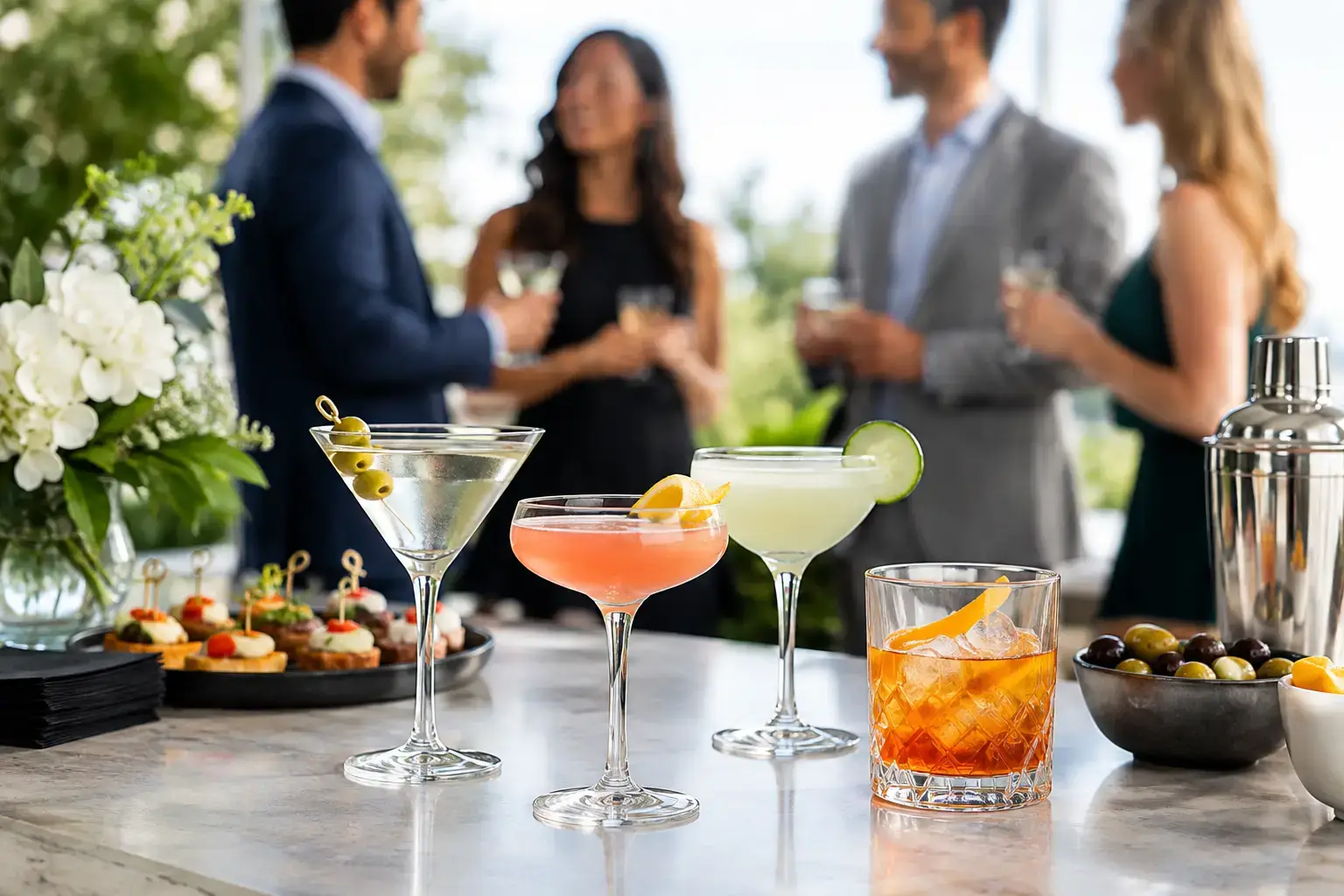
Cocktails set the tone, but choice needs structure. A full open bar works for some occasions, particularly larger celebrations with a broad guest list. For other events, a focused selection is more memorable and easier to manage: one signature cocktail, one zero-proof option, Spanish wine, beer, sparkling wine, and a few classic requests.
A bright sangría is built for sharing and immediately signals a convivial mood. A shaken cocktail can bring more ceremony, while sparkling wine keeps the welcome crisp and celebratory. Do not treat nonalcoholic drinks as an afterthought. A thoughtful zero-proof spritz, citrus-forward refresher, or sparkling option lets every guest participate in the toast.
Keep the bar from becoming a bottleneck. For larger groups, one bar may not be enough, even if the menu is simple. Consider a welcome drink served on arrival, then a main bar positioned away from the entry. Guests should be able to enter, greet the host, and settle in without joining a line.
Water belongs in the plan, too. Place it where people can easily find it and refresh it throughout the event. It is a small detail that supports a better evening, especially in warm weather or during a lively happy-hour crowd.
Design the Room for Movement and Moments
A room can be beautiful and still work against a reception. Avoid arranging all the action in one corner. Spread out the bar, food, and seating so guests naturally travel through the space. Keep pathways open for servers, and make sure anyone using a mobility aid can move comfortably between key areas.
Lighting should flatter guests without making the room too dim to read a menu or recognize a new contact. Music should supply a pulse, not compete with conversation. If speeches are planned, keep them brief and place them at a moment when glasses are full and guests have had time to arrive.
Think about the first ten minutes. A clear welcome sign, a host near the entrance, and a drink offered promptly can erase the awkwardness of walking into a room. Think about the last ten minutes, too. A final toast, a small sweet bite, or a warm thank-you gives the gathering a proper landing.
How to Plan a Cocktail Reception Timeline
A dependable reception rhythm prevents the event from feeling either rushed or flat. Let arrivals unfold for the first 20 to 30 minutes with welcome drinks and lighter bites. Bring out more substantial food once most guests are present. Schedule remarks, if any, after the room has warmed up. Then let the final stretch return to open conversation, dessert, coffee, or one last round.
Share this timeline with your venue, catering team, photographer, and anyone speaking. The goal is not to make the evening rigid. It is to make sure everyone supporting it knows when the energy needs to rise.
If you are hosting at a restaurant, ask what the space feels like during your selected time. A private room offers focus and intimacy. A semi-private area can borrow energy from a lively dining room. At Bulla Gastrobar, that social rhythm is part of the appeal: tapas arrive ready to share, glasses clink, and the table becomes an invitation to try one more bite.
Give Guests One Reason to Remember It
The most shareable receptions are not necessarily the most complicated. They have one clear moment: a signature sangría welcome, a dramatic paella reveal, a toast that makes everyone laugh, or a dessert that arrives at exactly the right time.
Choose that moment early, then let the rest of the plan support it. When food, drinks, timing, and hospitality all point toward the same feeling, guests do more than attend. They create a stir together – and leave already talking about the next gathering.