


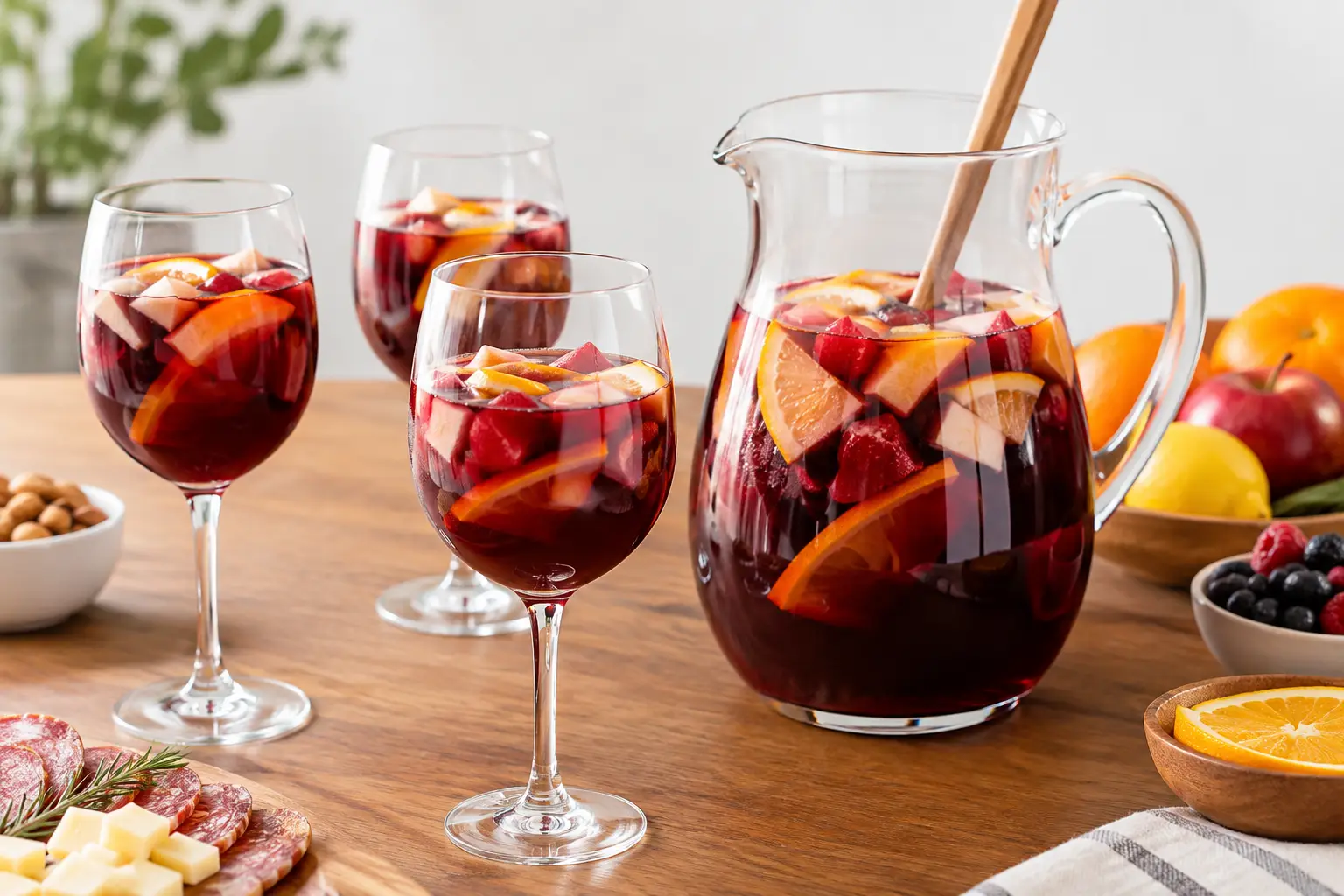
A good sangria tasting starts before the first pour. It starts with a table full of color, chilled glasses catching the light, and the promise that no one has to choose just one flavor. Learning how to host sangria tasting at home means creating a little Spanish-style energy: generous, social, and built for conversation between bites.
This is not a wine seminar with hushed tasting notes and intimidating rules. Sangria is meant to create a stir. Your job is to give guests a few thoughtful pours, delicious contrasts, and enough room to compare favorites without rushing the fun.
How to Host a Sangria Tasting Without Overcomplicating It
Keep the guest list intimate enough that everyone can taste, chat, and reach the snacks. Six to 10 people is a sweet spot. With that size, you can pour three or four sangrias and still make each pitcher feel like a moment rather than a production.
Choose a relaxed window of about two hours. An afternoon gathering works beautifully, especially when the weather calls for citrus and ice, but an early-evening tasting can easily become dinner. Send an invitation that sets the mood: sangria, tapas, good company, and no need for formal wine knowledge.
The central decision is how many sangrias to serve. Three styles give guests variety without crowding the palate: a classic red, a crisp white, and a rosé or sparkling version. Four can work for a longer gathering, though it helps to make one pour smaller or offer it as a final celebratory splash.
Plan on about 3 ounces of each sangria per guest. That comes to 9 to 12 ounces total across the tasting, before anyone decides to revisit a favorite. Make enough for modest refills, but do not feel pressured to fill every glass to the rim. A tasting is more lively when guests can sample, compare, and choose their encore.
Build a Flight With Contrast
The best flight moves from lighter, brighter flavors toward deeper fruit and spice. Think of it like a tapas table: each new dish should bring something different to the conversation.
Start with a white sangria made with a dry Spanish white wine, sliced green apple, lemon, orange, and a splash of peach or elderflower liqueur. Keep the sweetness restrained. The fruit should brighten the wine, not bury it. A little sparkling water added just before serving keeps the finish crisp.
Follow with rosé sangria, where strawberries, raspberries, and pink grapefruit bring a sunny, berry-forward character. Rosé can turn overly sweet quickly, so use ripe fruit and a squeeze of fresh citrus before reaching for extra syrup. If you want a little celebratory fizz, top individual servings with sparkling wine instead of adding it to the entire pitcher.
Finish with classic red sangria. Choose a fruit-forward Spanish red with enough acidity to stay refreshing over ice. Add orange, lemon, apple, and a touch of brandy. Cinnamon can be lovely, but use it lightly. One small stick in the pitcher is usually plenty. Too much spice can make every sip taste like holiday punch rather than sangria.
For a fourth option, make a zero-proof sangria. Combine chilled black tea or dealcoholized red wine with orange juice, pomegranate juice, berries, citrus, and sparkling water. It gives every guest a place at the tasting table and makes the host’s planning more thoughtful. The point is shared flavor, not pressure to drink.
Prep the Pitchers for Fresh Flavor
Sangria rewards a little patience. Mix the wine, fruit, and any liqueur four to eight hours ahead, then chill. This gives the fruit time to perfume the drink without turning soft and tired. Overnight can work for red sangria, but delicate white and rosé versions are usually brighter when made the same day.
Hold the ice until serving. Ice in the pitcher waters down the batch and makes it harder to control strength from one glass to the next. Instead, chill the wine thoroughly, use cold fruit, and serve over fresh ice. Add any bubbly ingredient at the last minute so it arrives with a proper sparkle.
Taste every pitcher before guests arrive. It may need a squeeze of lemon, a small splash of water, or a touch more wine to bring sweetness into balance. This is where homemade sangria becomes polished rather than sugary. Fruit, wine, acid, and spirit should each be noticeable, but none should take over.
Set the Table Like a Tapas Bar
You do not need matching glassware or an elaborate tablescape. A few clear pitchers, smaller wine glasses, cocktail napkins, and simple labels are enough. If you are serving several pours, number each sangria or give it a playful name so guests can remember what they loved.
Put water at the center of the table from the start. Add a bucket or tray for empty glasses, plus small plates and forks for the fruit. Sangria fruit is delicious, but it can be awkward if guests have nowhere to set a citrus slice or berry-stained pick.
A tasting card adds a little structure without making the party feel stiff. Write the name of each sangria and leave room for guests to mark a favorite. Instead of formal descriptors, prompt them with questions: Is it bright or rich? More citrus or more berry? Which bite would you pair with it? These are easy openings for even the newest sangria fan.
Pair Sangria With Salty, Savory Bites
Sangria needs food. The sweetness, fruit, and cold temperature feel more balanced alongside salt, smoke, acidity, and rich textures. Build your spread around bites that can sit at room temperature and invite guests to graze between pours.
A simple board of Manchego, marinated olives, jamón, toasted almonds, and crusty bread gives the tasting a distinctly Spanish rhythm. Add patatas bravas, croquetas, or gambas al ajillo if you want to serve warm tapas. The garlic, paprika, and savory richness make a lively counterpoint to fruit-forward drinks.
For the white sangria, lean into seafood, citrusy salads, and mild cheeses. Rosé sings with shrimp, tomato toast, and charcuterie. Red sangria has enough depth for chorizo, roasted peppers, meatballs, and smoky grilled vegetables. You do not need a separate platter for every glass, but a few intentional pairings make the tasting feel more generous.
If hosting at home starts to sound like too much chopping, chilling, and dishwashing, bring the occasion to the table instead. A shared tapas meal and handcrafted sangrías at Bulla Gastrobar offer the same compare-and-pass spirit, with the welcome advantage of someone else managing the pitchers.
Guide the Tasting, Then Let It Get Lively
Pour the lightest sangria first and give guests a minute to smell and sip before reaching for the food. Ask what they notice, then let the table answer itself. One person may taste grapefruit; another may catch peach, herbs, or spice. There is no prize for getting it “right.”
Move through the pours at an easy pace. After each round, invite guests to take a bite and see what changes. A salty olive can make a white sangria seem fruitier. A smoky piece of chorizo can pull the spice and red fruit forward in a classic red. Those small discoveries are the reason a tasting feels more memorable than simply serving one big batch.
Avoid pouring every option at once. The table gets crowded, the drinks warm up, and guests lose the sense of progression. A little pacing keeps the atmosphere buzzing while making responsible hosting easier. Have plenty of water available, offer the zero-proof option with equal enthusiasm, and make sure everyone has a plan for getting home safely.
End the night with one final choice: ask each guest to vote for the sangria they would happily order again. Then pour a small round of the winner, set out a last plate of something sweet or salty, and let the conversation keep flowing. That is the real secret to a sangria tasting – not perfect measurements, but a table where every sip gives people one more reason to stay awhile.