


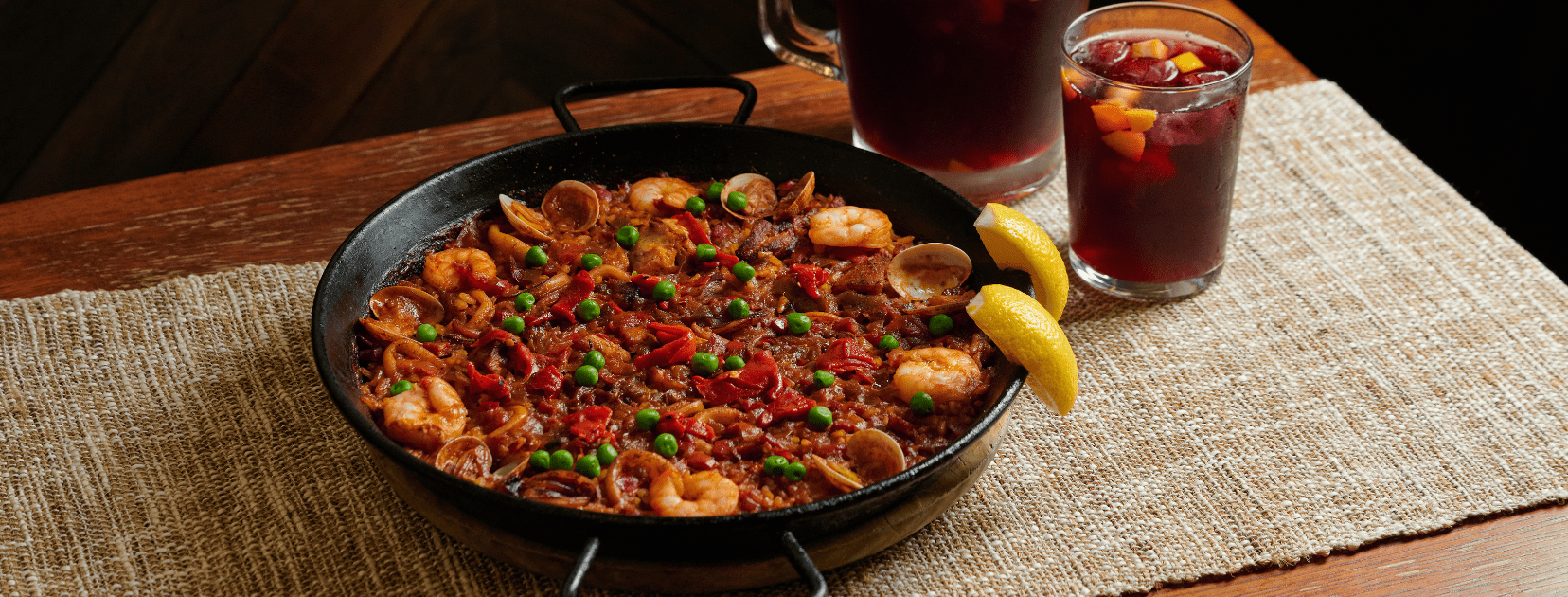
A search for paella near me should lead to more than a rice dish dropped in the middle of the table. It should lead to a moment: a wide pan arriving hot, the fragrance of saffron and roasted peppers in the air, cocktails catching the light, and everyone leaning in for that first spoonful. Paella was made for conversation. The best version gives the whole table something to talk about before anyone takes a bite.
For a date night with a little spark, a long-overdue catch-up with friends, or a family dinner that feels like an occasion, paella brings the celebration. But not every pan tells the same story. Knowing what to look for can turn a quick restaurant search into a Spanish meal worth savoring.
How to Find Paella Near Me Worth Sharing
Start with the setting. Paella is deeply social food, so the best place to order it is usually one that welcomes a linger, not one that rushes the experience. Look for a Spanish restaurant where the menu encourages sharing, where a few tapas can arrive before the main event, and where the bar has enough life to make a glass of sangría or Spanish wine feel like part of the plan.
The size of your group matters, too. A pan of paella is a natural choice for two people looking to make dinner feel more festive, but it shines with a larger group. A few small plates give everyone a taste of something different, then the paella lands as the table’s shared centerpiece. That rhythm keeps the meal moving and gives guests an easy way into Spanish dining, whether they already know their jamón from their gambas or are trying both for the first time.
A great paella experience also depends on timing. Many restaurants prepare paella to order because the rice needs attention, patience, and a proper finish. If you are heading out before a show, arriving with a big party, or celebrating something on a schedule, ask about preparation time when making plans. The wait is part of what makes the dish feel special, especially when you have tapas, conversation, and a round of drinks to enjoy along the way.
What Makes a Paella Worth Ordering?
Paella is often treated as shorthand for any Spanish rice dish, but the details matter. The classic dish comes from the region of Valencia and is named for the wide, shallow pan in which it is cooked. That pan is not just for presentation. Its shape helps the rice cook in an even layer, allowing flavor to build without turning the dish into a creamy rice bowl.
The rice should be tender but distinct, carrying the flavor of stock, saffron, and the ingredients cooked with it. Depending on the style, that might mean seafood, chicken, vegetables, or a mix of land and sea. There is no single paella that represents every Spanish table. Regional traditions, seasonal ingredients, and the chef’s point of view all play a role.
Then there is the detail many paella fans wait for: socarrat. This is the lightly toasted layer of rice at the bottom of the pan. It is not burnt rice, and it should never taste bitter. Done well, it has a savory, slightly caramelized character that adds texture and depth to every serving. If your spoon reaches the bottom and finds that golden, crisp-edged rice, the table has something to celebrate.
Color can be a clue, but it is not the whole story. A bright yellow pan may look dramatic, yet a memorable paella earns its flavor through a thoughtful base, quality stock, properly cooked rice, and ingredients that taste like themselves. The seafood should still taste fresh and briny. Vegetables should bring sweetness or earthiness. Meat should add richness without taking over the pan.
Build the Table Before the Pan Arrives
Paella does not need much help, but it becomes even better when the table has a little variety. Start light and snackable, then let the meal build. A few tapas bring contrast to the richness of the rice: crisp potatoes with a smoky sauce, garlicky shrimp, savory croquettes, marinated olives, or a bright salad can all stimulate the appetite without stealing the spotlight.
Drinks matter here, too. Sangría has an easygoing, celebratory energy that suits a group, especially when the table is full of color and everyone is sharing. Spanish wine can be a more focused choice when you want to explore the meal’s flavors. A crisp white is a natural match for seafood-forward paella, while a medium-bodied red can work beautifully with chicken, chorizo, or deeper roasted notes. If cocktails are the mood, begin there, then let the paella carry dinner into a more relaxed second act.
The trade-off is simple: do not over-order before the pan arrives. Tapas are meant to create a stir, not fill every seat at the table before the main dish lands. For a smaller party, two or three shareable plates can be plenty. Bigger celebrations have more room to play, especially when different guests want different tastes.
Choose the Paella That Fits the Occasion
Seafood paella is often the move for a sunny lunch, a romantic dinner, or anyone who wants the clean, coastal side of Spanish cooking. A mixed paella brings a heartier feel and can be a crowd-pleaser when the group cannot agree on one direction. Vegetable-forward versions offer plenty of depth for plant-focused diners, particularly when the kitchen gives the rice and seasonal produce the same care as its seafood and meat.
What matters most is ordering for the people around the table. If one guest avoids shellfish, a seafood-heavy pan may turn sharing into a puzzle. If the group includes adventurous eaters and first-time tapas guests, a familiar paella paired with a few bolder small plates keeps everyone happy. Good Spanish dining is generous, not precious. The goal is a table where everyone gets a taste and nobody feels left out.
At Bulla Gastrobar, that shared spirit is built into the experience. Chef-driven paellas, Spanish tapas, handcrafted sangrías, and a lively gastropub setting give the meal room to become whatever the night calls for: a polished business lunch, an after-work gathering, a birthday toast, or a dinner that simply needed better food and better company.
The Restaurant Atmosphere Is Part of the Flavor
When people search for paella, they are often really searching for an answer to a bigger question: Where should we go tonight? The food matters, of course, but the room matters too. A quiet table may be right for an intimate evening. A buzzing bar and upbeat dining room may be exactly what a friend group wants after a long week.
The best Spanish dining rooms make both feel possible. There is enough energy to feel like something is happening, but enough hospitality to settle in. Plates arrive as they are ready, which keeps conversation active and gives guests a reason to share reactions in real time. One person finds a favorite tapa. Someone else reaches for the last crispy spoonful of rice. That is the point.
For corporate hosts and larger groups, paella can take some pressure off planning. It is visually generous, easy to share, and naturally suited to a meal that needs to feel organized without becoming stiff. Add a few tapas and beverages, and the table has a built-in flow from arrival to final toast.
Make Your Next Paella Plan Feel Like a Plan
A little intention goes a long way. Reserve ahead when the occasion is important, particularly for a larger group or a popular dining time. Let the restaurant know about dietary needs before you arrive, and give yourself enough time to enjoy the meal at its own pace. Paella is not fast food, nor should it be.
Bring people who like to pass plates, compare favorites, and order one more round when the conversation gets good. Choose a pan that suits the table, save room for the socarrat, and let the evening unfold. The right answer to paella near me is not just a restaurant nearby. It is a pan in the center of the table and a reason for everyone to stay a little longer.