

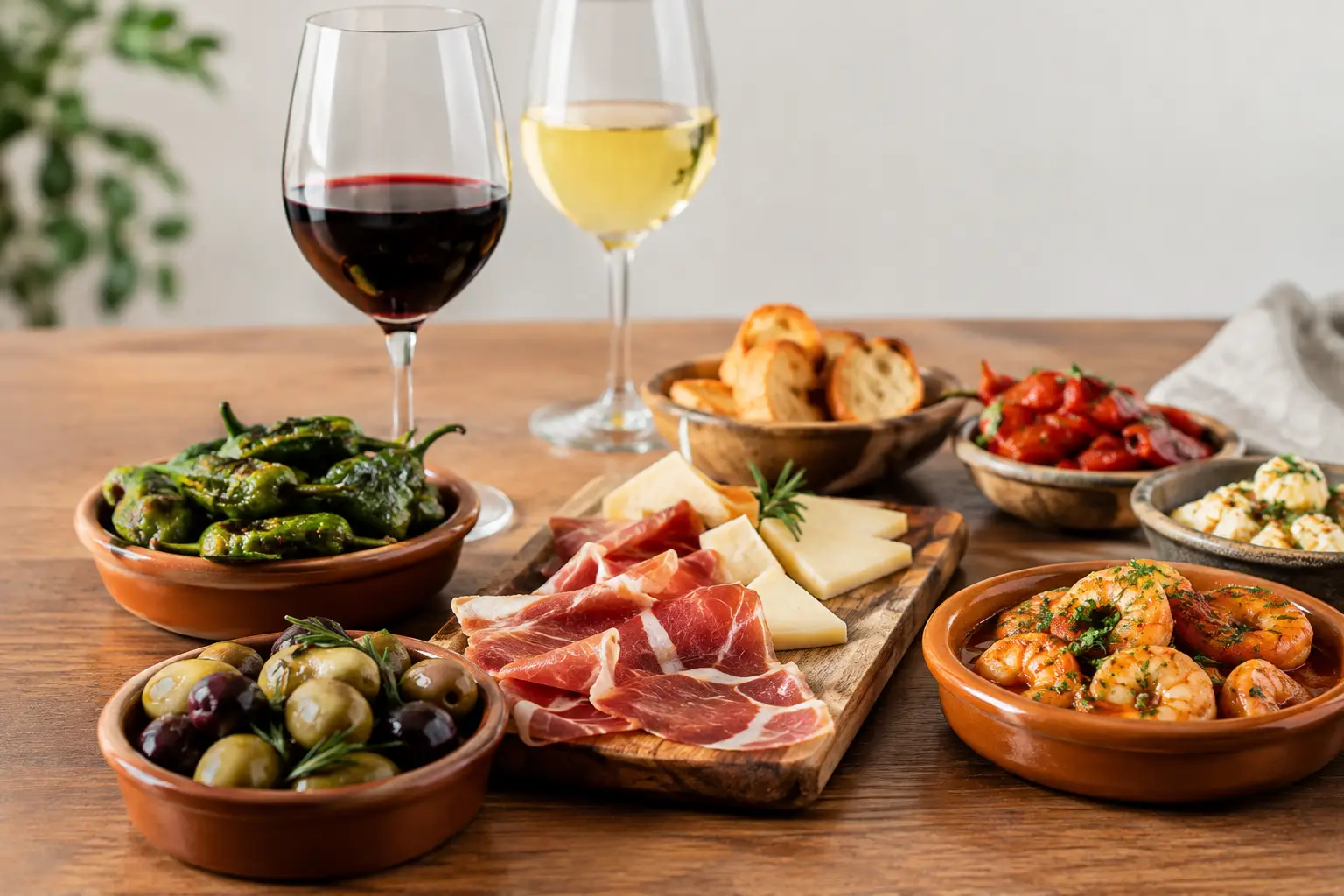
The first crisp pour hits the table, someone reaches for a warm croqueta, and suddenly the night has its rhythm. The best tapas for wine are not about following stiff pairing rules. They are about creating contrast, matching intensity, and giving every guest a reason to reach back across the table for one more bite.
Spanish wine and tapas belong together because both invite discovery. A bright Albariño can sharpen the sweetness of shrimp. A silky Rioja can settle beautifully beside smoky chorizo. A chilled glass of cava brings a little celebration to nearly anything fried, salty, or creamy. Order a few plates, pour a few styles, and let the conversation decide what comes next.
The Best Tapas for Wine Start With Contrast
A successful tapas table should have a little heat, a little crunch, something rich, something briny, and something fresh. Wine does more than sit beside the food. Acidity wakes up fried bites. Bubbles reset the palate after cured meats. A rounded red turns savory, caramelized flavors into something deeper.
The only rule worth keeping close is this: match the wine to the weight of the bite, not simply its color. White wine can stand up to pork when the dish is salty or bright. A light red can be a better seafood partner than an oaky white. Start with what tastes good to you, then create a stir with these classic pairings.
10 Best Tapas for Wine Pairings
1. Jamón Ibérico with Fino Sherry or Cava
Jamón Ibérico is rich, nutty, delicate, and deeply savory, with fat that softens almost the moment it touches your tongue. It calls for a wine with enough lift to keep that richness moving. Dry fino sherry is a traditional choice, bringing saline notes that echo the ham without overwhelming it.
For a more festive route, choose cava. Its bubbles cut through the fat, while its dry finish leaves room for the jamón’s sweet, cured character. This is a smart first order for the table because it stimulates the appetite without filling everyone up.
2. Croquetas with Cava
Golden on the outside and creamy at the center, croquetas are one of Spain’s great arguments for sparkling wine. Whether filled with ham, chicken, mushroom, or salt cod, they bring crunch and richness in one small package. Cava answers with freshness, bubbles, and a clean finish.
Avoid pairing croquetas with a big, tannic red. Tannins can make fried food taste heavier and less lively. A brut cava, served cold, gives each bite the snap it deserves and makes a second croqueta feel like a very good idea.
3. Gambas al Ajillo with Albariño
Sizzling shrimp in olive oil, garlic, and chile need a wine that can handle heat while keeping the seafood front and center. Albariño is made for this moment. It is bright, aromatic, and often carries a subtle salty edge that feels right at home with shellfish.
The wine’s acidity cuts through the garlicky oil, while its citrus character plays beautifully with the shrimp’s natural sweetness. If the dish leans especially spicy, make sure the wine is well chilled. Temperature matters here, softening the heat and keeping the pairing refreshing.
4. Patatas Bravas with Rosé
Patatas bravas bring crispy potatoes, a spicy sauce, and often a creamy aioli into the mix. That combination can overwhelm a delicate white but does not need the muscle of a full-bodied red. A dry Spanish rosé lands in the sweet spot.
Rosé has enough fruit to cool a chile-driven sauce, enough acidity for potatoes, and enough presence to stand up to garlic. It is also one of the easiest bottles to share when the table is ordering a little of everything. Consider it the social wine of the spread.
5. Chorizo al Vino with Rioja Crianza
Chorizo al vino is smoky, paprika-rich, and unapologetically bold. Rioja crianza, with its red-fruit character, gentle oak, and savory finish, meets the dish at its level without making the spices taste harsh. The result is warm, rounded, and full of Spanish character.
Choose a crianza rather than a heavily oaked reserva when the chorizo is spicy. A more restrained red keeps the paprika in focus and avoids turning the pairing dry or bitter. Serve it slightly cool, not warm, for a brighter, more food-friendly pour.
6. Pan con Tomate with Garnacha
Few tapas are simpler or more satisfying than crisp bread rubbed with tomato, garlic, olive oil, and salt. Its flavors may be humble, but they deserve a wine with real personality. A lighter-bodied garnacha brings juicy red fruit and a peppery lift that works with the tomato’s acidity.
This pairing is especially good at the beginning of a meal, when guests are settling in and the table is still building. If the garnacha is served a touch chilled, it becomes even more refreshing. It is proof that uncomplicated food and uncomplicated wine can still make plenty of buzz.
7. Spanish Cheese with Tempranillo
A cheese plate can move from buttery and mild to firm, nutty, and sharp, so flexibility matters. Tempranillo is a dependable choice for sheep’s milk cheeses such as Manchego, whose savory, slightly salty character finds a natural partner in the wine’s cherry fruit and earthy notes.
Add Marcona almonds, quince paste, or a touch of honey, and the pairing becomes even more playful. If the cheese is very aged, step up to a fuller Rioja. If it is young and creamy, a crianza or a fruit-forward tempranillo will keep the balance gentler.
8. Pulpo a la Gallega with Godello
Tender octopus with olive oil, paprika, and potatoes is textured, smoky, and more substantial than many seafood dishes. Godello, a white wine known for its stone-fruit flavor and fuller body, has the weight to match it. It brings freshness without disappearing under the paprika.
Albariño can work here, too, especially if the dish is lightly seasoned. But when the octopus has a generous dusting of pimentón and a lush drizzle of olive oil, Godello offers a more complete match. This is a pairing for diners who want white wine with a little more presence.
9. Albóndigas with Rioja Reserva
Tomato-braised meatballs are comforting, savory, and built for red wine. Rioja reserva, with developed notes of spice, dried cherry, and cedar, complements the browned meat and deep sauce beautifully. It feels polished without losing the warmth that makes tapas dining so inviting.
The trade-off is intensity. If the albóndigas are lightly seasoned or made with chicken, reserva may be more wine than the dish needs. In that case, reach for crianza. But with beef, pork, or a slow-cooked tomato sauce, reserva can make the whole table pause for a moment of appreciation.
10. Fried Calamari with Verdejo
Crisp calamari needs brightness. Verdejo brings citrus, herbs, and a pleasantly dry finish that keeps fried seafood from feeling too rich. A squeeze of lemon is welcome, but the wine does much of the same work, lifting the breading and refreshing the palate between bites.
Skip sweet whites with this dish. Sugar can make salty fried food seem heavier, while a dry verdejo keeps everything sharp and energetic. It is an easy happy hour pairing, particularly when the table is sharing calamari alongside olives, croquetas, and a chilled bottle or two.
Build a Table, Not a Formula
The most memorable wine-and-tapas nights mix familiar favorites with one or two surprises. Start with cava and a few lighter bites, then move toward a white such as Albariño or Godello for seafood. Bring in rosé or Rioja when potatoes, chorizo, cheese, and meatier plates arrive. That natural progression gives every course its moment without turning dinner into a tasting exam.
For a group, two or three wines are usually more fun than one bottle for everyone. Offer bubbles, a bright white, and a versatile red, then let guests compare pairings as dishes arrive. At Bulla Gastrobar, that shared discovery is part of the pleasure: a table that keeps changing, glasses that keep clinking, and another plate worth passing around.
Do not worry about getting every match exactly right. Order the croquetas. Pour the cava. Follow the aroma of garlic, paprika, and toasted bread, then see which sip makes the next bite even better.