

A noon meeting can lose its momentum fast when lunch becomes a traffic jam. People are checking watches, balancing laptops, and trying to decide between a second trip to the buffet line or a conversation with the person across the table. The choice between boxed lunches versus buffets shapes far more than the menu. It affects timing, energy, budgets, dietary planning, and whether guests leave the room ready to create a stir or ready for a nap.
For corporate lunches, team celebrations, client meetings, and training days, there is no single winning format. The right call depends on the rhythm of the occasion and the experience you want to serve.
Boxed Lunches Versus Buffets: Start With the Schedule
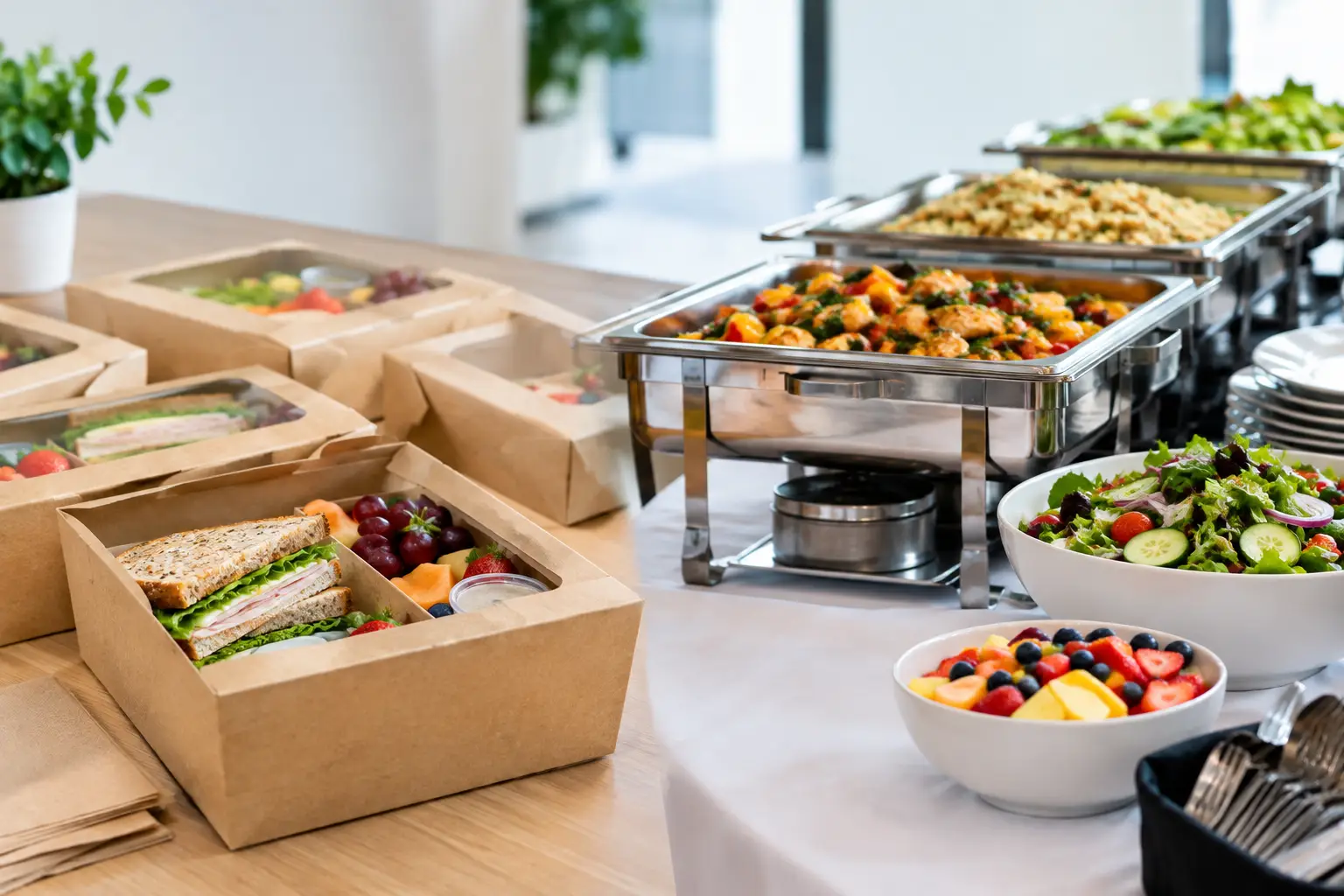
The first question is not, “What sounds best?” It is, “How much time do people really have?” A boxed lunch is built for precision. Each guest receives a complete meal, the group can eat immediately, and the agenda does not have to pause for a line. This makes boxed lunches especially effective for a working lunch, a conference break, an office-wide meeting, or any event with a firm start and end time.
Buffets ask guests to slow down a little, in a good way. They invite people to browse, choose, return for another taste, and talk while plates are filled. That relaxed pace fits team celebrations, client appreciation events, holiday gatherings, and social occasions where the meal is meant to be part of the program rather than an interruption to it.
A simple rule helps: choose boxed lunches when efficiency is the headline. Choose a buffet when connection and variety deserve more room on the schedule.
When Boxed Lunches Make the Better Move
Boxed lunches are not a lesser version of catering. Done well, they are polished, generous, and thoughtfully organized. For the host, their greatest advantage is control. You know exactly how many meals are needed, how they will be distributed, and how quickly everyone can get back to business.
They also make dietary preferences easier to manage. When meals are labeled clearly, a guest who needs a vegetarian, gluten-conscious, or other customized option does not have to wonder which dish is safe or ask a busy colleague to inspect every serving utensil. That small detail can make guests feel genuinely considered.
Individual packaging is also helpful when attendance is uncertain. If someone arrives late, steps out for a call, or needs to take lunch back to their desk, their meal is still waiting. For hybrid workplaces and rolling meeting schedules, that flexibility matters.
The trade-off is that boxed lunches offer less spontaneous choice in the moment. Guests typically select an entrée in advance or receive a host-selected assortment. That works beautifully for a focused midday event, but it may feel too structured for a group that wants to linger over lunch and sample several flavors.
Why Buffets Bring More Buzz
A buffet turns lunch into a gathering point. The aroma of warm food, the color of a well-set spread, and the chance to build a plate create an immediate sense of occasion. Rather than opening a container and eating quietly at a seat, guests naturally circulate, compare favorites, and start conversations.
That social pull is especially valuable for larger groups that do not know one another well. A buffet gives people an easy reason to move around the room. It can soften the formality of a client event, bring different departments together, and make a celebration feel more generous without requiring a formal seated meal.
Variety is another major advantage. With several mains, sides, salads, and desserts, guests have more agency. A light eater can build a smaller plate. A hungry attendee can return for another serving. Someone who wants to try a little of everything has the freedom to do exactly that.
The practical trade-off is movement. A buffet needs table space, serving equipment, a sensible room layout, and enough time for guests to serve themselves. For a group of 20, this may be effortless. For a group of 100 on a 30-minute break, a single buffet line can become the very bottleneck you hoped to avoid. Multiple stations or staggered release times can help, but they require planning.
Consider the Budget Beyond the Per-Person Price
It is tempting to compare only the quoted cost per guest. A smarter comparison looks at the full event picture. Boxed lunches can reduce waste because portions are assigned in advance. They also may require fewer service touches and less setup space, which can make them a practical choice for offices with limited room.
Buffets can feel more abundant, especially when the guest count is reliable and the event calls for a celebratory spread. But abundance needs to be planned carefully. Overordering leads to waste, while underordering can make the last guests in line feel overlooked. The best buffet order accounts for the group’s appetite, the event time, and whether lunch is the main attraction or one part of a longer day.
Do not overlook rentals, serving needs, beverages, desserts, and cleanup when comparing formats. The least expensive meal on paper is not always the most cost-effective experience. If a buffet encourages guests to stay engaged for an extra hour at an important relationship-building event, its value may go well beyond the food.
Bring Spanish Flavor to Either Format
Spanish food is made for shared appetite, but it can work beautifully in both catering styles. The key is choosing dishes that travel well and still feel lively when they arrive. A boxed lunch can pair a satisfying sandwich or salad with bright, Spanish-inspired sides and a sweet finish. It gives guests a complete, flavorful meal without slowing the day down.
A buffet gives tapas culture more room to shine. Think vibrant salads, roasted vegetables, savory proteins, croquetas, and paella presented as the centerpiece. Guests can build their own plate and sample different combinations, which captures the spirit of gathering around the table and discovering something new with every bite.
For a more elevated office occasion, a Spanish buffet can turn a standard luncheon into something people discuss after the meeting ends. Bulla Gastrobar brings that energy to event dining with shareable flavors designed to stimulate the appetite and spark conversation. Still, the format should serve the occasion, not the other way around. Even the most tempting paella spread needs enough time for guests to enjoy it.
Match the Format to Your Guests
Guest behavior often makes the decision clearer than the menu does. A sales team rushing between appointments may appreciate the grab-and-go ease of boxed lunches. A leadership retreat may benefit from a buffet that keeps everyone in the room, talking and refueling between sessions.
Consider whether attendees will be seated at tables, working at laptops, standing during a presentation, or moving between breakout rooms. Boxed lunches are easier in tight spaces and at individual workstations. Buffets are better when there is an open, welcoming area where people can gather without blocking doors, presentations, or service paths.
Also consider the group’s relationship with food. If the attendees are adventurous, social, and eager to taste a range of dishes, a buffet will likely create more excitement. If they value speed, predictability, and a meal they can enjoy on their own schedule, boxes are the better fit.
Plan the Details That Keep Lunch Moving
Whichever format you choose, clear communication makes the meal feel effortless. Gather dietary needs early. Confirm the delivery or setup window. Make sure there are enough utensils, napkins, beverages, and places to dispose of packaging. For buffets, plan the serving flow before food arrives. For boxed lunches, label every meal clearly and set them out in a way that prevents guests from hunting for theirs.
If the group is large, assign one person to coordinate with the catering team and another to guide guests when lunch begins. Those small operational choices protect the experience you worked to create. Guests should notice the food, the hospitality, and the company – not the logistics.
Choose the meal that gives your guests the right kind of pause: quick and satisfying when the day is moving fast, or generous and shareable when the gathering deserves a little extra buzz.