

A tapas party should never feel like a seated dinner broken into tiny portions. It is a moving, tasting, talking kind of night – the olives disappear, someone reaches for one more croqueta, a fresh pitcher of sangría lands on the table, and suddenly your guests are buzzing with excitement. Learning how to host tapas parties starts with one simple shift: build the evening around sharing, not serving.
The beauty is that no one needs to arrive knowing Spanish cuisine inside and out. A thoughtful spread gives experienced tapas fans plenty to savor and gives first-timers an easy, delicious way in. Keep the mood generous, the food varied, and the plan loose enough for the party to find its own rhythm.
How to Host Tapas Parties Without Overcomplicating It
Start with the guest count, then plan for abundance rather than individual plates. For a cocktail-style gathering, six to eight tapas choices usually work well for eight guests, especially when you include a more substantial dish. If the party is replacing dinner, aim for eight to 10 selections and add paella, tortilla española, or another filling centerpiece.
The smart host does not make every bite from scratch. Tapas are about contrast and discovery, not proving how long you spent in the kitchen. Choose two or three dishes you are excited to cook, then round out the table with quality pantry items, bakery bread, cheese, fruit, and prepared elements that only need a quick warm-up.
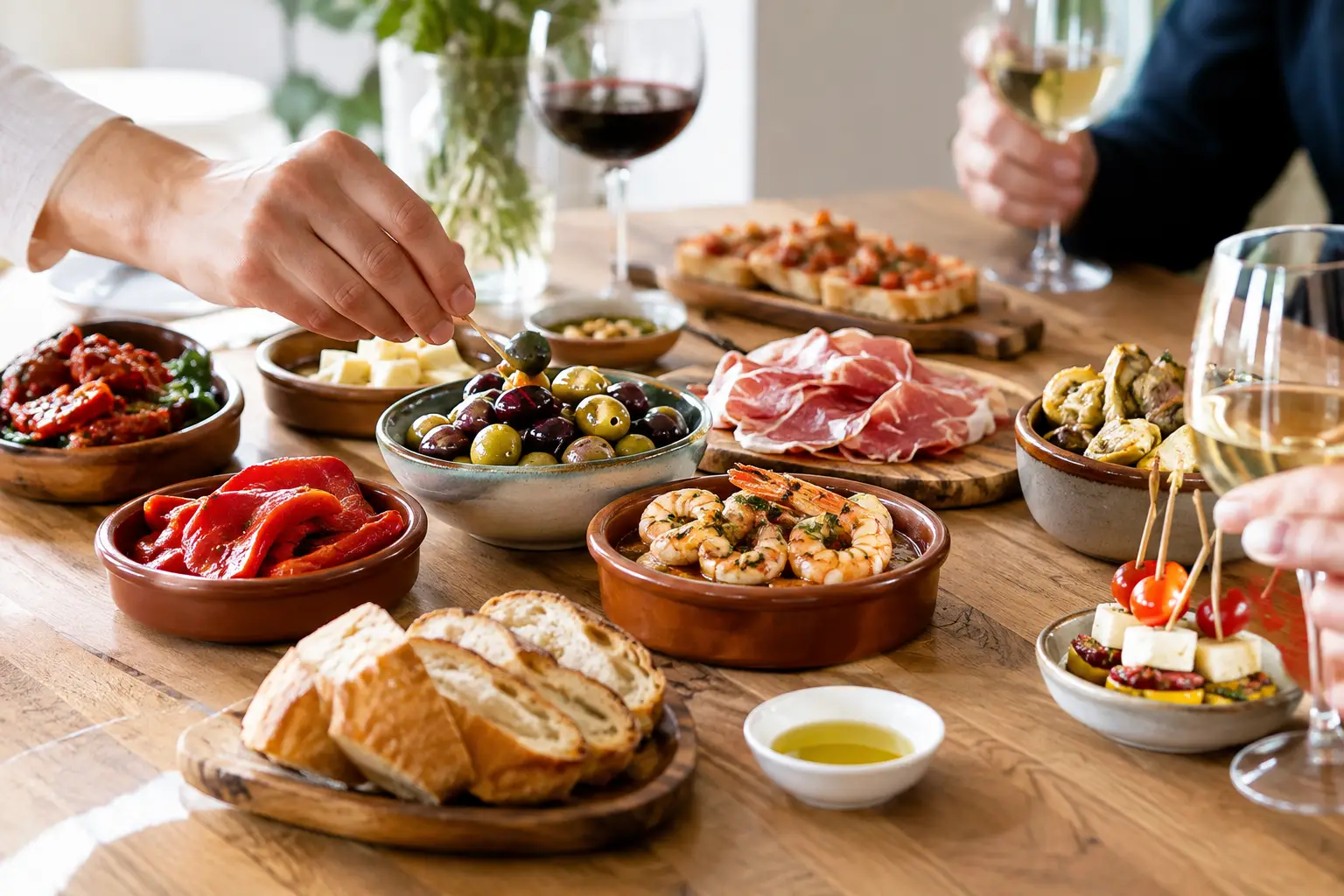
A well-balanced spread has a little heat, a little crunch, something creamy, something briny, and at least one dish that arrives warm. Think patatas bravas with smoky sauce, garlicky shrimp, crispy croquetas, marinated olives, jamón, manchego, roasted peppers, and pan con tomate. For guests who do not eat meat, grilled seasonal vegetables, blistered shishito peppers, marinated mushrooms, and a good Spanish tortilla bring just as much personality.
Build a Menu With Rhythm
The most memorable tapas parties do not place every dish on the table at once. Begin with snacks that welcome guests with a drink in hand: olives, almonds, chips, cheese, and thin slices of cured meat. These are your first bites, and they buy you time to finish anything warm.
Bring out the hot dishes in waves. Set down the patatas bravas, then let everyone enjoy them before adding shrimp or croquetas. A staggered approach keeps the table feeling active and makes even a modest menu feel generous. It also means fewer dishes sit cooling while guests are still parked by the bar.
Save one showstopper for the middle of the evening. Paella is ideal when you have a larger group and the time to make it properly, but it is not mandatory. A large tortilla española, roasted chicken with peppers, or a skillet of chorizo and chickpeas can play the same role. The point is to give the party a delicious center of gravity.
A simple formula for choosing tapas
Build your menu around one potato or bread dish, one seafood dish, one meat dish, two vegetable-forward plates, one cheese or cured-meat option, and one substantial centerpiece. Add a sweet finish if you like, such as churro-inspired bites, flan, or dark chocolate with orange.
If your group includes adventurous eaters, lean into bolder flavors like anchovies, octopus, or blue cheese. If you are hosting a mixed crowd, offer familiar favorites alongside one or two conversation starters. The best menus invite guests to try something new without making anyone feel stranded.
Set the Table for Sharing, Not Stiffness
A tapas table does not need matching dinnerware or a formal place setting. It does need enough small plates, cocktail napkins, forks, and serving utensils that guests can help themselves comfortably. Use low bowls and platters so people can see what is available, and place bread near saucy dishes from the start.
Keep the middle of the table open for food. Candles, flowers, and colorful linens create atmosphere, but they should not compete with the plates. A few votives, oranges or lemons in a bowl, and a playlist with Spanish guitar, Latin pop, or upbeat flamenco-inspired energy can create a warm scene without turning the room into a theme party.
If space is tight, create zones. Put drinks in one area, cold tapas on a central table, and hot food near the kitchen. Guests will naturally circulate, and that movement is part of the fun. A lively room beats a perfectly choreographed one.
Pour Drinks That Keep the Conversation Flowing
Sangría belongs at a tapas party because it is festive, shareable, and easy to make ahead. Prepare a red wine version with citrus and fruit, or choose white wine and stone fruit for a brighter, lighter pitcher. Do not overload it with hard liquor. You want a drink guests can enjoy through several rounds of food, not something that steals the show after one glass.
Offer one other drink choice, preferably something crisp. Spanish sparkling wine, a chilled albariño-style white, a light lager, or a zero-proof citrus spritz all pair beautifully with salty, savory tapas. Keep plenty of sparkling water on hand too. Between cured meats, cheeses, and fried bites, guests will appreciate it.
The food should lead the pairing. Rich croquetas and jamón welcome bubbles. Garlicky shrimp love a fresh white wine. Patatas bravas can handle a fuller red or a cold beer. There is no need to over-explain any of it – pour, taste, and let your guests find their favorites.
Prep Like a Host Who Wants to Enjoy the Party
The difference between a relaxed tapas host and a frazzled one is usually what happened before the first doorbell. Make sauces, chop vegetables, marinate olives, set out serving dishes, and chill wine earlier in the day. Anything that can be served at room temperature should be fully ready before guests arrive.
Reserve the final 30 minutes for only a few tasks: heating the oven, finishing a skillet dish, arranging bread, and pouring the first drinks. Avoid choosing a menu with five recipes that demand your full attention at the same time. One sizzling pan is exciting. Three is a traffic jam.
It also helps to label dishes if you are serving a crowd or accommodating dietary needs. A small card noting vegetarian, gluten-free, or spicy options lets guests make choices easily and saves you from answering the same question all night.
Know when to bring in help
For a birthday, engagement celebration, office gathering, or group that is larger than your dining table can comfortably handle, hosting at home may not be the best move. Catering can keep the flavors and abundance while freeing you to actually be part of the celebration. For an out-of-home gathering, Bulla Gastrobar brings that lively Spanish small-plate energy to the table, with shareable tapas, paella, sangría, and room for everyone to settle in.
Let the Night Unfold
Do not rush to clear every plate or apologize if a dish takes an extra few minutes. Tapas culture makes room for pauses. Guests can graze, refill a glass, trade recommendations, and circle back for another bite. That easy pace is the whole point.
Invite people to pass plates, ask what they liked best, and keep adding small surprises to the table. Maybe it is warm bread with tomato, a final dish of crispy potatoes, or a plate of something sweet with coffee. The goal is not a flawless production. It is a table full of flavor, laughter, and the kind of appetite that makes no one want to leave just yet.