

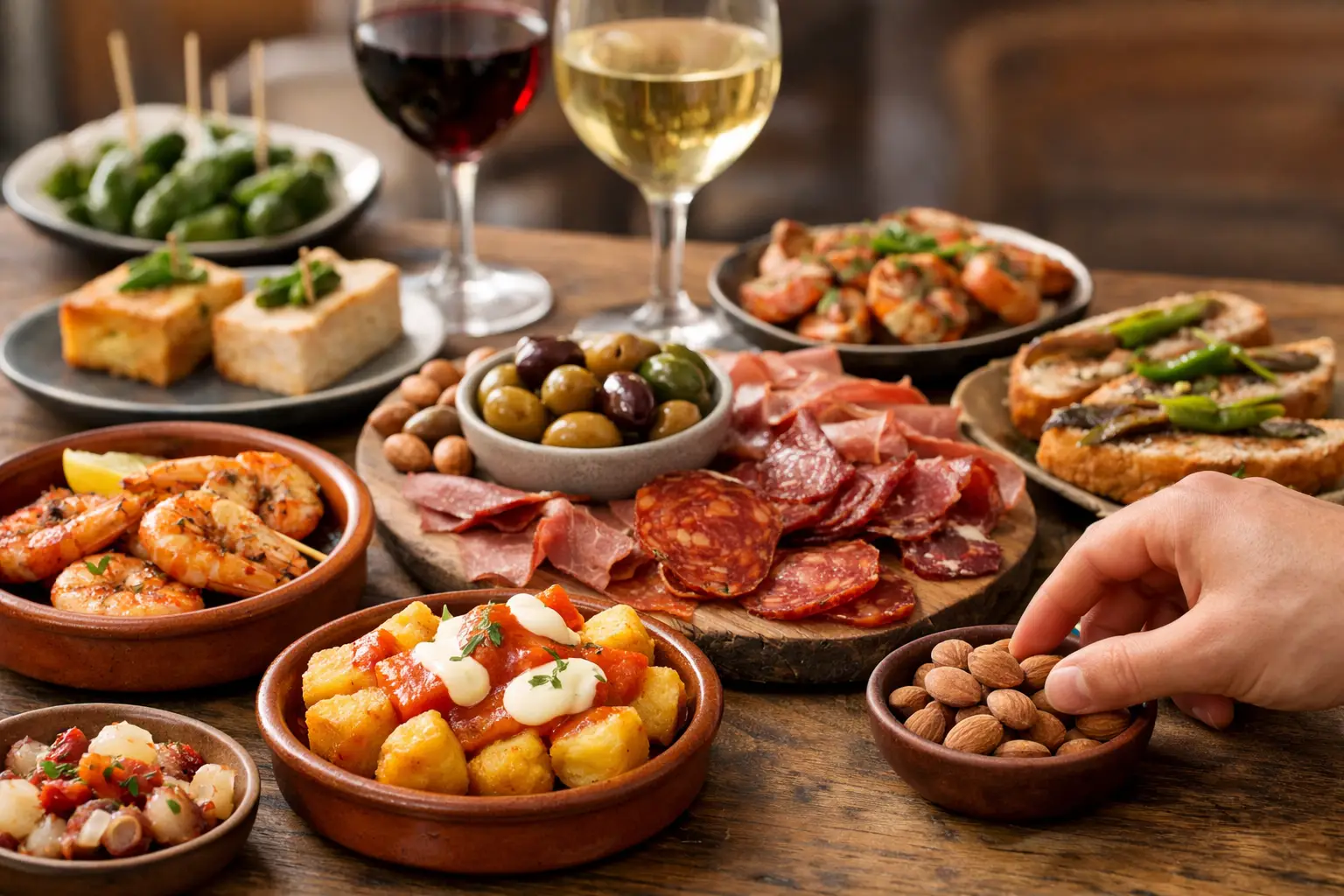
A tapas table should feel like a celebration: sizzling garlic, crisp croquetas, a bright pour of sangría, and plates made for passing. For guests with food allergies, that shared rhythm calls for a little extra conversation before the first bite. This Spanish food allergy guide helps you recognize where common allergens may appear in Spanish cooking and how to speak up clearly when dining out.
The goal is not to make Spanish food feel off-limits. It is to make the experience more informed, more relaxed, and still full of flavor. Recipes, suppliers, and preparation methods vary by restaurant, so the kitchen is always the final word on whether a dish can meet your needs.
Why Tapas Need an Allergy Game Plan
Spanish dining is built around sharing. That is part of the fun, but it can also create risk when dishes arrive at different times, serving spoons travel around the table, or one plate sits close to another. A patatas bravas order may be naturally free of one allergen, while its sauce or fryer is not. A grilled seafood dish may sound simple but be finished with butter, a wine reduction, or a garnish containing nuts.
For a serious allergy, do not rely on a menu symbol, a familiar dish name, or a quick guess from a fellow diner. Tell your server about the allergy as soon as you are seated and explain how carefully the meal must be handled. If you carry emergency medication, keep it with you, not in a bag across the room. Those few practical steps make it easier to settle in, create a stir, and enjoy the table.
Common Allergens in Spanish Food
Spanish cuisine offers plenty of straightforward grilled meats, vegetables, rice dishes, and olive-oil-forward flavors. It also uses ingredients that can be less obvious to guests who are new to tapas. Here is where to look twice.
Gluten and wheat
Bread is central to many Spanish meals, from crusty slices served alongside tapas to breadcrumbs used in croquetas, meatballs, and fried items. Wheat may appear in batter, flour-thickened sauces, marinades, or the roux inside a creamy béchamel filling. Shared fryers are another key question: even a naturally gluten-free item can come into contact with breaded foods in the oil.
Paella is traditionally made with rice, but the full dish matters more than the base. Ask about the stock, seasoning blends, chorizo, garnishes, and whether the kitchen can avoid cross-contact during preparation.
Dairy and egg
Cheese boards, creamy sauces, béchamel, aioli, flan, custards, and certain pastries are common places for dairy or egg. Aioli deserves special attention. Traditional aioli is an emulsified garlic sauce that often includes egg, although recipes can differ. A potato dish, sandwich, or seafood tapa may arrive with aioli even if the menu description focuses on the main ingredient.
If you avoid dairy, also ask about butter used to finish vegetables, seafood, rice, or sauces. Olive oil is a Spanish pantry star, but it is not the only cooking fat on every plate.
Shellfish, fish, and seafood
Spain’s coastal food traditions shine in dishes featuring shrimp, squid, octopus, clams, mussels, anchovies, and salt cod. Seafood can also appear in stocks, broths, sauces, and rice preparations. A fish allergy and a shellfish allergy are not the same, so be specific about what you must avoid.
For a shellfish allergy, ask whether seafood is cooked on the same grill, plancha, fryer, or prep surface as your food. The answer may shape the safest choice, especially during a busy service when the kitchen is firing several tapas at once.
Nuts, sesame, and legumes
Almonds are a classic Spanish ingredient. You may find them in romesco sauce, marzipan, desserts, salads, and garnishes. Romesco often contains almonds or other nuts, so it is never a sauce to assume is nut-free. Sesame may appear in modern preparations, dressings, bread, or garnishes.
Legumes deserve their own conversation. Chickpeas, lentils, and beans are common in Spanish cooking, and some guests have allergies to specific legumes. If peanuts, soy, peas, chickpeas, or another legume are a concern, name the ingredient rather than simply saying “legumes.”
How to Order with More Confidence
A clear, early conversation gives the restaurant the best chance to help. Start with the allergy, then state the level of sensitivity and whether cross-contact is a concern. “I have a severe shellfish allergy. Can the kitchen safely prepare a dish without shellfish or shared equipment?” is much more useful than “Is this safe?”
It also helps to keep questions focused. Rather than asking a server to recite every ingredient in every dish, identify two or three options that appeal to you and ask how they are prepared. A knowledgeable server can then consult the kitchen and guide the order without turning a lively dinner into a guessing game.
Ask these questions when they apply:
- Does this dish contain my allergen in the sauce, stock, seasoning, garnish, or cooking fat?
- Is it prepared on shared equipment, including a grill, fryer, cutting board, or utensil?
- Can the kitchen make it without the sauce or topping, and would that actually address the allergy?
- Are there ingredients in the dish that may change based on availability or the chef’s preparation?
- Which menu item does the kitchen recommend as the safest option today?
The phrase “today” matters. Menus evolve, specials rotate, and ingredient brands change. Even a dish you have enjoyed before deserves a fresh check on your next visit.
Useful Spanish Food Words to Know
Knowing a few menu terms can make a tapas order feel less mysterious. “Pan” means bread, “harina” means flour, “leche” means milk, “queso” means cheese, and “huevo” means egg. “Frutos secos” generally refers to nuts, while “almendras” means almonds. “Mariscos” means shellfish or seafood, depending on context, and “pescado” means fish.
Sauce names are worth reading closely, too. Aioli may contain egg. Romesco often contains nuts. Béchamel is typically made with milk and flour. A “frito” preparation means fried, which should prompt a fryer question for guests avoiding gluten, seafood, or another allergen affected by cross-contact.
These words are useful signals, not a substitute for confirming the actual recipe. A menu description tells you where to start the conversation. The kitchen tells you what is possible.
Making the Shared Table Work for Everyone
Food allergies do not mean one guest has to sit out while everyone else enjoys tapas. A little coordination keeps the table social and makes plate-passing easier. Consider ordering a few clearly confirmed dishes for the allergic guest first, then add shared plates with a plan for separate serving utensils and a designated spot on the table.
If one dish contains an allergen, keep it from becoming the center of the passing parade. Ask for an extra plate, avoid using the same fork across dishes, and remind friends not to place bread or garnishes onto someone else’s food. These are small moves, but they protect the person at the table without draining the energy from the occasion.
At Bulla Gastrobar, or any restaurant serving chef-driven tapas, let the team know before ordering rather than trying to sort it out once dishes are landing. The more specific you are, the better the team can explain available options and preparation limits.
A Note on Drinks and Dessert
Allergy planning does not stop with savory tapas. Sangrías, cocktails, and mocktails may include fruit purées, syrups, flavored liqueurs, dairy-based ingredients, or garnishes that matter for an allergy. Ask about cocktail components if you are avoiding a particular fruit, nut, dairy ingredient, or additive.
Dessert is another moment to pause. Spanish sweets often feature eggs, milk, wheat, almonds, and other nuts. If your group is celebrating, it can be tempting to make a quick choice at the end of the meal. Give the same clear notice you gave at the start, and let the server confirm what can be accommodated.
The best tapas nights build momentum: one plate sparks the next, glasses clink, and the table finds its own rhythm. With an honest allergy conversation and a few smart questions, you can leave more room for the flavors, the company, and the happy buzz of a meal worth sharing.