

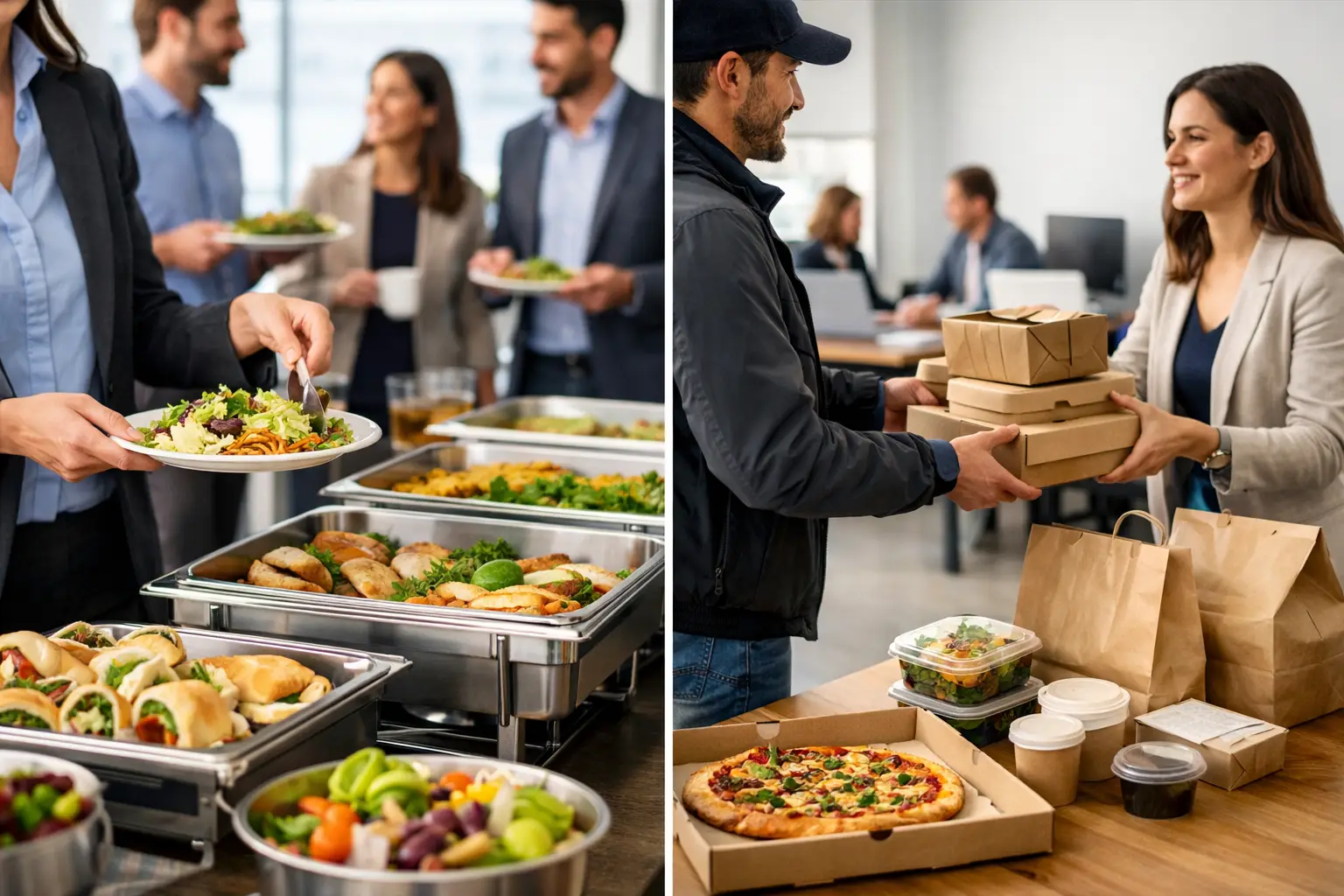
A lunch order can do more than fill a conference-room table. It can welcome a new hire, keep a client meeting moving, or give a busy team a reason to step away from their screens together. When weighing lunch catering vs delivery, the better choice comes down to the kind of gathering you want to create – and how much coordination it requires from your team.
Delivery is often the quick, efficient answer. Catering adds more intention, more variety, and often a more polished experience for the people around the table. Both can make lunch delicious. The difference is whether lunch is simply a break in the day or an occasion with a little buzz behind it.
Lunch Catering vs Delivery: The Core Difference
Lunch delivery generally means prepared meals arrive at your office, home, or meeting venue ready to hand out. It may be individual entrées, boxed lunches, or a few shared dishes placed on the table. It is built for speed, convenience, and smaller groups with straightforward needs.
Lunch catering is designed around the group experience. The order is usually planned in advance, sized for a larger headcount, and organized around a menu that gives guests choices. Depending on the event, catering can include clearly labeled packaging, serving utensils, chafing setups, beverages, desserts, and support that makes the meal feel considered rather than improvised.
The line can blur. A catered order may be dropped off without staff, while delivery may include a large-format spread. The practical distinction is planning: catering is built to serve an event, while delivery is built to get food from the kitchen to the door with minimal friction.
Choose Delivery When Time Is Tight
A delivery order shines when the group is small, the schedule is moving fast, or everyone needs their own meal. Think of a working lunch for six, a last-minute planning session, or a remote-team day when meals are being sent to different addresses. Individual packaging makes it easy to accommodate different arrival times and lets guests eat when the agenda allows.
Delivery is also a sensible choice when you need clear per-person budgeting. Individual selections can make dietary preferences easier to manage, especially for a group where one person wants a hearty sandwich, another needs vegetarian options, and someone else is looking for a gluten-conscious choice.
There is a trade-off: individual meals can make the table feel quieter. Everyone opens their own container, eats their own choice, and gets back to work. That is exactly right for a focused meeting. For a relationship-building lunch, though, it may miss the energy that comes from passing plates and asking, “Have you tried this yet?”
Best delivery moments
Delivery is usually the right fit for small teams, short meetings, individual meal preferences, and orders placed on a compressed timeline. It works especially well when food needs to arrive in a defined window and the host does not need a presentation-worthy setup.
Choose Catering When Lunch Is Part of the Occasion
Catering earns its place when the food helps set the tone. A client pitch, leadership offsite, training day, team milestone, and employee appreciation lunch all benefit from a spread that invites people to gather before the meeting starts and linger after it ends.
A catered menu also gives hosts more control. Rather than collecting a dozen separate orders and hoping they arrive correctly, you can build a balanced table with substantial dishes, bright salads, vegetarian options, sides, and something sweet. The group sees the meal at once, which makes it easier to serve, share, and enjoy.
Spanish tapas are particularly suited to this kind of lunch. Small plates encourage easy conversation because no one has to commit to just one thing. A table with croquetas, patatas bravas, seasonal vegetables, grilled meats, and paella feels generous without becoming stiff. Guests can sample, compare favorites, and return for one more bite between agenda items.
For larger groups, catering can also reduce the hidden work that falls on the organizer. Thoughtful portions, serving tools, labels, and an agreed delivery time make a difference when you are also greeting guests, managing a presentation, or trying to keep a training session on schedule.
Consider the Guest Experience, Not Just the Headcount
Headcount matters, but it should not be the only deciding factor. A group of eight prospective clients may call for a more elevated catered spread than a 20-person internal check-in. Ask what the meal needs to accomplish.
If people are meeting for the first time, shared food creates natural conversation. If the lunch is a thank-you, variety feels more generous than a single standard entrée. If the event is highly structured, individual delivery may keep the room cleaner and the timing tighter.
The setting matters, too. A boardroom with a large central table can handle family-style dishes beautifully. A classroom-style training room with laptops at every seat may be better served by neatly packaged lunches. At an outdoor gathering, choose dishes that travel well and can be enjoyed without a formal place setting.
Bulla Gastrobar brings the social spirit of Spanish dining to catered occasions, making it easier to turn an ordinary afternoon meeting into a table worth gathering around.
Plan for Variety Without Overordering
The most successful catered lunches have contrast. Include something satisfying and substantial, something fresh, and choices that welcome a range of eaters. A menu built entirely around rich dishes can feel heavy by 2 p.m.; a menu that is all salads may leave guests scanning for snacks an hour later.
For a shared Spanish-style spread, think in layers: a few familiar favorites, vegetable-forward plates, protein choices, and one centerpiece that signals the meal is special. Paella is a natural option for this role because it arrives with color, aroma, and a sense of occasion. It also serves a group more gracefully than a pile of individual containers.
Do not treat dietary needs as an afterthought. Collect them early, then choose dishes that allow everyone to participate in the meal rather than receive a separate, lesser substitute. Clearly identifying vegetarian, vegan, gluten-conscious, and allergen-related options helps guests feel at ease and prevents the host from answering the same questions all lunch long.
Portion planning depends on the event. For a working lunch, guests may eat less than they would at a celebration because they are taking notes or preparing to present. For a midday social event, expect more grazing and build in a little room for second helpings. Your catering team can help calibrate quantities based on the group, time of day, and menu style.
The Cost Question Is Bigger Than the Food
At first glance, delivery may look less expensive because it asks for less setup and planning. That can be true for a small, simple order. But compare the complete cost, not only the menu price.
With individual delivery, there may be higher packaging needs, separate customization, and a larger chance of unused meals if attendance shifts. With catering, shared dishes can offer better variety per dollar and reduce excess packaging. The value becomes even clearer when lunch is meant to support an important business goal, such as impressing guests or rewarding a team.
Budget for service details as well. Taxes, delivery fees, gratuity, disposable plates, beverages, and setup needs can change the final number. Confirm what is included before the day of the event, especially if your venue has delivery instructions, security check-in, parking limitations, or a narrow setup window.
A Simple Way to Make the Call
Choose delivery when the priority is speed, individual convenience, and a smaller order. Choose catering when the priority is hospitality, variety, and a meal that brings people into the same conversation.
If you are still on the fence, picture the first five minutes after the food arrives. Will people grab a labeled meal and return to their seats? Delivery is likely the cleanest choice. Will they gather at the table, point out dishes, pour a drink, and start talking before the meeting begins? Catering is the better move.
A well-planned lunch does not need to be extravagant to feel memorable. Give your guests food with flavor, choices with purpose, and enough room around the table for the good conversations to start.