


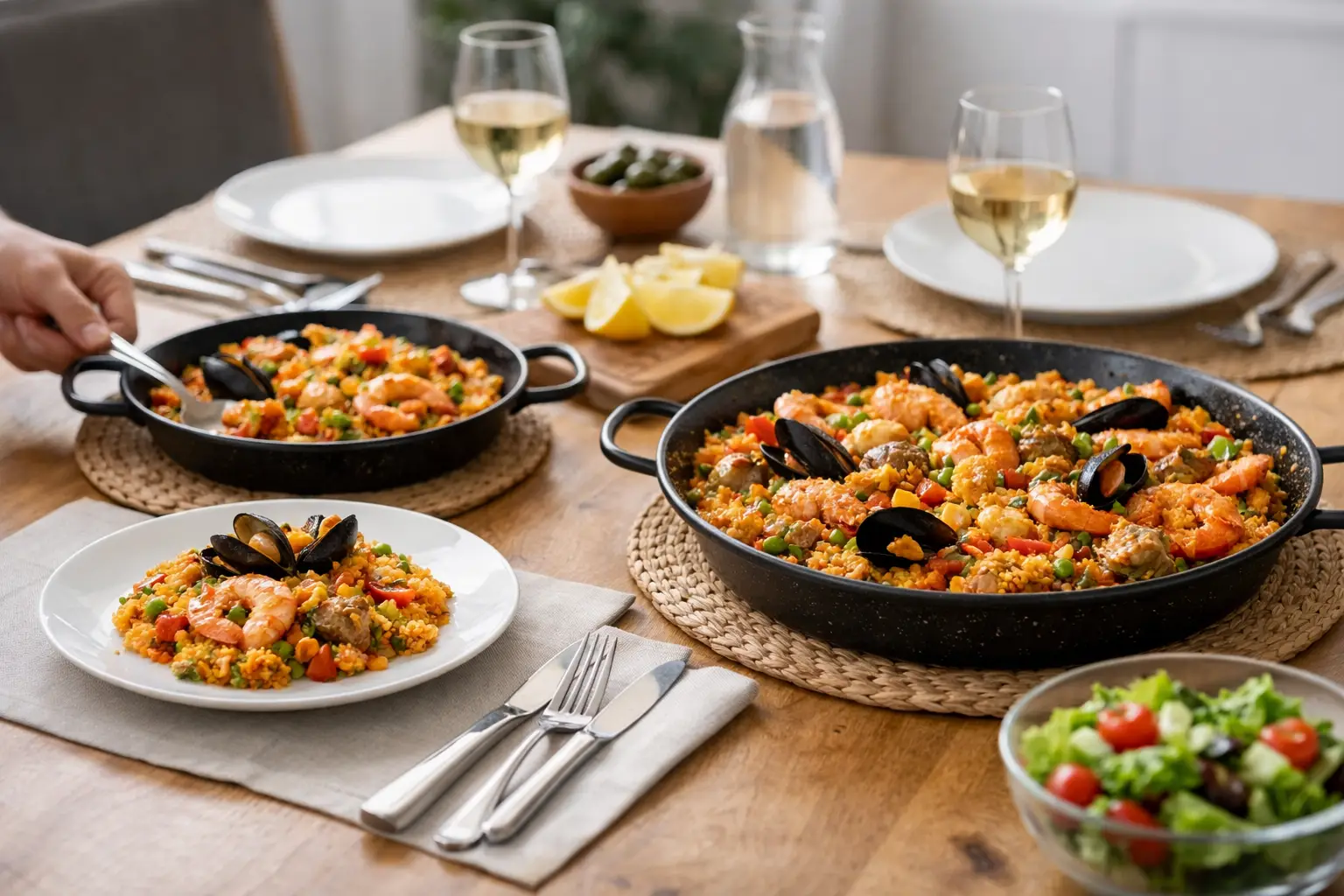
A paella arriving at the table should create a stir: the scent of saffron, the color of the rice, the first crisp scrape of socarrat from the pan. But before that moment comes a practical question for every host and hungry group: how to select paella portions without ordering too little, overdoing it, or leaving no room for the tapas everyone came to share.
The answer depends on your table. Paella is a communal centerpiece, not usually a solo plate, and the best order considers your group size, appetite, timing, and the small plates already in play. A smart plan keeps the table buzzing, gives everyone a satisfying spoonful or two of rice, and leaves room for another round of sangría.
Start With the Way Your Group Wants to Dine
Paella portions make the most sense when you think about the whole meal, not just the pan. A group meeting for a full Spanish dinner may begin with jamón, croquetas, patatas bravas, grilled vegetables, and other tapas before the paella arrives. In that setting, the paella is a generous shared course and a flavorful finale to the savory part of the meal.
If your group plans to make paella the main event, select enough portions for every person at the table. This is often the right move for a family dinner, a business lunch with a clear schedule, or a celebration where guests are arriving hungry and ready to eat.
If you are ordering several tapas, a simple rule works well: plan paella for about half to three-quarters of the group, then let the other shared dishes fill out the meal. For example, four guests who have ordered a lively spread of tapas may be happy with a paella designed to share among two or three people. Four guests who want paella to carry dinner should choose four portions.
How to Select Paella Portions by Group Size
The portion count on a restaurant menu is your starting point. If a paella is listed for two, it is intended to serve two diners as a main course or more people as part of a broader tapas-style meal. Honor that guidance, especially when the pan is prepared to order and the rice is meant to reach the table at its best.
For two people, choose a two-person paella when it is the focus of the meal. It makes a date night feel instantly more festive, particularly with one or two tapas to begin. If you both want to snack through a larger variety of small plates, share the paella as a finishing course and keep the tapas selections intentional rather than excessive.
For four people, a paella serving four is the easy, satisfying choice when the table wants a true paella dinner. If your group is ordering several hearty starters, two smaller paellas or a portion count that serves two to three may be enough, depending on the menu’s available sizes. Choosing two varieties can also keep the conversation moving, since guests can compare flavors and pass the spoons around.
For six or more, think of paella as one essential part of the party, then build outward. Larger groups often enjoy more than one pan so everyone has a clear share and the table can try different styles. Consider the preferences in the group before you order: seafood enthusiasts, meat lovers, vegetarians, and guests with dietary needs may be better served by a mix of dishes than one pan expected to please everyone.
For a celebration of eight, 10, or more, paella is often best planned with the restaurant in advance. The right quantity can depend on the available pan sizes, the rest of the menu, and the pace of your event. That little bit of planning helps the kitchen time the experience so the food lands ready for the table, not before the first round of guests has arrived.
Let Appetite Set the Pace
Not every two-person paella serves the same two people. A pair of friends meeting after work for cocktails and bar bites may want a lighter share than two guests arriving after a long day with one thing on their mind: rice, seafood, and that golden crust at the bottom of the pan.
Consider these appetite cues before you order. If your group skipped lunch, has been traveling, is coming from a workout, or is gathering for a late dinner, lean toward full paella portions. If it is brunch, happy hour, or a meal with appetizers, dessert, and drinks in the plan, a slightly lighter paella order may feel just right.
Children can also shift the math. A family of four with two younger children may find a paella for three or four, plus a few familiar tapas, more comfortable than ordering four full adult portions. Teenagers, on the other hand, can eat like a table of adults. Ask the people in front of you, not the number on the reservation, and you will make a better call.
Match the Paella to the Rest of the Table
Paella is satisfying because rice carries deep flavor, but it is even better when the surrounding dishes create contrast. Crisp croquetas, salty cured meats, bright salads, garlicky vegetables, and seafood tapas each bring a different rhythm to the table. The more substantial those opening dishes are, the less paella each guest may need.
This does not mean ordering a mountain of food all at once. Spanish dining has a natural pace. Begin with a few tapas, let the table settle in, and make paella the dish everyone anticipates. At Bulla Gastrobar, dishes are designed for that social flow, where each new plate gives the group another reason to talk, taste, and linger.
Be mindful of rich pairings. A paella with bold proteins alongside fried tapas, cheese, and dessert can be a glorious feast, but it can also become more food than the table can enjoy comfortably. Balance richer selections with one or two fresh, lighter plates, then choose the paella portions based on how much of the meal you expect the rice to carry.
Choose Variety Without Shortchanging Anyone
Ordering two paellas for a group can be a great move, but only if each pan has enough reach. A pan that serves two will not satisfy six guests simply because everyone wants one bite. It can work as a taste alongside a larger main paella, though, especially when one variety suits a particular preference or dietary consideration.
For a group of four, two paellas for two offer an easy way to explore different flavors while giving every guest a real serving. For six, consider whether two pans will cover the group as mains or whether they are better treated as part of a tapas-forward spread. The key is to avoid calling a few spoonfuls dinner when your guests are expecting a full meal.
When in doubt, choose the pan that can feed the whole table first. Add a second variety only after the base portion count is covered. Everyone should get the comfort of a generous serving before the table starts negotiating the last bites of rice.
Timing Matters More Than Most Hosts Expect
Paella is worth the wait because it is cooked with attention, and that timing should shape your order. If your group is large or heading to a show, meeting, or game afterward, mention your schedule early. A restaurant team can help guide the order and set expectations so your meal keeps its celebratory energy instead of feeling rushed.
For a relaxed dinner, let paella arrive after the first round of tapas. This creates the classic shared-table rhythm: snack, sip, talk, then gather around the pan. For a lunch with limited time, keeping the order focused can make more sense. Fewer opening dishes and enough paella for the group gives everyone a clear, satisfying meal without stretching the clock.
Ask for Guidance When the Table Is Complicated
There is no prize for guessing perfectly. If your group includes selective eaters, guests with allergies, a mix of big and light appetites, or a celebration with a changing headcount, ask your server for help selecting paella portions. They can explain current portion sizes, ingredients, preparation timing, and which tapas will complement your choice.
That guidance is especially useful for private dining, office lunches, and larger family gatherings. A well-planned menu gives guests options while preserving the shared spirit that makes Spanish dining so memorable. It also helps prevent the two outcomes no host wants: a nearly empty table too soon, or a beautiful pan of rice left behind when the party is ready for dessert.
The best paella order leaves the table happily occupied: forks reaching in, glasses clinking, and just enough room for one more bite. Choose portions around your people and your occasion, then let the pan do what it does best – bring everyone closer together.