


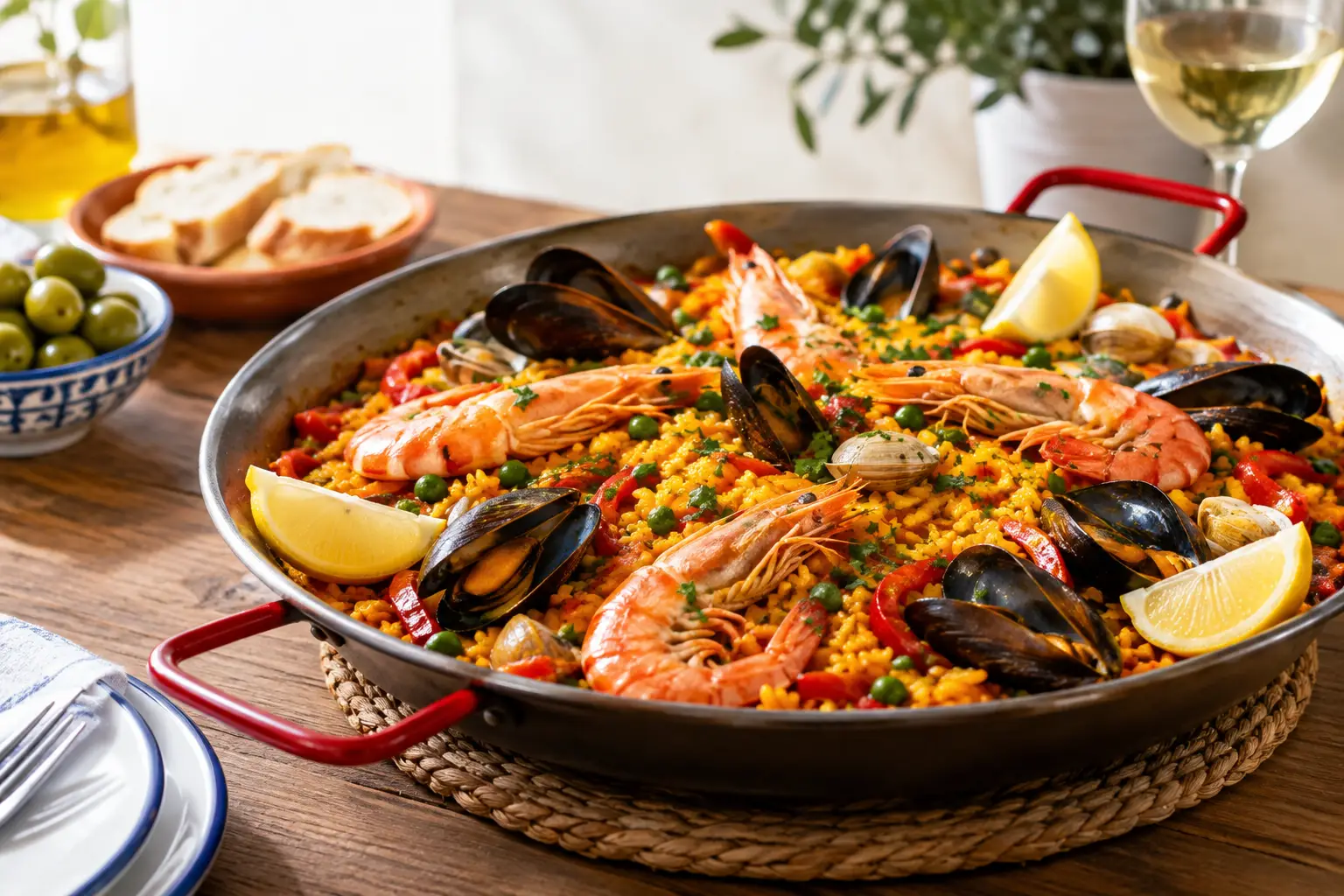
A paella arriving at the table does more than feed a group. It creates a pause in the conversation, a reason to lean in, and a centerpiece worth sharing before the first spoonful disappears. If you are wondering when to serve paella, the short answer is when you want the meal to feel like an occasion. The better answer depends on your guests, your schedule, and whether you can serve it at its best: hot, freshly finished, and ready for everyone to enjoy together.
Paella is not a dish made for rushed eating or separate plates. Its spirit is communal. The rice, saffron, sofrito, vegetables, seafood, meats, and crispy socarrat at the bottom of the pan all ask guests to gather around and create a little buzz. That makes it a natural choice for celebrations, relaxed weekends, and any meal where the table is meant to be as lively as the food.
When to Serve Paella: Choose the Moment, Not Just the Menu
Traditionally, paella is often a midday meal in Spain, especially on weekends, when friends and family have time to linger. There is a practical reason for that tradition. A pan of paella is generous, satisfying, and best followed by easy conversation rather than a sprint back to work.
For a stateside gathering, lunch still makes a brilliant fit. Serve paella for a Saturday or Sunday lunch when guests can settle in with sparkling sangría, a few tapas, and no pressure to watch the clock. It is especially good for birthdays, family visits, graduation weekends, and casual celebrations that deserve more energy than a standard brunch.
Dinner works beautifully, too, particularly when the goal is a festive shared meal. A paella night can anchor a date night with friends, an anniversary dinner, a team celebration, or a warm-weather patio gathering. The key is timing: make paella the main event, not an afterthought added between appetizers and dessert. Guests should arrive ready to snack, sip, and enjoy the anticipation while the pan comes together.
The Best Occasions for a Paella Pan
Paella has enough presence for a special occasion but enough warmth for an informal one. It shines when a group wants variety without everyone having to make a separate choice.
Weekend lunches that stretch into the afternoon
A long lunch is perhaps paella’s happiest setting. Begin with shareable bites such as olives, croquetas, patatas bravas, or a bright salad. Then bring out the paella when everyone has settled into the rhythm of the table. This pacing gives the dish the attention it deserves and keeps guests pleasantly hungry for that first scoop of rice.
For hosts, it also removes the pressure of a highly structured dinner party. Guests can arrive in a relaxed window, help themselves to a drink, and stay for coffee or something sweet. Paella keeps the mood polished without making the afternoon feel formal.
Celebrations where everyone belongs at the table
A large pan has a way of making people feel included. Instead of individual entrées arriving at different times, the table shares one colorful centerpiece. That makes paella especially fitting for birthdays, engagement celebrations, reunions, and family-style holiday gatherings.
Consider your guest count before choosing the pan. A smaller group can enjoy one classic style, while a bigger party may benefit from two different paellas, such as a seafood option and a chicken-and-vegetable option. The trade-off is simple: more variety delights the table, but too many pans can dilute the dramatic arrival. For most gatherings, two well-chosen options are plenty.
After-work dinners with a reason to linger
Paella is a smart answer to the question, “Where should we go after work?” when the group wants more than a quick drink and a snack. Start with bar tapas and cocktails, then move into paella once everyone has arrived. The meal naturally encourages people to put phones down, pass plates around, and stay for another round of conversation.
At Bulla Gastrobar, that shared-table energy is part of the experience. A chef-driven paella turns a regular catch-up into a dinner with a little Spanish spark, whether the plan is a weekday reunion or a Friday night celebration.
Outdoor gatherings and warm-weather evenings
Paella looks right at home outdoors. Its sunny color, aromatic steam, and wide pan bring a celebratory feel to patios, poolside parties, and backyard dinners. Serve it after guests have had a chance to cool down with chilled wine, sangría, or a crisp nonalcoholic refresher.
Heat matters here. On a very hot afternoon, a rich meat-forward paella may feel heavy, while seafood or vegetable paella can feel brighter and more refreshing. As the evening cools, heartier flavors become more appealing. Let the weather guide the style, not just the calendar.
When Not to Serve Paella
Paella is generous, but it is not always the easiest choice. Avoid making it the centerpiece when guests need to eat in a hurry, when arrivals will be spread far apart, or when the gathering is built around grazing rather than sitting down together. The dish waits better than a soufflé, but it is at its most exciting soon after it leaves the heat.
It also deserves a little planning around dietary needs. Seafood allergies, shellfish preferences, vegetarian guests, and spice tolerance can all shape the right pan. There is no need to make the meal complicated. Ask before you plan, choose an inclusive option when possible, and make sure every guest has satisfying tapas to enjoy alongside the rice.
A paella dinner may not be ideal for a very small, quiet meal either. For two people, it can still be romantic, but the pan should feel intentional rather than excessive. Pair it with a few small plates and a relaxed pace, and let the shared spoonfuls do the talking.
How to Time Paella So It Hits the Table Right
The best paella arrives after the first wave of hunger and before anyone starts wondering where dinner is. For a restaurant meal, reserve a time that allows your group to have a drink and a few tapas first. For a home gathering, invite guests 30 to 45 minutes before you expect to serve the main dish.
Do not fill the table with heavy starters. Paella is satisfying enough to carry the meal, and too much food beforehand can make its arrival feel less exciting. A few salty, crunchy, creamy, or bright tapas are ideal because they stimulate the appetite without stealing the show.
Once the paella lands, let it be seen. A wide pan at the center of the table is part of the occasion. Encourage guests to serve from the pan, reaching for their favorite ingredients and the coveted browned rice at the bottom. That crisp layer, known as socarrat, is not a mistake. It is one of the best reasons to slow down and savor the final bites.
What to Serve With Paella
Paella does not need a crowded supporting cast. It benefits from contrast: something fresh, something bubbly, and something sweet later on. A citrusy salad can cut through the richness of the rice, while marinated olives or charred vegetables add easy, savory notes before the main course.
For drinks, match the mood and the pan. A dry Spanish white or sparkling wine is lively with seafood paella. A fruit-forward red can work with chicken, chorizo, or other deeper flavors. Sangría is made for a social table and is especially welcome when the gathering is celebratory, sunny, or full of first-time paella diners.
Dessert should feel like a final flourish, not another heavy course. Think creamy flan, churros with chocolate, or a simple fruit-forward finish. The goal is to leave guests content, still talking, and already suggesting the next paella night.
Paella is best served when the people around it have time to enjoy it. Choose the lunch, dinner, celebration, or patio evening that invites everyone to stay a little longer, pass the pan, and create a stir worth remembering.