


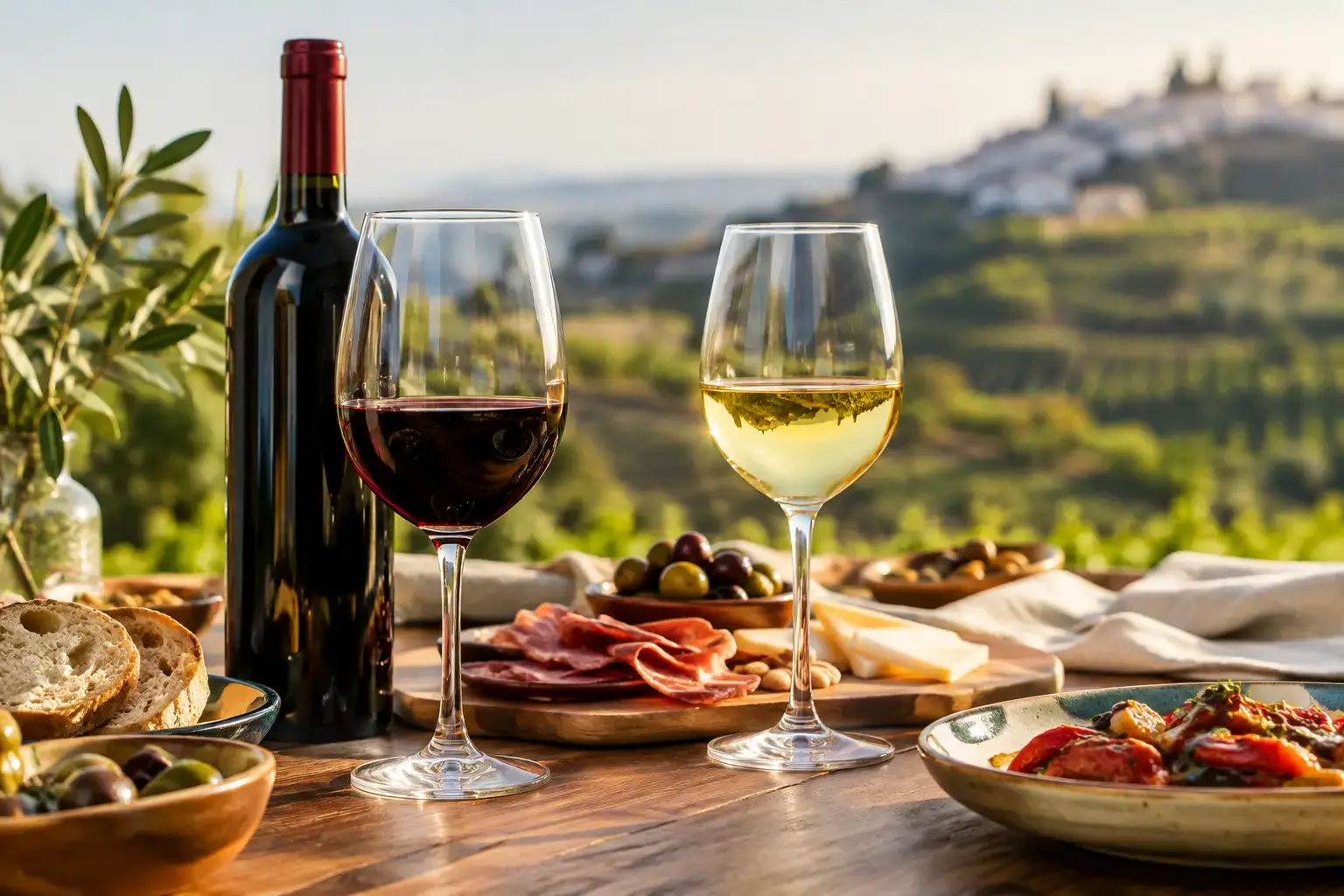
A great bottle can change the rhythm of dinner. Spanish wines have a way of doing just that: a chilled glass of Albariño wakes up salty bites, Tempranillo settles beautifully beside charred meats, and sparkling Cava makes even a casual gathering feel worth celebrating. They are made for the kind of table where plates keep arriving, glasses keep clinking, and everyone finds one more thing to taste.
Spain is one of the world’s most exciting wine countries, yet it is still wonderfully easy to approach. You do not need to memorize every region before ordering. Start with the flavor on the table, the mood of the occasion, and whether you want a wine that refreshes, comforts, or creates a little stir.
Why Spanish wines belong at a tapas table
Tapas are not built around a single main course, and that is exactly why Spanish wine is such a natural fit. A meal might move from briny olives and crispy croquetas to blistered vegetables, jamón, seafood, and paella. The best pairing is rarely one wine that matches every bite perfectly. It is a flexible wine with enough freshness, texture, or savory character to stay interesting as the table evolves.
Spanish winemakers have long worked with food in mind. Many wines carry bright acidity, herbal notes, mineral character, or a gentle earthy edge that lets ingredients speak. That balance matters with tapas, where garlic, paprika, sherry vinegar, olive oil, smoke, and salt can all make a wine seem flatter or sharper than expected.
There is also a social advantage. Spanish bottles invite comparison. One friend may prefer a crisp white with gambas al ajillo, while another reaches for a structured red alongside lamb or a rich pork dish. Ordering a couple of styles turns the table into its own tasting, without making the moment feel precious.
The Spanish wine styles worth knowing
Albariño: bright, coastal, and made for seafood
From Galicia in Spain’s green northwest, Albariño is one of the easiest wines to love with Spanish food. Expect citrus, white peach, fresh herbs, and a clean saline finish that can feel like a sea breeze in the glass. It is a confident choice with shrimp, calamari, oysters, grilled fish, or anything that leans lemony and garlicky.
Albariño is usually best served well chilled. Its energy can cut through fried tapas and creamy sauces, but it is not only a seafood wine. Try it with a manchego-forward cheese board or roasted vegetables when the table needs something bright and palate-cleansing.
Verdejo: the lively white for bold flavors
Verdejo, most closely associated with the Rueda region, often offers lime, green apple, fennel, and a subtle bitter-almond finish. It has more edge than many familiar easy-drinking whites, which is a good thing when the food brings heat, smoke, or plenty of garlic.
Choose Verdejo for patatas bravas, spicy sauces, grilled chicken, or vegetable dishes with romesco. It can handle assertive flavors while keeping the meal feeling light. If you usually order Sauvignon Blanc, Verdejo is a smart next pour, though it tends to show a rounder, more savory side.
Cava: not just for the toast
Cava is Spain’s classic sparkling wine, traditionally made with bubbles created in the bottle. It can be dry, crisp, and wonderfully food-friendly, with apple, citrus, almond, and pastry notes depending on its style and age.
The magic of Cava is its versatility. Those lively bubbles refresh the palate after a bite of fried croquetas, crispy potatoes, or cured ham. A drier Brut Cava works from the first snack through seafood and lighter entrées, while a fuller, more mature bottling can stand up to richer dishes. Save some for the paella, not only the opening cheers.
Tempranillo: Spain’s red-wine calling card
Tempranillo is the grape behind many of Spain’s best-known reds, especially from Rioja and Ribera del Duero. Its personality changes by region and aging style, but red cherry, plum, leather, tobacco, vanilla, and savory spice are common threads.
A younger Tempranillo can be juicy and lively enough for charcuterie, mushrooms, and grilled vegetables. A more aged Rioja, often labeled Crianza, Reserva, or Gran Reserva, brings deeper oak spice and a silkier feel that shines beside steak, lamb, pork, and slow-cooked dishes.
The trade-off is weight. A powerful, oak-aged red can overwhelm delicate seafood or bright citrus-driven tapas. When the table is full of both grilled meats and lighter starters, begin with a chilled white or Cava, then bring in Tempranillo as the heartier plates arrive.
Garnacha: generous fruit with a spicy side
Garnacha, known elsewhere as Grenache, often delivers ripe red fruit, pepper, herbs, and a warm, generous texture. In regions such as Priorat, it can become dark, concentrated, and intensely mineral. In other expressions, it is juicy, approachable, and ideal for sharing.
This is a wine for smoky flavors: grilled chorizo, roasted peppers, lamb, meatballs, and dishes touched by paprika. Garnacha can feel fuller than Tempranillo, especially from warmer areas, so it is best when the food has enough depth to meet it. If the evening calls for a bold red that still feels festive rather than formal, this is a strong move.
How to order Spanish wines with confidence
Start with the food, but do not overthink every pairing. A simple table strategy works beautifully: order one refreshing white or sparkling wine first, then add a red when richer dishes begin to land. That gives everyone options and lets the wine move with the meal instead of locking the group into one lane.
Temperature makes a real difference. Whites and Cava should arrive cold, but not painfully icy, so their aromas can open up. Light reds can benefit from a short chill, especially in warm weather or a lively bar setting. A slightly cool Tempranillo often tastes brighter, smoother, and more refreshing with tapas than one served too warm.
It also helps to read Spanish aging terms as a style clue rather than a rule of quality. Joven generally signals a younger, fruit-forward wine. Crianza has spent time aging and often shows a balanced mix of fruit and oak. Reserva and Gran Reserva typically bring more development, with deeper savory notes and a softer texture. The best choice depends on whether the table wants freshness and fruit or more richness and complexity.
Pairings that keep the conversation going
There are no hard rules, but a few combinations earn their place on repeat. Albariño with seafood and citrus is a natural match. Verdejo brings lift to spicy potatoes and garlicky vegetables. Cava makes fried tapas feel lighter and turns a mixed spread into a celebration. Tempranillo finds its groove with jamón, grilled meats, mushrooms, and paella with deeper, savory flavors. Garnacha is at home with chorizo, lamb, and anything kissed by the grill.
Paella deserves a little flexibility. A seafood paella often calls for Albariño, Verdejo, or Cava. A chicken-and-chorizo version can easily take a medium-bodied Tempranillo. For a mixed table, Cava is the diplomatic bottle: bright enough for seafood, structured enough for saffron rice, and always ready for another round.
At Bulla Gastrobar, that spirit is part of the experience. The goal is not to find one “correct” wine. It is to sip, pass the plate, compare notes, and let the next bite change your mind.
Make the next glass a little more Spanish
The most memorable wine order is often the one that invites a new discovery. If you always choose a familiar Cabernet, try Tempranillo. If you usually reach for Pinot Grigio, ask for Albariño or Verdejo. If sparkling wine only appears at milestones, bring Cava to the table before the first croqueta arrives.
Ask your server what is pouring especially well with the dishes you have chosen, then trust your own taste. Spanish wine culture has room for expertise, but it is happiest when shared. Order a bottle with friends, leave space for one more plate, and let the table find its own favorite pairing.