

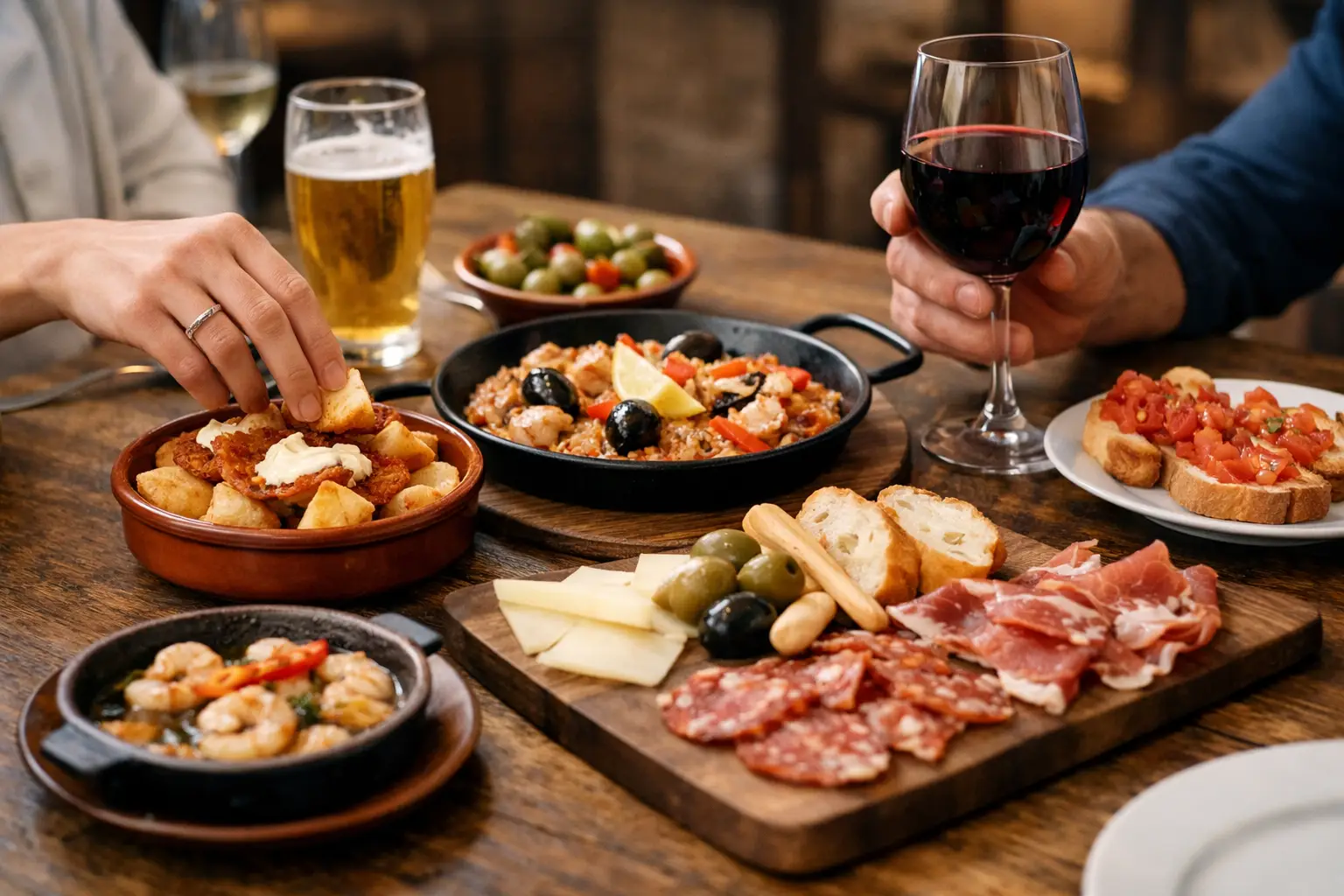
The first plate lands in the center of the table, someone reaches for a croqueta, and the sangría starts catching the light. That is your cue to relax. This Spanish dining etiquette guide is less about a long list of rules and more about joining the rhythm of the table: order with your group, taste generously, and leave room for the next delicious thing.
Spanish dining is designed to create a stir. Meals can be unhurried, dishes may arrive in waves, and conversation is every bit as welcome as a perfectly crisp patatas bravas. Whether you are planning a date night, gathering coworkers after hours, or introducing friends to tapas for the first time, a few cultural cues make the experience feel even more natural.
Spanish Dining Etiquette Guide: Start With Sharing
The heart of a Spanish-style meal is the table, not the individual plate. Tapas are meant to be shared, so it is completely normal for everyone to taste from the same dishes. Rather than ordering one item per person and guarding your selection, choose a mix that gives the group different textures, temperatures, and flavors to talk about.
A smart first round might include something salty and snackable, something fresh, something warm from the kitchen, and a larger dish to build toward. Think cured ham, a bright salad, sizzling garlic shrimp, and a paella for the table. If you are unsure how much to order, begin with a few plates, then add more as the table finds its appetite. There is no prize for ordering everything at once.
When a dish arrives, pause for a beat before taking the first bite. Offer it around, especially if it is a shared portion or something the group selected together. You do not need to perform elaborate food choreography, but a simple “Has everyone tried this?” keeps the energy generous and social.
Let the Meal Arrive in Its Own Time
At many Spanish restaurants, tapas do not follow the American appetizer-entrée-dessert script. Dishes are often sent as they are ready, which means a cold bite may appear alongside something hot from the grill. That is part of the fun, not a service mistake.
Eat hot dishes while they are hot, even if the whole table has not received the same number of plates yet. A just-fried croqueta or a skillet of shrimp is at its best immediately. Meanwhile, cured meats, cheeses, olives, and salads can linger comfortably while the next round arrives.
This style rewards flexibility. If a plate you expected early arrives later, let it become part of the next conversation instead of treating the meal like a timed course sequence. Spanish dining has a lively, gathered-as-you-go feeling. The table evolves, and so does the meal.
Bread Has a Job, but It Is Not the Main Event
Bread is welcome at the table, particularly for enjoying sauces, olive oil, or the last savory juices from a shared plate. Use it with intention rather than filling up before the dishes arrive. A small piece can help you enjoy every bit of a garlicky sauce or a rich stew, but save your appetite for the plates designed to be passed around.
Avoid using bread as a substitute for utensils when a dish is clearly meant to be eaten with a fork or spoon. For casual tapas, though, there is no need to overthink it. Follow the presentation of the dish and take your cue from the setting.
Order Paella With Patience
Paella is one of Spain’s most celebrated shared dishes, and it deserves a little breathing room. It is typically prepared to order, so it may take longer than smaller plates. That wait is not dead time. It is the perfect stretch for tapas, a glass of Spanish wine, and the kind of table talk that makes dinner feel like an occasion.
Paella is generally served for the table, not as a quick personal side. When it arrives, give everyone a chance to enjoy the rice, seafood, vegetables, or meat before going back for a larger second helping. The prized caramelized rice at the bottom of the pan, known as socarrat, is especially worth sharing. If you spot it, do not quietly claim it all. Point it out and let the table buzz.
There is also no need to rush paella to the center of a formal place setting. The pan itself is part of the presentation. Your server may portion it, or the group may serve from the pan depending on the restaurant and occasion. When in doubt, follow your server’s lead.
Sip, Toast, and Keep It Social
A Spanish meal often includes wine, beer, sangría, or a cocktail, but the goal is conviviality, not ceremony for ceremony’s sake. A toast can be as simple as “Salud,” which means “health.” Make eye contact, raise your glass, and enjoy the moment before taking a sip.
If you are sharing a pitcher of sangría, pour with the table in mind. Offer others a refill before topping off your own glass, especially when you are seated near the pitcher. And if someone is not drinking alcohol, keep the toast inclusive. Sparkling water, a zero-proof cocktail, or any favorite drink belongs in the celebration.
Pacing matters. Spanish-style dining invites you to linger, so there is no reason to order every drink at once or rush to clear the table. Let a crisp white wine meet seafood, let a fuller red settle beside grilled meats, or let a bright cocktail open the evening. It depends on the menu, your group, and the mood you want to create.
The Best Table Manners Are Generous Ones
Traditional manners still count: arrive on time for your reservation, place your napkin on your lap, and avoid reaching across another guest when you can politely ask for a dish to be passed. But the most meaningful etiquette is communal.
Keep shared serving utensils with their intended dishes when provided. If there are no serving utensils, use your own fork thoughtfully and avoid double-dipping. Do not monopolize the last bite of a popular plate. Offer it, split it, or ask whether anyone has their eye on it. These small gestures keep the table comfortable and let everyone enjoy the variety.
Phone photos are welcome at a beautiful meal, especially when a paella arrives steaming or a cocktail is dressed for the occasion. Take the shot quickly, then return to the people at the table. The best Spanish dining moments are the ones you can taste, hear, and talk about while they are happening.
How to Handle the Check
Spanish dining is built around sharing, but that does not always mean the bill has to be split perfectly item by item. For a group that shared most dishes and drinks evenly, dividing the check equally is often the easiest and fairest approach. If one guest ordered substantially more, a little flexibility goes a long way.
For business meals or celebrations, decide early if someone is hosting. That removes the awkward end-of-dinner scramble and lets the table stay focused on dessert, coffee, or one last toast. In the United States, standard restaurant tipping customs apply, even when the meal is inspired by Spanish dining traditions.
At Bulla Gastrobar, the experience is built for this kind of easygoing exchange: plates in the center, flavors moving around the table, and plenty to celebrate between the first bite and the final sip.
Make Room for the Long Goodbye
In Spain, the conversation after the meal can be as important as the meal itself. You do not need to turn every dinner into an all-night affair, but resisting the urge to immediately stand up after the last bite changes the energy. Consider dessert, coffee, or a final round of conversation before you call it a night.
If you need to leave quickly, that is perfectly fine. A Spanish-style meal is an invitation, not a test. The point is to be present enough to enjoy the dishes as they arrive, share what is on the table, and let a little warmth build between bites. Order a few plates, pass them freely, say salud, and let the evening do the rest.