


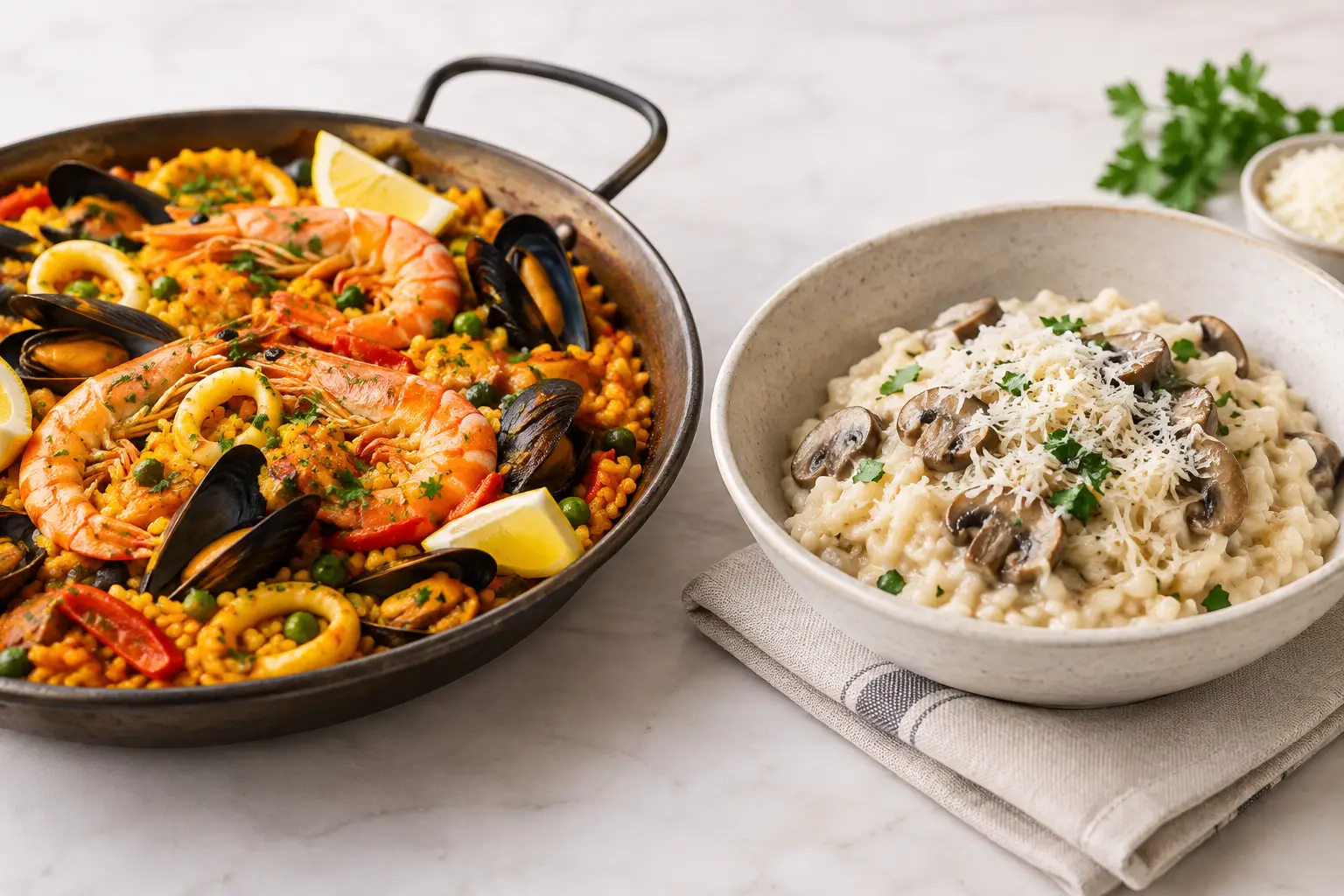
A pan arrives at the table, fragrant with saffron, roasted peppers, and the savory promise of what is waiting at the bottom. That moment is where paella versus risotto stops being a simple rice comparison. One dish is made for gathering around and scraping up a golden crust; the other is built around slow stirring, creamy texture, and a spoonful that settles softly on the plate.
Both are beloved rice dishes with serious culinary roots. Both can carry seafood, vegetables, meat, cheese, stock, and seasonal ingredients beautifully. But they ask for different rice, different technique, and a very different kind of appetite. If you are choosing between them for dinner, the answer is not about which one is better. It is about whether the night calls for a shared Spanish feast or an Italian bowl of comfort.
Paella Versus Risotto: The Essential Difference
Paella is a Spanish rice dish traditionally cooked in a wide, shallow pan called a paellera. Its home is Valencia, on Spain’s eastern coast, where the original paella valenciana often featured chicken, rabbit, local beans, and snails. Seafood paella, mixed paella, and vegetable-forward versions have become popular far beyond Valencia, but the core idea remains the same: rice cooked in a broad layer, absorbing a deeply flavored broth while developing distinct textures from top to bottom.
Risotto comes from northern Italy and is defined by a different rhythm. Short-grain rice is cooked gradually with warm stock, usually added a ladle at a time. Stirring coaxes starch from the grains, creating a creamy sauce around rice that should remain tender but retain a little bite at its center.
The key contrast is texture. Paella aims for separate, flavorful grains with a toasted base known as socarrat. Risotto aims for a loose, flowing creaminess often described in Italian as all’onda, or “like a wave.” A great paella has definition and a little drama in every forkful. A great risotto feels plush, glossy, and deeply comforting.
The Rice Makes the Dish
Rice is not a background player in either preparation. It is the reason these dishes cannot be made well by simply swapping one method into the other.
Paella commonly uses Spanish varieties such as bomba, Calasparra, or sénia. These grains are especially prized for their ability to take on broth without becoming mushy. They hold flavor with confidence, which matters when the pan is layered with ingredients like saffron, smoked paprika, green beans, artichokes, chicken, mussels, shrimp, or squid.
Risotto traditionally leans on starchier Italian varieties, including Arborio, Carnaroli, and Vialone Nano. Carnaroli is often favored by cooks for its ability to stay structured while releasing enough starch for a luxurious finish. The rice is usually toasted in butter or olive oil before wine and stock are introduced, setting up the savory, creamy character that follows.
Could you make a risotto-style dish with bomba rice or cook Arborio in a paella pan? Of course. It may still be delicious. But it will not deliver the signature texture that makes either classic preparation worth seeking out.
Technique: Stillness Versus Stirring
The cooking process is where the personality of each dish becomes unmistakable.
For paella, the cook builds flavor in the pan first. Meat, vegetables, seafood, sofrito, and spices may all have their moment before the rice and broth go in. Once the rice is spread across the pan, it is generally left alone. No constant stirring. The goal is even cooking, concentration, and eventually socarrat, that coveted caramelized crust at the bottom. It is not burnt rice. It is the delicious result of careful heat, properly seasoned broth, and patience.
Risotto asks for more hands-on attention. The rice is stirred regularly as stock is added and absorbed. That movement is not busywork. It helps create the creamy consistency risotto is known for, while the gradual addition of liquid lets the grains cook evenly. A final finish of butter, cheese, olive oil, or another rich element gives the dish its sheen.
Neither technique is inherently harder, but each has a narrow window between excellent and disappointing. Paella can turn dry if the ratio of broth to rice is off or if it is left too long. Risotto can become heavy, gluey, or overly loose when the rice is overcooked or the timing is wrong. Both reward a cook who pays attention to heat, liquid, and the behavior of the grain.
Flavor: Bright Spanish Depth or Creamy Italian Comfort
Paella often leads with bold, sunlit flavors. Saffron brings floral warmth and golden color. Paprika adds earthiness or smoke. Tomatoes, garlic, olive oil, peppers, and stock create a savory foundation, while seafood or meats bring their own character. Lemon may arrive at the table to brighten the finished pan, especially when shellfish is involved.
Risotto tends to feel rounder and more enveloping. Its flavor can be delicately simple, as in a Parmesan risotto, or intensely seasonal with mushrooms, asparagus, butternut squash, saffron, seafood, truffle, or braised meat. Wine adds lift, stock adds depth, and the final enrichment ties it all together.
That distinction makes a difference when pairing drinks, too. Paella has the energy to stand beside Spanish wine, crisp beer, or a lively sangría. Risotto often loves an Italian white, a light red, or a sparkling wine that can cut through its richness. The right pairing depends on the ingredients, but paella usually feels brighter and more festive, while risotto often feels more intimate and indulgent.
Which Dish Is Better for Sharing?
Paella is the natural choice when the table is part of the experience. A large pan placed in the center creates instant conversation. Guests can reach for shrimp, spoon up rice, compare the crisp edges with the tender center, and make a meal feel like an occasion. That communal spirit is why paella works so well for birthdays, date nights with a little buzz, family meals, and group dinners that are meant to stretch past the first round of drinks.
Risotto is more commonly plated individually, although it can certainly be served family-style. Its creaminess is best enjoyed right away, before the sauce tightens as it cools. That gives it a more immediate, chef-to-guest quality. It is ideal when each person wants a composed dish and the meal leans toward cozy rather than celebratory.
At Bulla Gastrobar, paella fits naturally into the Spanish tradition of passing plates, sipping something bright, and creating a stir around the table. It is food with a center-of-the-party point of view.
When to Order Paella and When to Choose Risotto
Choose paella when you want a dish with texture, color, and a little theater. It suits a table that wants to share, a night that calls for sangría, and anyone who enjoys the contrast between tender rice, savory broth, roasted ingredients, and crisp socarrat. It is especially satisfying when you are hungry for something that feels expansive rather than delicate.
Choose risotto when creamy comfort is the craving. It is a natural fit for cooler evenings, mushroom season, a quiet dinner, or a menu built around refined, rich flavors. If a spoonful of Parmesan, butter, wine, and stock sounds more appealing than a crisp-bottomed rice pan, risotto has your name on it.
There is no need to declare one the winner. Paella and risotto are two expressions of how much character rice can carry when it is treated with care. Order the one that matches the mood, then give it the attention it deserves: paella shared from the pan while the table is buzzing, or risotto enjoyed hot and creamy before the moment slips away.