


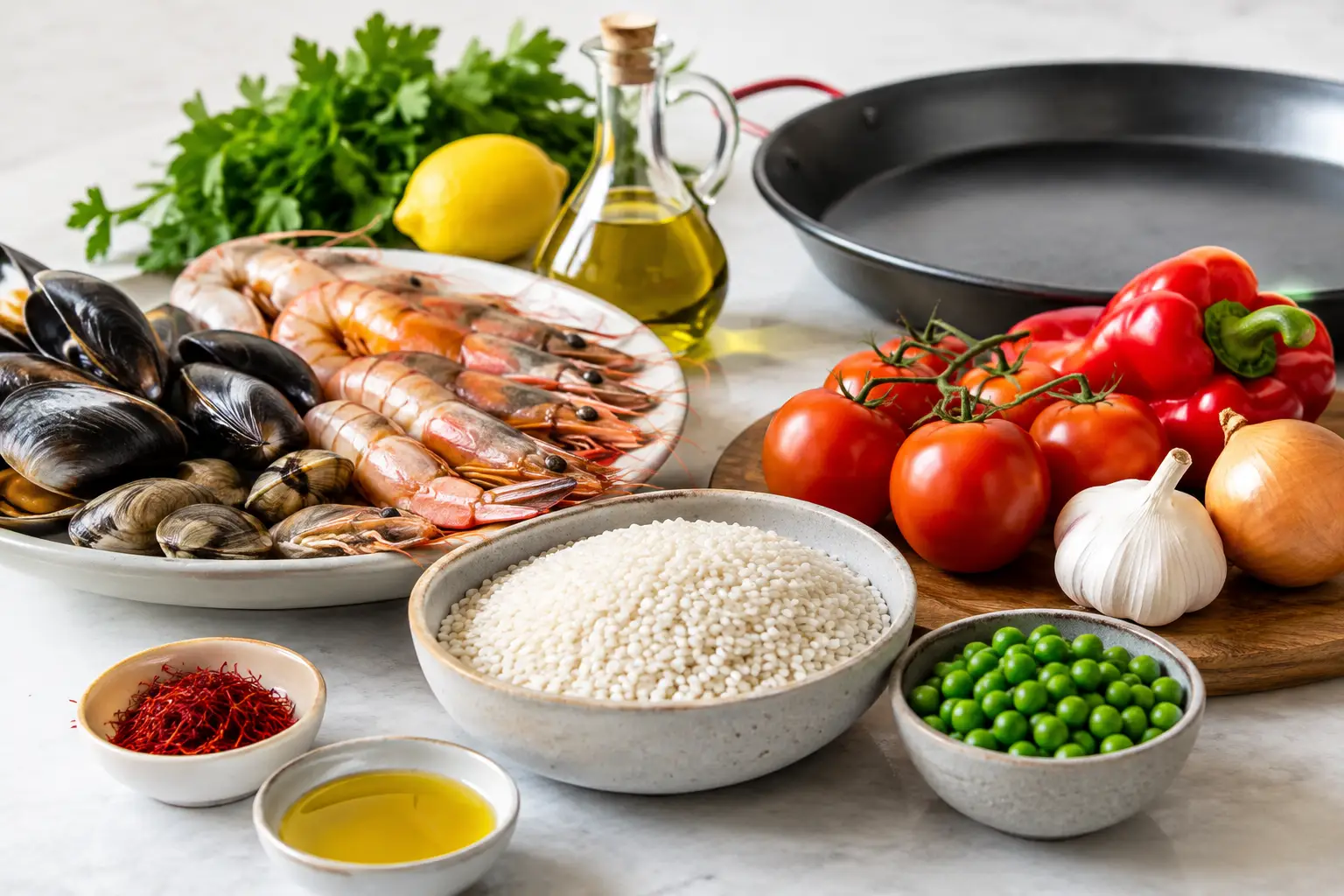
A great paella arrives with a little theater: the wide pan, the perfume of saffron, the rice settling into a golden crust, and the immediate urge to pass a spoon around the table. This paella ingredients guide breaks down what gives the dish its unmistakable character, from the rice at its center to the seafood, meats, vegetables, and seasoning that create a pan worth gathering over.
Paella is not one fixed recipe. It is a style of Spanish rice cookery with deep regional roots, especially in Valencia, where the original version grew from ingredients found in the surrounding fields. That is why one pan may feature rabbit, chicken, and beans while another leans into shrimp, mussels, and squid. The goal is not to add every ingredient available. It is to choose ingredients that cook in harmony and let the rice carry the flavor.
Paella Ingredients Guide: Start With the Rice
Rice is the main event, not a quiet side dish beneath the toppings. Spanish short-grain rice absorbs stock while keeping its structure, which is exactly what paella needs. Bomba rice is a favorite because it can take on plenty of liquid without turning soft or sticky. Calasparra rice is another excellent choice, prized for its ability to drink in big flavor.
If those varieties are not available, look for a short- or medium-grain rice rather than long-grain rice. Arborio can work in a pinch, but it releases more starch and has a creamier tendency that moves the final result closer to risotto than paella. The texture you want is tender rice with distinct grains, not a spoonful that collapses together.
Just as important is the pan. A broad, shallow paella pan gives the rice room to cook in a thin, even layer. That surface area encourages evaporation and makes space for socarrat, the toasted, caramelized rice that forms along the bottom. It is the part of the pan that sparks the fastest conversation.
The Flavor Base: Olive Oil, Sofrito, Stock, and Saffron
Before the rice goes in, paella builds its foundation. Good olive oil starts the process, carrying the flavor of the ingredients as they cook. Then comes sofrito, usually a slow-cooked mixture of tomato, garlic, and sometimes onion or pepper. It should taste concentrated and slightly sweet, not raw or watery. Give it time in the pan, because this is where the deeper savory notes begin.
Stock is the rice’s primary source of seasoning, so use one that suits the pan. Seafood paella calls for a clean, rich seafood stock. Chicken or rabbit paella benefits from poultry stock. Vegetable stock makes sense for a meatless version, though it should have enough body to stand up to saffron and vegetables. A thin, underseasoned stock produces thin, underseasoned rice.
Saffron is essential for its floral aroma, warm golden hue, and lightly earthy finish. A small pinch goes a long way. Toasting the threads very briefly and steeping them in warm stock helps spread the color and flavor evenly. Smoked paprika is often used alongside saffron, bringing a gentle smokiness and red-orange glow. Choose Spanish pimentón if possible, and add it carefully so it blooms in the oil without burning.
Choose a Paella Style Before Choosing Proteins
The most delicious paella is usually the most focused one. Decide on a direction before filling the pan, because cooking times and stock choices matter.
Valencian Paella
Traditional paella Valenciana is rooted in land-based ingredients: chicken, rabbit, green beans, large white beans such as garrofó, tomato, saffron, and rosemary. Depending on the season and household, snails may appear as well. It is rustic, fragrant, and surprisingly restrained. Seafood is not part of the classic formula.
Seafood Paella
Seafood paella brings a celebratory, coastal feel to the table. Shrimp, mussels, clams, squid, and firm white fish are common choices. The trick is timing. Squid can cook early to flavor the base, while shrimp and shellfish should go in later so they remain juicy and tender rather than overcooked.
Use shell-on shrimp when possible for extra visual drama and flavor. Clean mussels and clams thoroughly, discard any with cracked shells, and toss any that do not open during cooking. These details may sound small, but they make the difference between a polished pan and a frustrating one.
Mixed Paella
Mixed paella combines meat and seafood, and it is popular for good reason: it delivers plenty of color, texture, and variety in one shared dish. Chicken, shrimp, mussels, squid, and vegetables can work beautifully together when the stock and seasoning connect them. Keep portions sensible. A pan crowded with too many proteins makes it harder for the rice to cook evenly.
One ingredient often associated with Americanized paella is chorizo. Spanish chorizo is delicious, but it is not a universal paella requirement, and it is not traditionally used in paella Valenciana. If you include it, treat it as a deliberate flavor choice, not a shortcut to making a dish taste Spanish. Its paprika-rich fat can take over a pan quickly.
Vegetable Paella
A vegetable paella can be every bit as satisfying as a seafood or meat version. Artichokes, peppers, green beans, peas, mushrooms, tomatoes, and beans bring substance and color. Seasonal produce is the best guide. Artichokes and beans create a more Valencian-inspired feel, while roasted peppers and mushrooms offer deeper, earthier notes.
The key is to cook vegetables according to their needs. Brown mushrooms and artichokes early for richer flavor. Add tender peas later. Avoid piling in vegetables that release too much water, or the rice may steam instead of developing its prized bottom crust.
The Details That Make Paella Taste Like Paella
Seasoning should be confident but balanced. Saffron, paprika, garlic, tomato, olive oil, and stock do most of the work, while salt should be adjusted with care. A squeeze of lemon at the table can brighten seafood paella, but it should lift the flavors rather than cover them.
Fresh rosemary is especially welcome in land-based paellas, though a heavy hand can make the whole pan taste piney. Parsley is a clean finishing touch for seafood versions. Some cooks add a little grated tomato; others use diced tomato cooked down slowly. Both approaches can work if the sofrito becomes richly concentrated before the liquid is added.
Once the rice and stock are in the pan, resist the urge to stir. Paella is not risotto. Stirring releases starch and interrupts the even layer that helps create socarrat. Rotate the pan if the heat is uneven, listen for a gentle crackle near the end, and let the cooked paella rest for a few minutes before serving. That brief pause lets the rice finish absorbing flavor and gives everyone time to gather close.
Build a Paella Worth Sharing
Paella rewards good ingredients, but it also rewards a relaxed approach. You do not need the same seafood used on the Spanish coast or a pantry full of specialty products to make a memorable pan. You do need flavorful stock, suitable rice, a focused combination of ingredients, and enough patience to let the bottom toast without rushing it.
At Bulla Gastrobar, paella belongs where it has always belonged: at the center of a lively table, with spoons reaching in and conversation getting louder. Choose ingredients with intention, let the aroma create a stir, and serve the pan while the socarrat is still calling everyone’s name.