


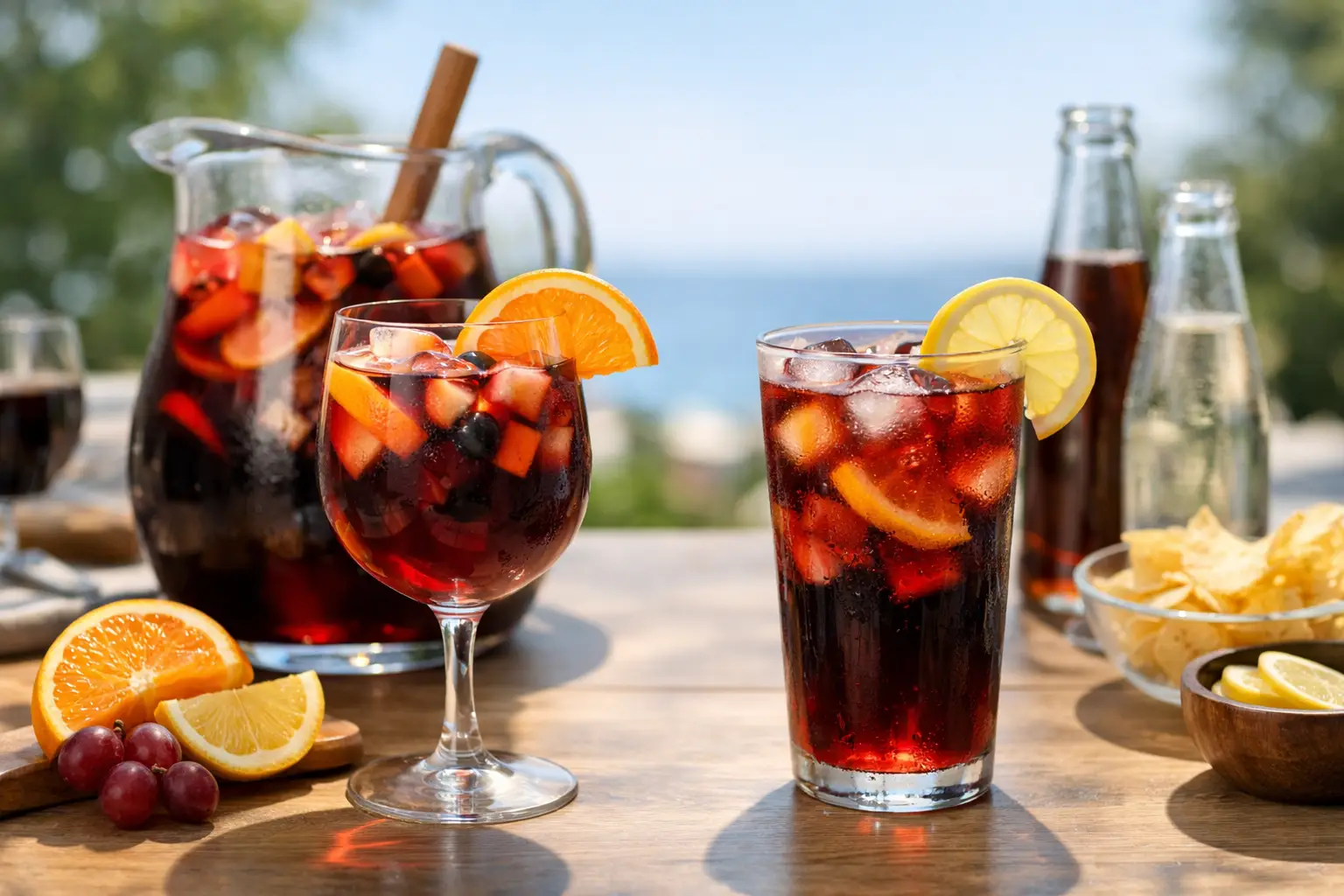
A carafe hits the table, the ice catches the light, and suddenly everyone has an opinion. In the sangria vs tinto de verano conversation, both drinks bring red wine, sunshine, and an unmistakably Spanish sense of occasion. But they are not interchangeable. One is a fruit-forward punch built for sharing; the other is a brisk, unfussy wine cooler that keeps an afternoon moving.
Knowing the difference makes ordering more fun, especially when the table is filling up with tapas. Are you settling in for a long dinner with patatas bravas, croquetas, and conversation? Or are you looking for something crisp to carry you through happy hour? Your answer points toward the right pour.
Sangria vs Tinto de Verano: The Quick Difference
Sangria is a wine-based punch. It is typically made with red wine, fruit, a sweetener, and often a splash of spirits or liqueur, then served over ice. Recipes change from one home, bar, and region to the next, which is part of its charm. Orange, lemon, apple, peach, berries, brandy, orange liqueur, cinnamon, and sparkling water can all find a place in the glass.
Tinto de verano is simpler by design. Its name translates to red wine of summer, and the classic version combines red wine with gaseosa, a lightly sweet sparkling soda common in Spain. It is poured over plenty of ice and usually finished with a lemon slice. Outside Spain, lemon-lime soda is often used when gaseosa is unavailable, though it can make the drink noticeably sweeter.
The easiest way to remember it: sangria is prepared like a party drink, while tinto de verano is mixed like a quick, refreshing highball. Sangria asks for a little time. Tinto de verano is ready when the glass is.
Sangria Brings the Fruit and the Theater
A well-made sangria earns its place at a crowded table. The fruit perfumes the wine, the ice keeps it lively, and a large-format pitcher invites everyone to pour, pass, and linger. It can be bright and citrusy, dark and berry-rich, gently spiced, or bubbly, depending on the recipe.
That variation is also why sangria can taste very different from one glass to the next. Some versions are dry and wine-led. Others lean sweeter, with ripe fruit and a stronger pour of liqueur. Some are built with red wine, while white sangria and rosé sangria offer a lighter, more floral direction. There is no single rigid formula, but balance matters: the wine should still taste like wine, rather than disappear behind sugar and fruit juice.
Because it is often prepared ahead, sangria gives fruit time to mingle with the wine. That softer, rounded flavor is a major part of the appeal. It is made for the moment when dinner becomes an event and one round turns into an evening.
When Sangria Is the Right Call
Choose sangria when you want a drink with presence. It works beautifully for birthdays, group dinners, brunches, and any meal where sharing is part of the plan. A pitcher also makes sense when friends have similar tastes and want to start with something festive before moving into Spanish wines, cocktails, or another round.
Food-wise, sangria plays especially well with salty, smoky, and richly seasoned dishes. Think jamón, chorizo, grilled meats, crispy potatoes, and cheeses that bring a little funk or nuttiness. Its fruit and sweetness can cool a spicy bite, while its acidity helps reset the palate after something fried.
The trade-off is that sangria can feel fuller and sweeter than a simple wine-and-soda drink, particularly in warm weather or over a long lunch. If you want your drink to stay light, ask about the style or choose a drier version when available.
Tinto de Verano Keeps Things Light
Tinto de verano has a quieter kind of confidence. It is not trying to be a fruit salad in a glass. The red wine remains visible in the flavor, but the sparkling soda lifts it, softens the alcohol, and makes each sip especially refreshing. Served very cold, it is easygoing in the best sense of the word.
In Spain, it is the kind of drink that makes sense on a terrace when the afternoon heat lingers and nobody is in a hurry. It is often associated with casual bars, beach towns, family lunches, and the simple pleasure of a cold glass beside a plate of food. A proper tinto de verano does not need a long ingredient list to create a stir.
Its lighter profile makes it a strong choice for guests who enjoy red wine but do not want the weight of a full pour. It is also a smart option when you plan to have more than one drink and would rather keep the pace relaxed.
When Tinto de Verano Wins
Order tinto de verano when the weather is working overtime, when lunch is on the table, or when you want a drink that refreshes without taking over the meal. It is particularly at home alongside lighter tapas: marinated olives, pan con tomate, seafood, tortilla española, fried calamari, or bright salads.
It can also be the better companion for a tapas crawl or a long afternoon of grazing because the carbonation and ice make it feel crisp from first sip to last. The wine still brings depth, but the drink stays leaner than most sangrias.
There is a practical detail worth considering: soda quality changes the result. A lightly sweet, clean-tasting gaseosa lets the wine stay in focus. A very sugary lemon-lime soda shifts the drink toward sweetness and citrus. Neither choice is automatically wrong, but they create different experiences.
Is Tinto de Verano More Authentic Than Sangria?
This question gets tossed around often, usually with more certainty than it deserves. Tinto de verano is deeply woven into everyday Spanish warm-weather drinking culture, and many Spaniards reach for it more often than sangria. That is true.
But calling sangria inauthentic misses the point. Sangria has real Spanish roots, regional variations, and a long life at celebrations and shared meals. It has also become an international symbol of Spain, which means some versions abroad can be overly sweet, overly boozy, or loaded with fruit for visual effect. That does not erase the good versions.
Authenticity is less about declaring a winner and more about respecting the drink’s character. Sangria should feel balanced, wine-forward, and convivial. Tinto de verano should feel cold, simple, and refreshing. Both belong at the table when they are made with care.
How to Choose for Your Table
Start with the occasion, then let the food do some of the talking. For a date night, celebratory dinner, or a group ready to share a carafe, sangria brings color and conversation. For a sunny lunch, after-work tapas, or a lighter first round, tinto de verano offers an easy, sparkling alternative.
Your personal taste matters just as much. Choose sangria if you like citrus, ripe fruit, and a little more texture in your glass. Choose tinto de verano if you prefer a cleaner red-wine flavor with fizz and less sweetness. If you are sharing a varied spread, there is no rule against ordering both and letting the table decide.
That is the Spanish way to approach it: not as a test, but as another reason to gather. At Bulla Gastrobar, a lively tapas table calls for the kind of sip that keeps the stories coming, whether that means a fruit-filled sangria or a chilled, sparkling tinto de verano.