


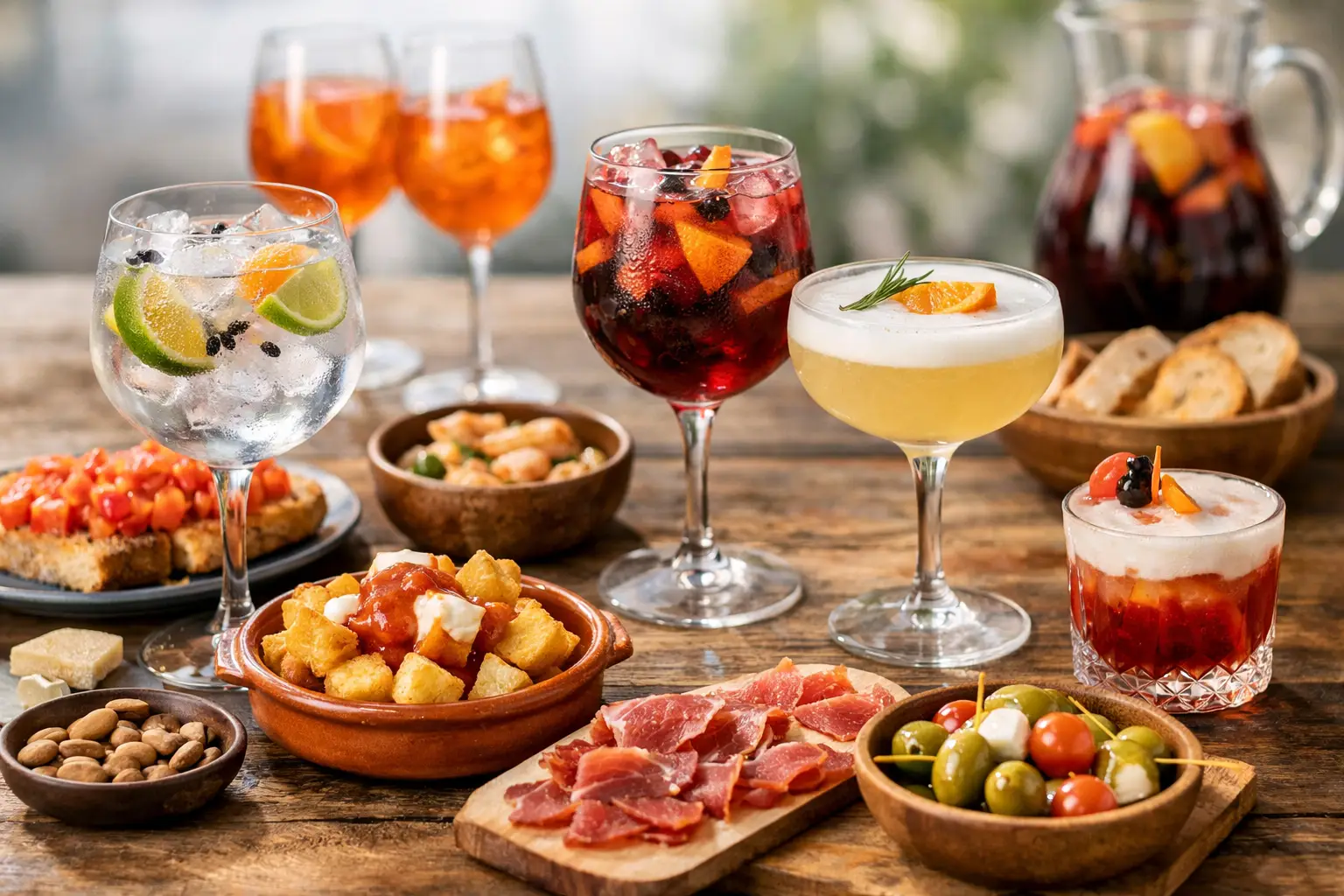
A plate of crispy croquetas calls for a cold, bright sip. Patatas bravas want something refreshing with enough character to stand up to smoky sauce. And when the paella arrives, steaming and made for the middle of the table, a shared pitcher simply makes sense. These Spanish cocktails to try are less about stiff rules and more about creating a little buzz around the table.
Spain’s drinking culture is wonderfully regional, social, and relaxed. Some of these pours are built for a sunny terrace, others for a late-night toast, and a few are deceptively simple classics worth knowing by name. Order one, pass a few tapas, and let the conversation linger.
Spanish Cocktails to Try for Every Kind of Table
1. Red Sangría
Sangría is the crowd-pleaser for good reason. A traditional-style red wine base gets lifted with fruit, citrus, a splash of spirit, and often a touch of fizz. The best versions taste wine-forward and fresh rather than overly sweet, with the fruit adding perfume instead of turning the glass into fruit salad.
It is a natural match for a table with variety: jamón, manchego, marinated olives, grilled meats, and fried tapas all find a friend in its juicy, chilled finish. Pitcher or glass depends on the occasion, but a pitcher makes the most sense when everyone is ready to share the first round.
2. White Sangría
White sangría brings a lighter, more citrusy side of the classic. Built around white wine and often accented with stone fruit, apples, berries, or lemon, it has an easygoing freshness that shines with seafood-forward tapas.
Try it alongside garlic shrimp, fried calamari, or a bright salad with citrus and cheese. It is also a smart choice for guests who find red wine a little too weighty in warm weather. The trade-off is simple: white sangría has a more delicate profile, so it can get lost beside the boldest, smokiest dishes.
3. Tinto de Verano
If you like sangría but want something simpler and more casual, meet tinto de verano. Its name translates to “summer red wine,” and that is exactly the appeal: red wine poured over ice and lengthened with lemon soda or sparkling citrus soda.
This is a refreshing Spanish staple, not a dressed-up project. It is crisp, lightly fizzy, and lower-key than many sangrías, making it a great first drink for a long lunch, happy hour, or an afternoon that may stretch into dinner. Pair it with salty snacks, fried tapas, and anything that benefits from a squeeze of lemon.
4. Rebujito
Rebujito is a southern Spanish favorite with serious warm-weather energy. It traditionally combines fino or manzanilla sherry with a lemon-lime mixer, plenty of ice, and fresh mint. The result is pale, bubbly, dry-leaning, and highly refreshing.
Because sherry brings saline, nutty complexity, rebujito has more edge than a standard spritz. It sings beside cured ham, almonds, olives, and seafood, especially when the table is grazing rather than settling into one large entrée. If you prefer sweeter cocktails, ask about the balance before ordering, because a well-made rebujito is meant to be brisk.
5. Agua de Valencia
For a celebratory table, agua de Valencia brings the sparkle. This Valencian cocktail blends orange juice, cava, and spirits such as vodka and gin. It is sunny in color, festive in spirit, and stronger than its fruit-forward flavor may suggest.
The orange connection makes it especially fitting with brunch or a paella-centered meal. Serve it when the group wants something more exciting than mimosas but still wants bubbles in the glass. Pace yourself, though: this one is easy to sip and built for a leisurely meal, not a quick round.
6. The Spanish Gin and Tonic
Spain turned the gin and tonic into a proper ritual. Rather than a quick pour in a narrow highball, the Spanish-style version is often served in a large balloon glass with abundant ice, quality tonic, and aromatic garnishes that complement the gin. Think citrus peel, herbs, juniper, or seasonal fruit.
The garnish should add aroma, not clutter. A grapefruit peel can sharpen a botanical gin, while rosemary may bring a savory note to match grilled vegetables or lamb. This is an excellent pre-dinner order when you want something polished and refreshing without the sweetness of a fruit-based cocktail.
7. Kalimotxo
Kalimotxo, pronounced roughly “cal-ee-MO-cho,” proves that a humble combination can become a beloved classic. From the Basque Country, it mixes red wine and cola over ice, usually with a wedge of lemon. It may sound unexpected, but the cola softens the wine’s tannins and adds a familiar caramel note.
This is not the cocktail for a formal wine tasting. It is, however, a playful choice for casual gatherings, game-day energy, and late-night tapas. Order it when the mood is lively and the point is to try something distinctly Spanish without taking it too seriously.
8. Clara con Limón
A clara is Spain’s answer to an easy beer cocktail: lager mixed with lemon soda. It is light, fizzy, and made for long, sunny afternoons when a full-strength drink feels like too much. Some versions use sparkling lemonade, while others lean more citrus-forward depending on the region and bar.
A clara is especially good with salty, crispy bites like patatas bravas, croquetas, or fried calamari. It will not deliver the depth of sherry or the fruit of sangría, but that is precisely the point. Sometimes the ideal drink is the one that keeps the appetite awake for the next plate.
9. Carajillo
When dinner turns into dessert and no one is quite ready to call it a night, order a carajillo. This Spanish coffee cocktail combines espresso with a spirit, often Licor 43, brandy, or rum. The Licor 43 version is especially popular for its vanilla, citrus, and spice notes.
It is rich without being heavy and gives the table a second wind after paella, grilled meats, or a round of sweets. A carajillo is less of a patio sipper and more of a closing move, particularly for espresso fans who want their nightcap with a little extra spark.
10. Cava Cocktail
Cava deserves more attention beyond the toast. Spain’s signature sparkling wine makes a crisp base for cocktails that call for a splash of citrus, a little fruit liqueur, or a bittersweet aperitif. The bubbles keep the drink bright, palate-cleansing, and celebratory.
Choose a cava cocktail when your table is ordering seafood, lighter tapas, or brunch favorites. It can feel festive without the fuller sweetness of sangría, and it gives every clink of the glass a little occasion. For a big celebration, start here. For a casual Tuesday, it still works beautifully.
Build the Round Around the Food
The most memorable Spanish cocktail order is not always the most complicated one. Start with what is landing on the table. For fried and salty tapas, reach for a clara, tinto de verano, or gin and tonic. For seafood and lighter dishes, white sangría, rebujito, and cava cocktails keep things crisp. For grilled meats, bold sauces, and a table that wants to settle in, red sangría has the range to keep up.
Variety is part of the fun, too. One friend can order a Spanish gin and tonic, another can choose a carajillo after dinner, and the table can share sangría in between. At Bulla Gastrobar, handcrafted sangrías and Spanish-inspired pours are made for exactly that kind of lively, pass-the-glass-and-pass-the-plate rhythm.
The best move is to order for the moment, not the rulebook. Pick a drink that suits the food, invite the table into the decision, and leave room for one more round when the conversation is still buzzing.